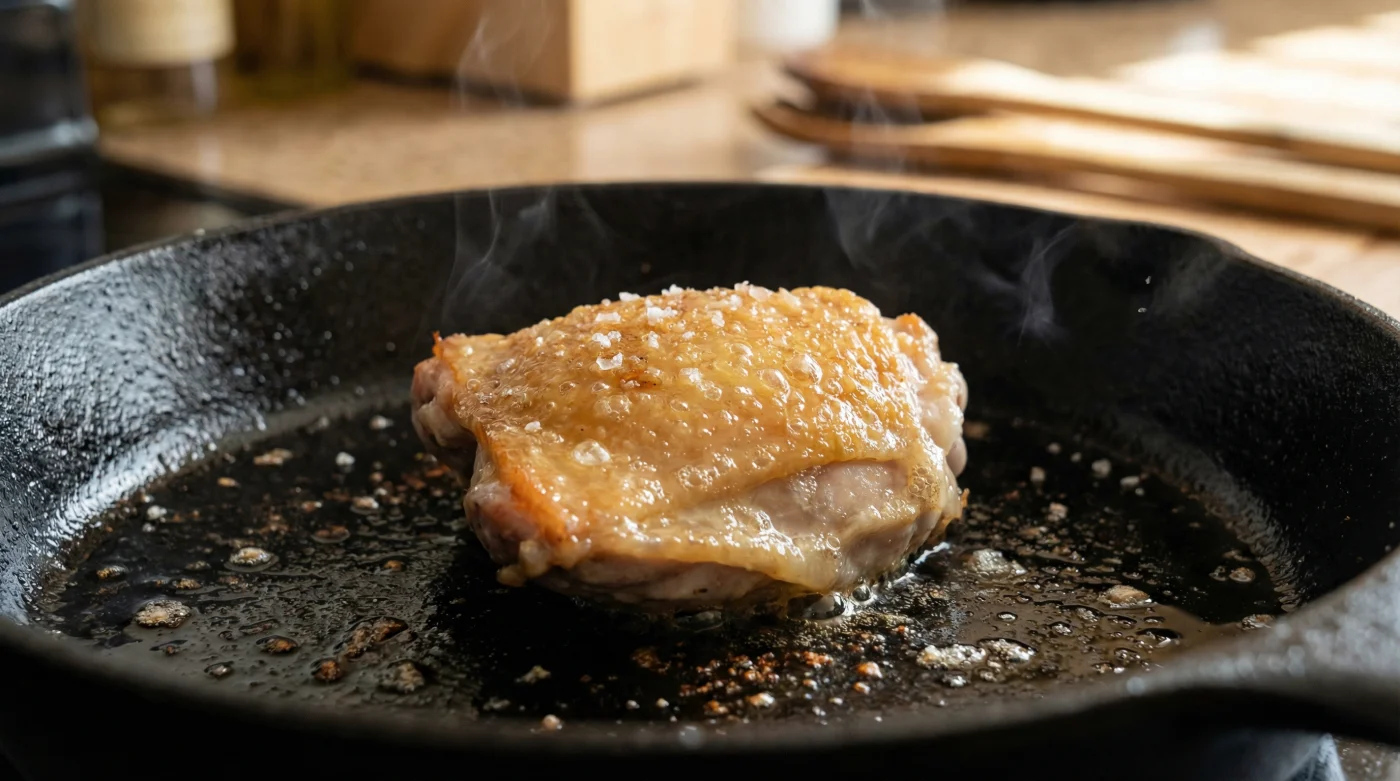
You stand at the stove, listening to the aggressive, spitting hiss of oil hitting a smoking-hot skillet. You drop the chicken thigh into the pan, anticipating that beautiful, shattering crust. But ten minutes later, you are left scraping a blackened, charred layer off the metal, while the meat near the bone remains stubbornly pink. The kitchen smells slightly of scorched cooking oil, and your dinner feels like a compromise. You end up chewing through a rubbery, flabby piece of poultry, wondering why your meals never quite match the glossy cookbook photos.
The Myth of the Searing Skillet
The culinary world drilled a golden rule into your head from the very beginning: always preheat your pan. You have been told over and over that a screaming-hot skillet is the only way to build flavor and achieve a proper crust. But when dealing with skin-on chicken thighs, that intense, immediate heat is actually the obstacle.
Think of the chicken skin as a heavy winter coat hiding a dense layer of trapped insulation. This insulation is the subcutaneous fat. When you throw that thick layer onto a blistering surface, the exterior seizes and burns before the fat beneath has any time to melt away. The result is a sealed pocket of rubbery tissue sitting right on top of your meat. To fix this, you have to break the oldest rule in the kitchen. You need a cold pan.
| Home Cook Profile | The Cold-Start Benefit |
|---|---|
| The Rush-Hour Parent | Frees up your hands; the chicken requires absolutely zero attention for the first 15 minutes. |
| The Texture Enthusiast | Achieves a potato-chip-level crunch without deep frying or heavy breading. |
| The Cast-Iron Novice | Prevents the agonizing frustration of protein permanently sticking to your cookware. |
I learned this lesson the hard way, standing at a scarred prep counter in a cramped Chicago bistro. Chef Marcus, a line veteran with old grease burns mapping his forearms, watched me ruin an entire batch of family-meal thighs. “You are shocking the bird,” he told me gently, reaching over to click my burner completely off. He took a raw, heavily salted thigh, placed it skin-side down onto the cold metal of a cast-iron skillet, and only then turned the dial to a whisper of a medium-low flame. “Let the pan and the skin wake up together,” he advised. “The fat needs time to weep.”
| Thermal Phase | Skillet Temperature | Mechanical Action in the Chicken |
|---|---|---|
| The Cold Start | 68°F to 150°F | Pores in the skin relax; trapped surface moisture begins to silently evaporate. |
| The Rendering Window | 150°F to 280°F | Subcutaneous fat liquefies, pooling around the skin to act as a shallow frying oil. |
| The Crisping Threshold | 280°F to 350°F | Proteins brown perfectly; the now paper-thin skin hardens into a crisp shell. |
Mastering the Mindful Sear
The physical actions required here are minimal, but they demand your presence. Begin by taking your chicken out of the refrigerator and patting it aggressively dry with paper towels. Moisture is the absolute thief of crispiness; if the skin is wet, it breathes through a pillow of steam, and it will not fry. Season the skin generously with coarse kosher salt, pressing the grains gently into the flesh so they adhere.
Place the chicken skin-side down into your dry, cold skillet. Do not add oil. The bird brings its own cooking fat to the party. Turn the burner to medium-low and step back. You will hear nothing at first. Then, after a few minutes, a gentle, rhythmic popping will begin as the pan slowly warms.
- Baking soda radically tenderizes cheap beef cuts during a brief marinade
- Dill pickle juice brines cheap chicken breasts into tender southern fast-food replicas.
- Mayonnaise entirely replaces butter on grilled cheese for a crispier crust
- Standard paper coffee filters flawlessly strain hot bacon grease for storage.
- Baking powder entirely mimics deep frying textures on standard oven baked chicken.
| Phase | Success Cues (What to Look For) | Warning Signs (What to Avoid) |
|---|---|---|
| Preparation | Bone-dry skin, generous even coating of coarse salt. | Glossy, wet skin; fine table salt pooling in crevices. |
| The Cook | A slow, steady sizzle; fat slowly rising up the sides of the chicken. | Aggressive popping, smoking oil, or the smell of burning proteins. |
| The Flip | Skin detaches from the pan with zero resistance, appearing deep golden brown. | Tugging or tearing the skin to force it off the metal. |
Patience as a Culinary Ingredient
When you finally slide your spatula under the chicken, it will lift effortlessly. The skin will resemble a pane of amber glass. You flip it, allowing the exposed meat to finish cooking in the hot, savory fat for another five to seven minutes. The sound of your knife slicing through that crust later at the dinner table will be a loud, satisfying crunch.
By letting go of the urge to rush the heat, you fundamentally change the texture of your meal. You transform a mundane weeknight staple into a sensory experience that rivals a professional kitchen. It is a quiet reminder that sometimes, slowing down and ignoring the conventional noise is the only way to achieve something extraordinary. You do not have to force the heat; you just have to allow the process to unfold at its own rhythm.
“Great cooking is rarely about forcing ingredients to submit to high heat; it is about listening to what the food needs to naturally transform.”
Frequently Asked Questions
Does this cold-start method work with chicken breasts?
No. Chicken breasts lack the subcutaneous fat necessary for this rendering process and will simply dry out on the stove. Stick exclusively to skin-on thighs or drumsticks.Should I use cast iron, stainless steel, or non-stick cookware?
Cast iron or a heavy-bottomed stainless steel skillet works beautifully and retains the even heat you need. Avoid non-stick if you want the absolute best possible crust, though it will technically still work in a pinch.What do I do with all the leftover liquid fat in the pan?
Do not wash it away. Pour off the excess into a glass jar for roasting potatoes later in the week, or leave a tablespoon in the pan to build a quick, rich pan sauce with minced shallots and a splash of white wine.Do I cover the pan while the chicken cooks to prevent splattering?
Never. Covering the pan traps escaping steam, which forces moisture right back into the skin, instantly destroying your hard-earned crispiness. Use a mesh splatter guard instead.How do I know the inside is safe to eat if I am only focusing on the skin?
The slow, steady cook time skin-side down actually pushes heat gently up through the meat. By the time you finally flip it, the meat is nearly completely done. Always use a digital meat thermometer to ensure the thickest part near the bone hits 165 Fahrenheit.