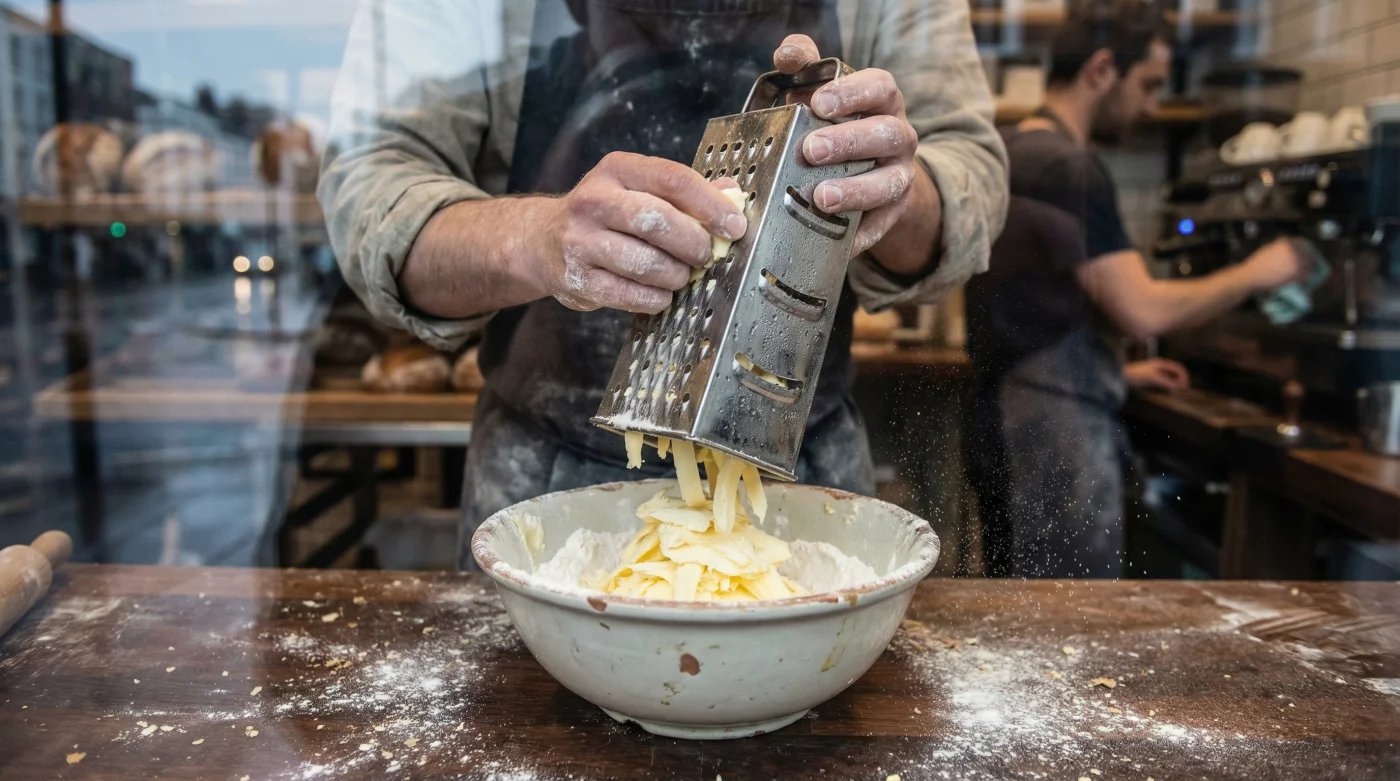
You stand at the kitchen counter, a stubborn block of cold butter in one hand and a rigid wire pastry blender in the other. The morning light catches the fine mist of flour hanging in the air. You press down, hoping to cut the chilled fat into the dry ingredients, but instead, it fights back. It sticks. It clumps. The metal blades bend slightly under the sheer pressure of the task. Before you know it, the warmth radiating from your palms has turned those ideal little pebbles of fat into a greasy, smeared paste. Your wrists throb, your frustration peaks, and you already know the heavy truth: these biscuits will be dense.
It is a frustrating culinary tradition that has caused countless home cooks to abandon weekend baking altogether. We are taught that making a flaky biscuit requires brute force and relentless chopping. But the reality is far more forgiving.
The Architecture of the Crumb
Let us rethink the physical foundation of your dough. The traditional method demands that you forcefully chop cold butter into submission. It is a stressful race against time and temperature, akin to building a house of cards using melting ice. The secret to a towering, flaky biscuit is not muscle. It is simply a matter of surface area.
By abandoning the pastry blender entirely, you can rewrite the physical rules of baking. When you stop trying to crush the butter and instead focus on shaving it, you preserve the precise structural integrity needed for the dough to rise.
I learned this years ago in the cramped, humid kitchen of a Savannah diner. The head baker, an older gentleman named Silas, never once touched a pastry blender. He kept bricks of butter buried in the deepest, coldest corner of the deep freezer. When a morning rush order came in, he pulled out a standard metal box grater—the exact everyday tool you use for cheddar cheese—and shredded the freezing fat directly into his massive flour bowl. ‘Don’t fight the butter,’ he told me, his hands moving in quick, steady, rhythmic strokes. ‘Let the cold do the heavy lifting for you.’
| The Baker | The Immediate Benefit |
|---|---|
| The Weekend Bruncher | Cuts preparation time in half, keeping the morning relaxed and unhurried. |
| The Beginner | Eliminates the stressful guesswork of identifying ideal fat clusters. |
| Those with Joint Pain | Removes the harsh, repetitive downward pressure of the pastry blender. |
The Physics of the Flake
Let us examine exactly what happens when you introduce a simple box grater to the equation. Biscuit flakiness relies entirely on microscopic pockets of steam. When perfectly cold, solid butter hits a 425-degree Fahrenheit oven, the water trapped inside the fat evaporates rapidly, forcefully pushing the layers of dough upward.
If your butter smears into the flour during preparation, you lose those precious steam pockets. The resulting texture breathes through a pillow, becoming cakey rather than light and crisp. Grating frozen butter creates hundreds of identical, paper-thin ribbons of fat. Every single ribbon is instantly coated in a protective sheath of dry flour the second you toss the bowl, entirely insulating the fat from the ambient warmth of the room.
| Preparation Method | Friction Generated | Butter Temp Retention | Surface Area Distribution |
|---|---|---|---|
| Traditional Pastry Blender | High (Metal mashing aggressively against the bowl) | Poor (Smears quickly as it warms up) | Uneven (Varies wildly by wrist strength) |
| Box Grater Method | Minimal (Clean, sharp slicing action) | Excellent (Stays frozen solid throughout) | Perfectly Uniform (Identical paper-thin ribbons) |
The Mindful Shred
To practice this method, you need a slight, intentional shift in your preparation rhythm. Thirty minutes before you plan to bake, place your stick of butter in the freezer. It needs to be aggressively cold, hard enough to knock audibly on the kitchen counter.
- Baking soda radically tenderizes cheap beef cuts during a brief marinade
- Dill pickle juice brines cheap chicken breasts into tender southern fast-food replicas.
- Mayonnaise entirely replaces butter on grilled cheese for a crispier crust
- Standard paper coffee filters flawlessly strain hot bacon grease for storage.
- Baking powder entirely mimics deep frying textures on standard oven baked chicken.
Peel back just one end of the wrapper on your frozen butter, using the remaining paper as a protective grip against the natural heat of your hand. Run the exposed butter firmly down the largest holes of the grater.
Watch as beautiful, stiff ribbons of fat cascade directly into the flour bed. After every few strokes, pause to gently toss the mixture with a fork or your cool fingertips. You want to coat the shreds in dry flour before they have a chance to stick to one another.
| What to Look For | What to Avoid |
|---|---|
| Butter that feels heavy and frozen solid like a rock. | Soft butter that gives slightly when pressed with a thumb. |
| Distinct, individual ribbons of fat completely coated in flour. | Yellow clumps that stick together and resemble wet sand. |
| Cold mixing bowls and cold utensils used throughout the process. | Working near a hot stove or a preheating oven. |
Reclaiming Your Morning Rhythm
Adopting the box grater method is about far more than just saving five minutes of physical strain. It is about removing the lingering anxiety from an inherently comforting task. Baking your own bread should never feel like an arm-wrestling match with your ingredients. It should be a grounding, peaceful process.
When you stop fighting the dough, your kitchen becomes a quieter, more enjoyable space. The stress of over-working the flour vanishes into thin air. You pour your cold buttermilk into a bowl of perfectly distributed, frozen fat ribbons, knowing exactly what the final result will be.
The oven door closes, and the aroma of toasting flour and browning butter soon fills the house. You finally sit down with your morning coffee. Twenty minutes later, you pull out a tray of golden biscuits that rise like accordions, splitting apart into delicate, buttery sheets with nothing more than a gentle pull. You did not conquer the dough; you simply understood it better.
Baking is an ongoing conversation with temperature; when you learn to respect the cold, the dough responds with effortless grace.
Frequently Asked Questions
Can I use this method for pie crusts as well?
Absolutely. Grated frozen butter works beautifully for pie dough, scones, and any delicate pastry requiring cold, evenly distributed fat.Do I need to freeze the flour too?
While not strictly mandatory, chilling your flour in the refrigerator for twenty minutes before mixing will further protect those delicate butter ribbons from melting.What if I only have unsalted butter?
Unsalted butter is highly recommended for baking, as it allows you to control the exact sodium content. Just add an extra pinch of kosher salt to your dry mix to compensate.Can I grate the butter ahead of time?
Yes. You can grate the butter onto a parchment-lined plate, freeze the ribbons overnight, and dump them straight into your flour the next morning for ultimate convenience.Why are my biscuits still turning out flat?
Ensure your oven is fully preheated to at least 425 degrees Fahrenheit and always remember to press your biscuit cutter straight down without twisting it, which seals the edges and prevents rising.