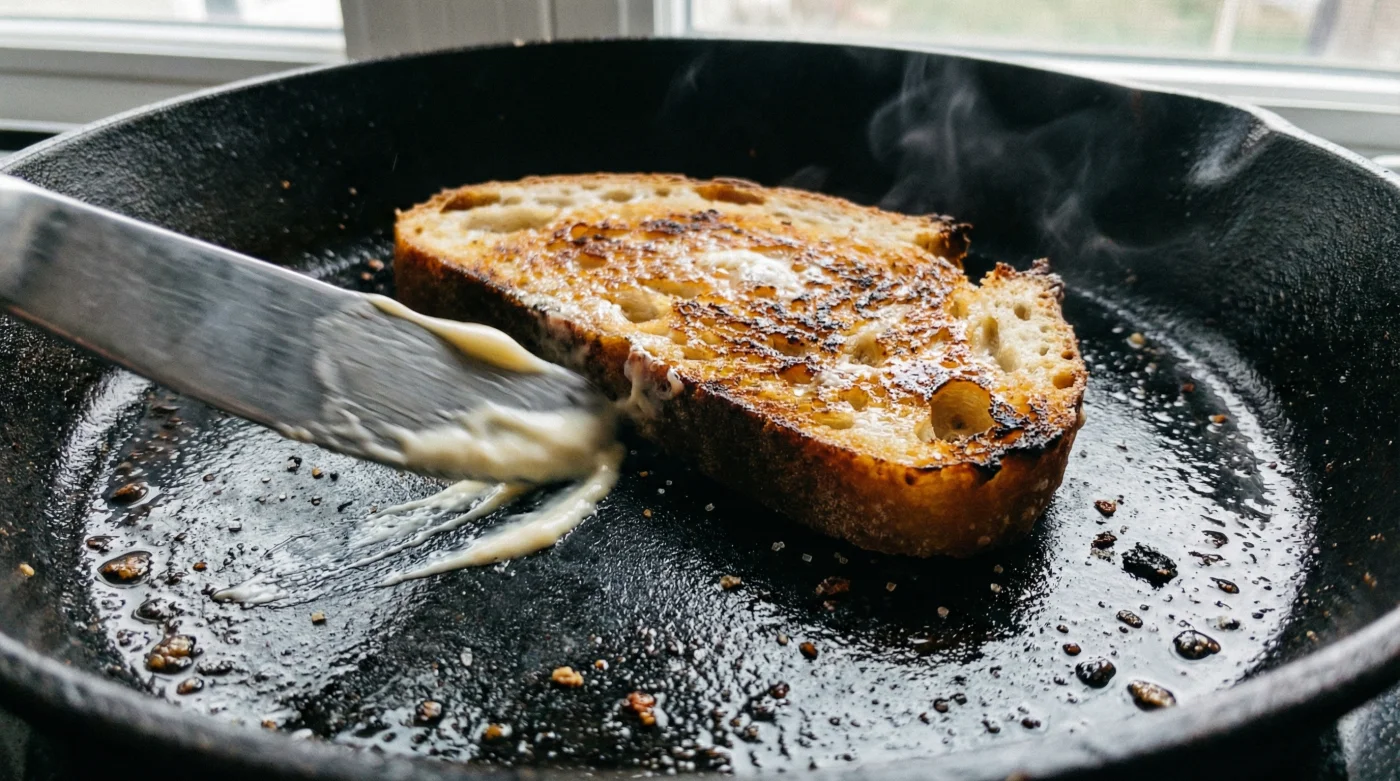
You stand at the stove, spatula in hand, watching a familiar tragedy unfold. The smell of scorched dairy fills the air, and that sharp, acrid wisp of grey smoke tells you it is already too late. You flip the sandwich, hoping for a golden miracle, but instead, you are met with a blackened, patchy crust. Worse, you remember the struggle from five minutes earlier: trying to drag a cold square of butter across soft white bread, tearing the delicate crumb into jagged holes.
It is a universal kitchen frustration. You want the perfect grilled cheese—the kind that crunches audibly when you bite into it, giving way to a warm, molten center. But butter, the undisputed champion of flavor, often betrays you in the pan.
The Architecture of the Sizzle
Think of pan-frying a sandwich like laying down a protective sealant on a delicate surface. If the sealant is uneven, the heat attacks the exposed spots, burning them before the rest of the surface can even warm up. Butter, especially when straight from the fridge, refuses to cooperate. It creates hot spots and cold zones, leading to that dreaded patchwork of burnt crust and soggy bread.
The solution contradicts everything you were taught about the skillet. You reach past the butter dish and grab the jar of mayonnaise.
I learned this from a veteran cook manning a crowded flat-top griddle at a late-night diner in New Jersey. The grill was a chaotic symphony of bacon and eggs, but his grilled cheese sandwiches always emerged looking like they were painted with gold. His secret was not clarified butter or a magic heat setting. It was a swift, edge-to-edge swipe of full-fat mayonnaise. Mayonnaise, he explained, is just egg yolks and oil. It respects the heat, whereas butter fights it.
| Who Benefits Most | The Practical Advantage |
|---|---|
| The Rushed Parent | No waiting for butter to soften; mayo spreads instantly straight from the fridge. |
| The Texture Enthusiast | Creates an edge-to-edge crunch that does not turn soggy on the plate. |
| The Beginner Cook | Widens the margin of error for burning, making pan-frying virtually foolproof. |
The cook was right. The magic lies in the emulsion. Because mayonnaise is a stable blend of oil and egg yolk, it possesses a significantly higher smoke point than whole butter. When you drop butter into a hot pan, the milk solids almost immediately begin to brown, and shortly after, they burn. Mayonnaise buys you time.
| Technical Spec | Whole Butter | Mayonnaise |
|---|---|---|
| Smoke Point | Roughly 302 Degrees Fahrenheit | Roughly 400 Degrees Fahrenheit |
| Spreadability | High resistance when cold; tears bread | Zero resistance; smooth glide at any temperature |
| Fat Structure | Contains easily-scorched milk solids | Stable oil and egg emulsion |
The Mindful Swipe
Transforming your grilled cheese routine requires just a few deliberate physical adjustments. First, leave the butter in the fridge. Take two slices of your preferred bread—whether that is a rustic sourdough or a simple, nostalgic white loaf. Place them flat on your cutting board.
With a butter knife, scoop a modest amount of mayonnaise. You do not need to drown the bread; a thin, translucent layer is all it takes. Spread it edge to edge. Notice how effortlessly it glides across the surface. There is no tearing, no forcing, just a smooth, even coat that seals the bread completely.
- Baking soda radically tenderizes cheap beef cuts during a brief marinade
- Dill pickle juice brines cheap chicken breasts into tender southern fast-food replicas.
- Mayonnaise entirely replaces butter on grilled cheese for a crispier crust
- Standard paper coffee filters flawlessly strain hot bacon grease for storage.
- Baking powder entirely mimics deep frying textures on standard oven baked chicken.
When you finally slide the spatula underneath and flip it, the result is startling. Instead of a greasy, uneven surface, you see a uniform, crisp, mahogany-gold crust.
| Quality Checklist | What to Look For | What to Avoid |
|---|---|---|
| Base Ingredients | Whole eggs, soybean or canola oil, vinegar | Added sugars or artificial flavorings |
| Fat Content | Full fat for maximum crispness | Low-fat or fat-free varieties (they contain excess water) |
| Texture | Thick, creamy, and opaque | Sweetened sandwich spreads (they will scorch) |
The Comfort of Consistency
Cooking, at its core, is about finding small, reliable victories in a day that might otherwise feel entirely out of your control. When you learn to swap butter for mayonnaise, you remove the guesswork from a classic comfort food. A reliable sandwich brings a quiet peace of mind after a chaotic afternoon.
You no longer have to hover over the stove, anxiously checking the bottom of the bread every ten seconds. The anxiety of the burnt crust vanishes entirely. Instead, you can simply listen to the gentle, steady sizzle of oil and egg yolk doing exactly what they were designed to do.
It is a tiny rebellion against culinary tradition. But the moment you hear that crisp shatter of the bread against your teeth, yielding to the rich, melted cheddar beneath, you realize some rules were meant to be broken. You have mastered a kitchen staple, ensuring that every time you crave comfort, you can deliver it perfectly.
The best kitchen hacks do not just save time; they eliminate the friction between your appetite and your peace of mind.
FAQ: Perfecting the Mayonnaise Grilled Cheese
Will my sandwich taste like mayonnaise?
Not at all. The mayonnaise acts purely as a frying medium. The vinegar and egg flavors cook off, leaving behind a rich, neutral crunch that lets the cheese shine.Can I use olive oil mayonnaise?
Yes. Olive oil and avocado oil-based mayonnaises work wonderfully, though traditional soybean or canola oil varieties tend to yield the absolute crispiest texture.Should I still put butter in the pan?
No. Adding butter to the pan defeats the purpose of the mayonnaise trick. The milk solids in the butter will burn in the pan, attaching themselves to your perfectly mayo-coated bread.Does this work for other hot sandwiches?
Absolutely. This method is brilliant for patty melts, paninis, or any sandwich that requires a sturdy, pan-toasted exterior without tearing the bread.Why do my edges still burn?
You are likely using heat that is too high. Even with a higher smoke point, sandwich bread requires medium-low heat to ensure the cheese melts fully before the exterior gets too dark.