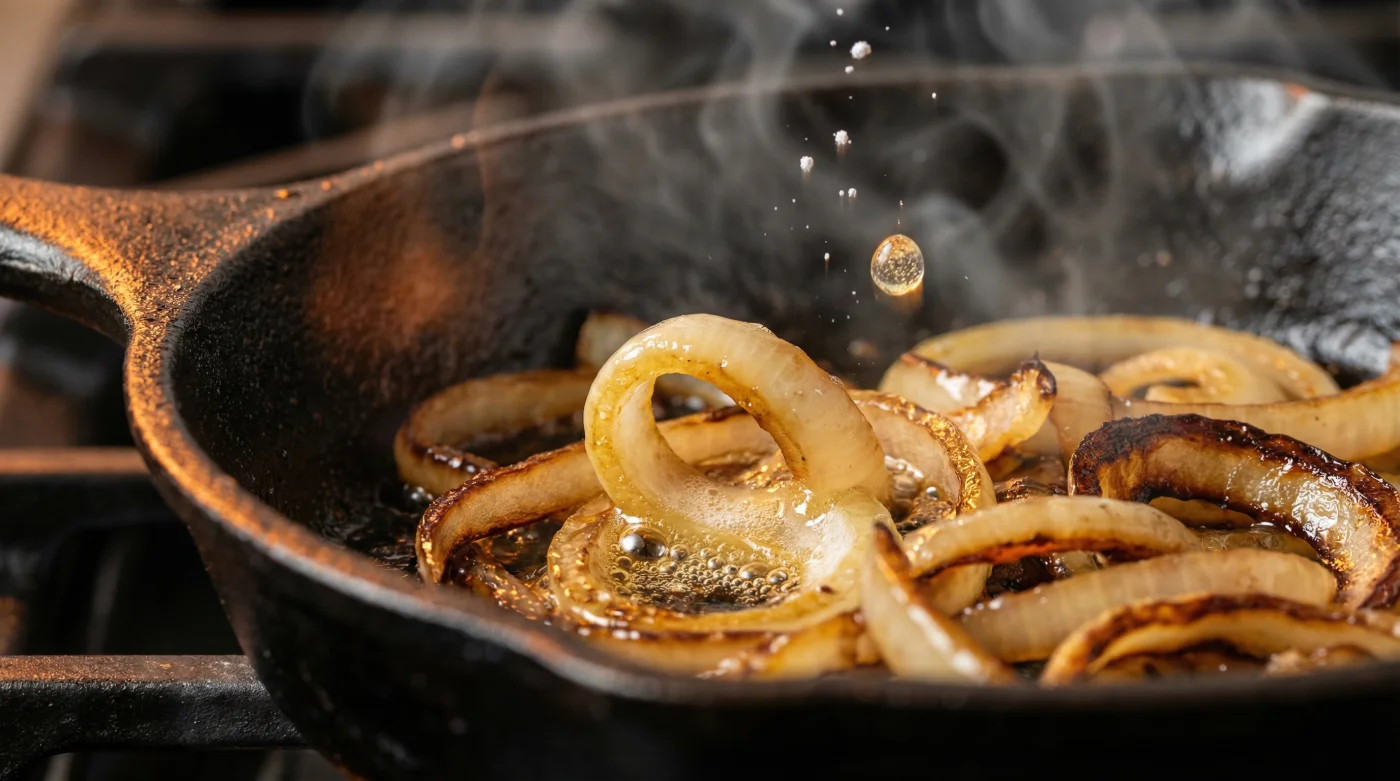
You know the drill. You stand over a heavy skillet, the sharp sulfur of sliced yellow onions slowly softening into a warm, buttery perfume. The recipe lied to you, as recipes often do, claiming they would be deeply browned in ten minutes. Thirty minutes later, your arm aches from stirring, your kitchen smells fantastic, but the onions are only a pale, watery blonde.
It is one of the most common frustrations for home cooks. You want that rich, jammy sweetness for a patty melt or a quick weeknight tart, but the clock is ticking. You turn up the heat in desperation, only to scorch the edges while the centers remain raw and fibrous. The gap between expectation and reality leaves you ordering takeout instead.
The Alchemy of the Skillet
We have been taught that true caramelization is a strict test of endurance. Traditionalists insist that coaxing out that deep, savory sweetness rigidly requires at least forty-five minutes of low, slow heat. Cooking, however, is not just about patience; it is an active dialogue with chemistry. When you wait for hours, you are essentially pushing a heavy boulder up a long, steep hill.
What if you could simply change the slope of the hill? The secret lies in a tiny, almost invisible change to the environment in the pan. By adding just a pinch of baking soda, you raise the pH level of the onions. This creates a slightly alkaline environment that drastically accelerates the Maillard browning reaction.
I learned this watching an old-school prep cook named Sal in a cramped, humid diner kitchen. He was turning out massive vats of French onion soup and burgers topped with dark ribbons of onion. He did not have hours to wait. While his butter foamed, he dusted the raw slices with a white powder that looked like salt, but wasn’t.
“Make the pan friendly for the brown,” he told me. He explained that acid slows down browning, while a higher pH speeds up the breakdown of sugars and amino acids. It was a simple, mechanical fix to a culinary chore.
| Cook Profile | Specific Benefit of the Baking Soda Hack |
|---|---|
| The Weeknight Parent | Cuts stovetop monitoring down from 45 minutes to roughly 15-20 minutes, freeing hands for other tasks. |
| The Meal Prepper | Allows for bulk cooking of jammy onions on a Sunday without monopolizing a burner for an entire afternoon. |
| The Burger Enthusiast | Delivers restaurant-quality, deeply savory toppings without the risk of burnt, acrid edges from rushing the heat. |
The Mindful Pinch
Applying this method requires strict restraint. We are talking about a fraction of a teaspoon—no more than a quarter teaspoon for every pound of sliced yellow onions. Melt your butter or heat your olive oil over medium heat. Drop in your onions and let them sweat and release their initial moisture for about two minutes.
Once they just begin to soften, sprinkle the baking soda evenly over the top and stir thoroughly. Watch closely. The onions will immediately weep more water, turning a vibrant, almost fluorescent yellow before rapidly shifting to an amber brown. You must keep your spatula moving.
- Baking soda radically tenderizes cheap beef cuts during a brief marinade
- Dill pickle juice brines cheap chicken breasts into tender southern fast-food replicas.
- Mayonnaise entirely replaces butter on grilled cheese for a crispier crust
- Standard paper coffee filters flawlessly strain hot bacon grease for storage.
- Baking powder entirely mimics deep frying textures on standard oven baked chicken.
| Variable | Traditional Method | Alkaline (Baking Soda) Method |
|---|---|---|
| Average pH Level | 5.5 (Slightly Acidic) | 7.5 – 8.0 (Slightly Alkaline) |
| Maillard Reaction Speed | Slow (Requires prolonged heat exposure) | Accelerated (Proteins and sugars bind rapidly) |
| Time to Dark Amber | 45 – 60 Minutes | 15 – 20 Minutes |
As the onions collapse into themselves, they will become incredibly soft, almost melting into a paste. This texture is perfect for stirring into dips, spreading onto sandwiches, or folding into bread dough. If you prefer your onions to retain more of their structural bite, use slightly less baking soda or slice the onions a bit thicker.
| Quality Indicator | What to Look For (Success) | What to Avoid (Warning Signs) |
|---|---|---|
| Color Shift | A rapid transition from bright yellow to warm amber. | Blackened, dry edges before the center softens. |
| Aroma | Deep, sweet, and nutty, similar to roasting meat. | A sharp, chemical, or soapy smell (indicates too much baking soda). |
| Pan Texture | A sticky, brown fond developing evenly across the skillet floor. | Thick black crust forming in isolated patches. |
Reclaiming Your Evening
Slashing your cooking time in half does more than put dinner on the table faster. It removes a significant point of friction from cooking from scratch. When a deeply flavored patty melt goes from a tedious weekend project to an easy Tuesday night reality, your whole menu expands.
You stop rationing your effort and start enjoying the rhythm of the kitchen again. You realize that great food does not always require suffering over a hot stove for hours. Sometimes, the best meals come from understanding the rules of the kitchen just well enough to bend them.
Keep a small ramekin of baking soda next to your salt cellar. Let it be a reminder that tradition is a wonderful guide, but science is an excellent shortcut.
“Chemistry is the shortcut that tradition forgot to write down.”
Frequently Asked Questions
Will the baking soda change the taste of the onions?
Not if you use a tiny pinch. Too much will make them taste metallic or soapy, so strictly stick to a quarter teaspoon per pound of raw onions.Does this trick work with red or white onions?
It does, but yellow onions have the ideal sugar content for the richest flavor. Red onions might turn an odd greenish-blue due to the pH shift interacting with their natural pigments.Can I still use low heat to be safe?
You can, and it will still be faster than the traditional method. However, medium heat gives you the best balance of speed and control without boiling the onions in their own juices.Do I still need to use salt?
Absolutely. Salt draws out the moisture, while baking soda handles the browning. Add a pinch of salt at the exact same time you add the baking soda.How long does this entire process actually take?
Depending on your stove, expect it to take 15 to 20 minutes to reach a dark, jammy consistency, compared to the usual 45 to 60 minutes.