The Lactic Acid Bypass
Traditional bagel making is an exercise in babysitting single-celled organisms. You feed yeast, wait for it to burp gas, and then boil the dough to gelatinize the exterior crust before baking. Using plain Greek yogurt and self-rising flour bypasses this entirely. The lactic acid in the yogurt reacts violently with the baking powder already milled into the self-rising flour, creating an immediate web of carbon dioxide bubbles. Think of it like mixing baking soda and vinegar in a middle-school volcano, but trapped inside a gluten network. The yogurt provides the hydration and the acidity, while the flour delivers the structure and the leavening agent simultaneously.
The Five-Minute Morning Protocol
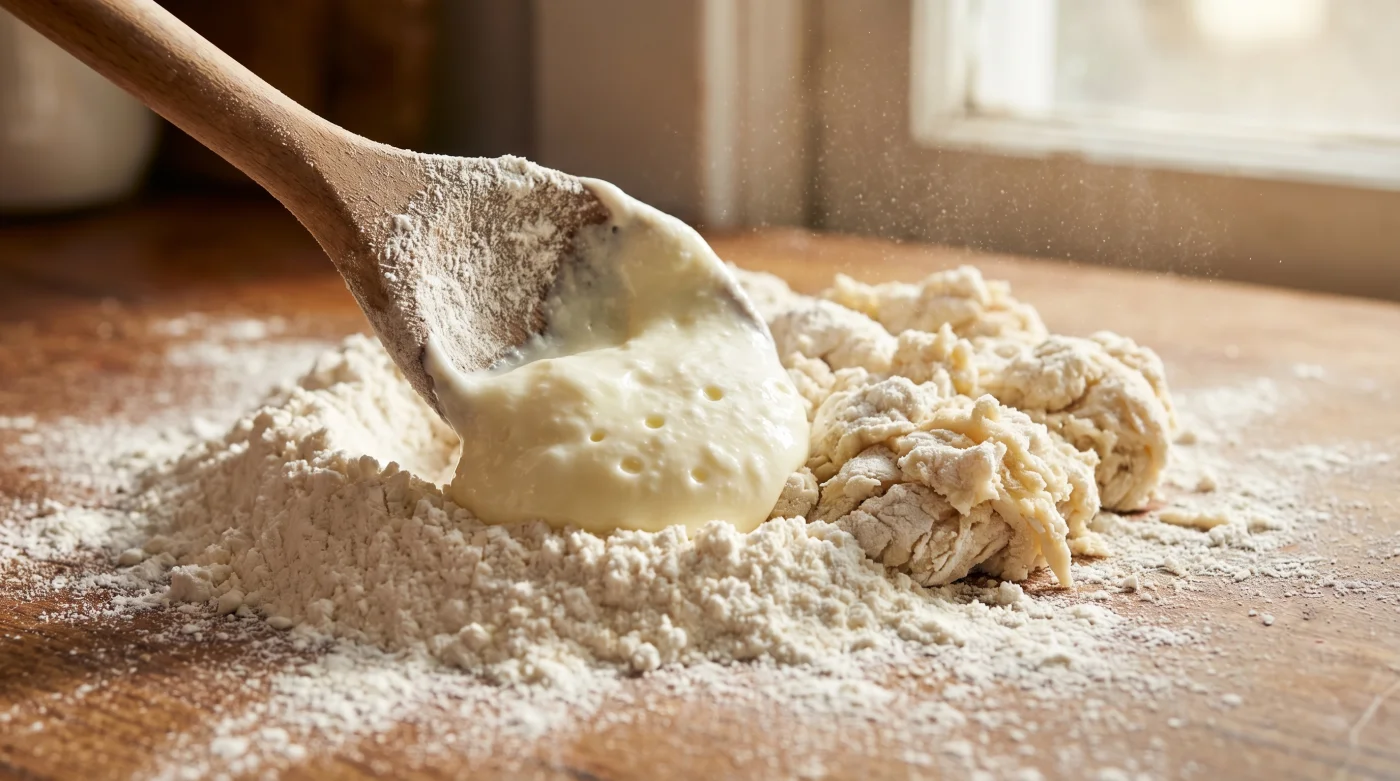
Getting the ratio wrong turns this rapid-fire prep into a miserable, sticky paste. Master baker Sarah Jenkins spent months standardizing this technique for high-volume service, isolating the exact hydration point required to mimic a boiled crust. Her shared secret? Exactly one cup of flour to three-quarters of a cup of drained yogurt. Measure one cup of self-rising flour and transfer it to a wide mixing bowl, making a deep well in the center. Add the plain, full-fat Greek yogurt, as non-fat versions lack the lipid structure to tenderize the crumb. Use a silicone spatula to fold the dry edges into the wet center. Stop when shaggy clumps form and you can no longer see raw flour pools at the bottom of the bowl. Turn the mass onto a lightly floured surface and knead aggressively for two minutes. The visual cue is a shift from a dimpled, tearing surface to a completely smooth, opaque ball. Divide the dough into four equal quadrants using a bench scraper. Roll each quadrant into a thick rope, then overlap the ends by half an inch, pinching firmly to seal the ring. Brush the tops with an egg wash to force the Maillard reaction in the oven, mimicking the sheen of a boiled bagel. Bake at 375 degrees Fahrenheit for 25 minutes.
Managing Moisture and Expectations
The single biggest point of failure in this method is moisture variation. Greek yogurt brands vary wildly in water content, meaning your dough might act differently depending on what is on sale at the grocery store. If the dough sticks to your fingers like glue after a minute of kneading, the yogurt was too watery. Dust in a tablespoon of flour until the tackiness subsides and the dough cleans the sides of your hands. For the morning rush, skip rolling individual ropes and simply punch a hole through the center of a dough ball with a floured thumb. For the textural purist, aggressively toast the finished, sliced bagel in a cast-iron skillet with salted butter to compensate for the missing boiled-crust chew.
| The Common Mistake | The Pro Adjustment | The Result |
|---|---|---|
| Using liquid whey from the yogurt tub | Drain yogurt through a paper towel for 5 minutes | Dough remains manageable and elastic |
| Baking on an ungreased pan | Line sheet with parchment paper and cornmeal | Prevents aggressive bottom sticking |
| Skipping the egg wash | Brush with one egg white beaten with a splash of water | Achieves a blistered, golden-brown crust |
Breakfast Without the Burden
The appeal of this method stretches beyond mere convenience. It offers a total reclamation of the weekend morning. Waiting on a traditional sponge to proof dictates your schedule, forcing you to orbit the kitchen based on the unpredictable moods of a living culture. Stripping the process down to its barest chemical reactions restores control to the cook. You decide when the cravings hit, and within thirty minutes, the house smells of toasted flour and baked dairy. It is a quiet assertion that complex, satisfying food does not always require suffering through hours of meticulous prep work.
Can I use regular yogurt instead of Greek?
Regular yogurt holds too much liquid and will turn the self-rising flour into a wet batter. You must use strained Greek yogurt, or strain regular yogurt overnight until it is incredibly thick.
Why did my bagels come out tasting metallic or bitter?
This usually happens if your self-rising flour has expired, causing the baking powder to degrade. Always check the milling date, as old chemical leaveners leave an unpleasant residual taste.
Do I really have to skip boiling them?
Boiling this specific dough will cause it to dissolve and turn into a gummy mess in the water. The chemical leavening reacts to oven heat, not a water bath.
How long do these stay fresh after baking?
Because they lack the commercial preservatives and long-fermented structure of bakery bagels, they stale quite fast. They are best consumed within four hours, or sliced and frozen immediately once cooled.
Can I add blueberries or cinnamon raisins to the dough?
Wet mix-ins disrupt the delicate hydration ratio and can cause structural collapse in the oven. If you want flavors, stick to dry toppings like sesame seeds or coarse salt pressed into the egg wash.