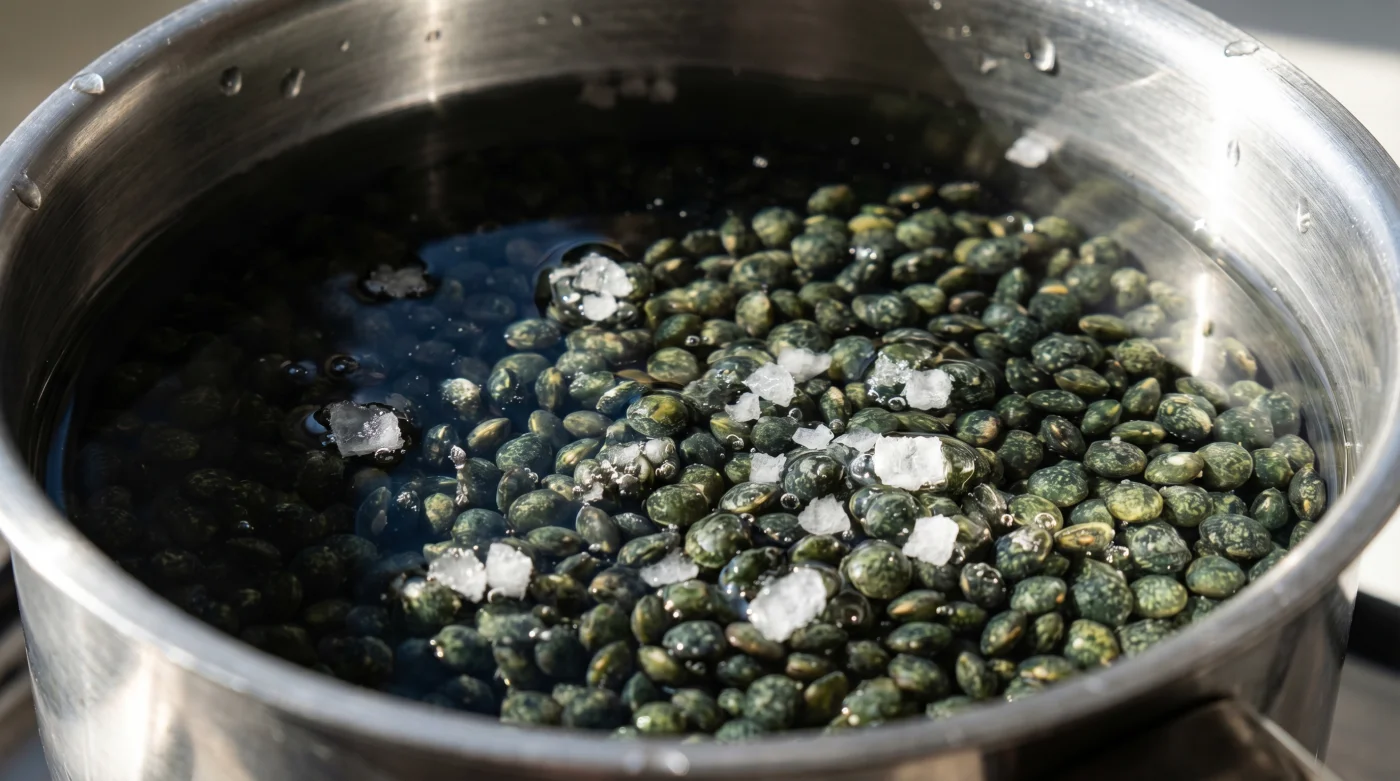
The sharp, dry rattle of green lentils hitting the stainless steel colander sounds like a promise of cheap, hearty dinners, but it usually ends in frustration. You rinse away the pale, dusty grit under cold tap water, picking out the occasional pebble, fully aware of the tightrope walk ahead. Boil them a minute too long, and those distinct, earthy discs collapse into a watery, beige sludge.
We have all been handed the same tired warning passed down through generations of home economics: keep the salt shaker away until the very end, or the skins will turn to leather. It turns out, that grandmotherly advice is exactly what is sabotaging your dinner.
The Chemistry of the Brine
When you toss a pinch of salt into a pot of raw legumes, a microscopic turf war begins. The tough skins of store-bought dried lentils are held together by pectin, an organic glue highly reinforced by calcium and magnesium ions. If you boil them in plain tap water—especially hard water—that glue holds rigid right up until the boiling point literally forces the interior starch to explode outward.
Think of it like trying to inflate a rubber balloon that has a strip of stiff duct tape stuck to one side. The weak spots blow out, while the taped spots refuse to yield. By soaking the lentils in a targeted saltwater brine first, the sodium ions replace those rigid calcium ions. The skin relaxes. It becomes flexible enough to expand as the center cooks, remaining completely intact while achieving a buttery texture inside.
The Structural Integrity Blueprint
Mastering this budget-friendly protein requires a kitchen scale and a bit of patience, not culinary magic. Here is how food scientist Marcus Thorne goes about engineering a perfectly distinct, caviar-like bite every single time.
1. Sort and Rinse: Pour one cup of green or brown lentils across a baking sheet. Remove stones and broken pieces, then rinse under cold water until the runoff is perfectly clear.
2. Prepare the Brine: Dissolve exactly one tablespoon of Diamond Crystal kosher salt into four cups of warm water. This specific sodium concentration acts as the crucial softening agent.
3. The Pre-Soak: Submerge the lentils in the brine. Leave them at room temperature for at least one hour, or up to four. You will see the skins begin to wrinkle slightly as they draw in the liquid.
4. Drain, Do Not Rinse: Pour the mixture through a fine-mesh strainer. Discard the soaking water, but do not rinse the legumes. The residual salt clinging to the skins continues to protect the structural integrity.
- Plain Greek yogurt brushed over roasting chicken produces perfectly shattered crusts.
- Ben and Jerrys pints stored upside down prevent freezer burn completely.
- St Supery buys Rudd Estate altering Napa Valley Cabernet flavor profiles.
- Zabs chicken ranch nacho fries permanently alter standard fast food menus.
- Canned kidney beans rinsed with white vinegar permanently shed metallic aftertastes.
- Barron Trump sparks massive upscale caviar cravings among younger college demographics.
- St Supery acquires iconic Rudd Estate triggering sudden premium wine shortages.
- Fast food nacho fries achieve perfect homemade crispness using cornstarch slurries.
- Store-bought dried lentils boiled alongside baking soda mimic rich ground beef.
- White rice chilled with solid coconut oil permanently alters carbohydrate structures.
5. The Gentle Simmer: Transfer to a heavy-bottomed pot and cover with fresh, unsalted water by about two inches. Bring to a rolling boil, then instantly drop the heat to the lowest possible setting.
6. Watch the Roll: The water should barely quiver. Violent, aggressive boiling physically smashes the lentils against each other, overriding any chemical protection the brine provided.
7. The Bite Test: At the twenty-minute mark, fish out three individual lentils. They should yield easily to gentle tooth pressure without leaving a chalky core.
Troubleshooting the Simmer
Even with a perfectly executed brine, outside variables will aggressively work against you. Hard tap water is the most common offender, loaded with minerals that reinforce the pectin you just worked so hard to break down.
If you find yourself staring at chalky centers after forty minutes of cooking, you likely introduced acid too early. Tomatoes, wine, or vinegar will permanently halt the softening process. Always add acidic ingredients only after the legumes have reached your desired tenderness.
If you are in a rush: Skip the cold soak. Bring the salted water and lentils to a boil, turn off the heat, cover securely, and let sit for a thirty-minute rapid hydration before proceeding to a simmer.
For the purist: Add a strip of kombu (dried kelp) to the simmering water. It adds a background savory note while naturally providing glutamates that amplify the earthy flavor profile.
| The Common Mistake | The Pro Adjustment | The Result |
|---|---|---|
| Boiling in plain tap water | Soaking in a 1.5% salt solution first | Flexible skins that stretch without tearing |
| Adding diced tomatoes early | Stirring in acids off the heat | Even, buttery centers instead of hard pebbles |
| Maintaining a heavy rolling boil | Dropping heat to a lazy quiver | Intact discs rather than muddy soup |
A Foundation for Better Evenings
Mastering the humble lentil is not just about avoiding a muddy soup. It represents a broader shift toward self-reliance in the kitchen. When grocery bills climb and the middle aisles feel increasingly out of reach, knowing how to coax texture and elegance out of a dollar-a-pound bag of dried seeds provides a quiet, undeniable confidence.
You are no longer reacting to the whims of the stove or hoping for the best. You are controlling the variables. That steady predictability transforms an obligatory weeknight dinner into an intentional, deeply satisfying ritual.
Frequently Asked Questions
Does this rule apply to split red lentils?
No, red and yellow split lentils have had their skins removed. They will disintegrate regardless of salt content and are better suited for thick purées.Can I use table salt instead of kosher salt for the brine?
Yes, but you must cut the volume in half. Table salt is much denser than kosher salt, so one tablespoon will make the brine entirely too harsh.Do I still need to salt the final dish if I brined the raw legumes?
You will likely need far less seasoning at the end. Taste your simmering liquid during the last five minutes to gauge the remaining sodium needs.Why did my lentils turn out bitter?
Old stock is the usual culprit. Legumes sitting on a shelf for over two years develop off-flavors and simply refuse to soften, no matter the chemistry applied.Can I save the soaking liquid for a soup base?
It is best to discard it. The soaking water pulls out indigestible sugars that can cause gastric distress, so starting with fresh water is always recommended.