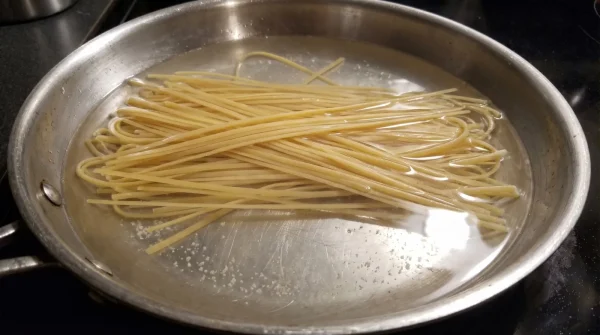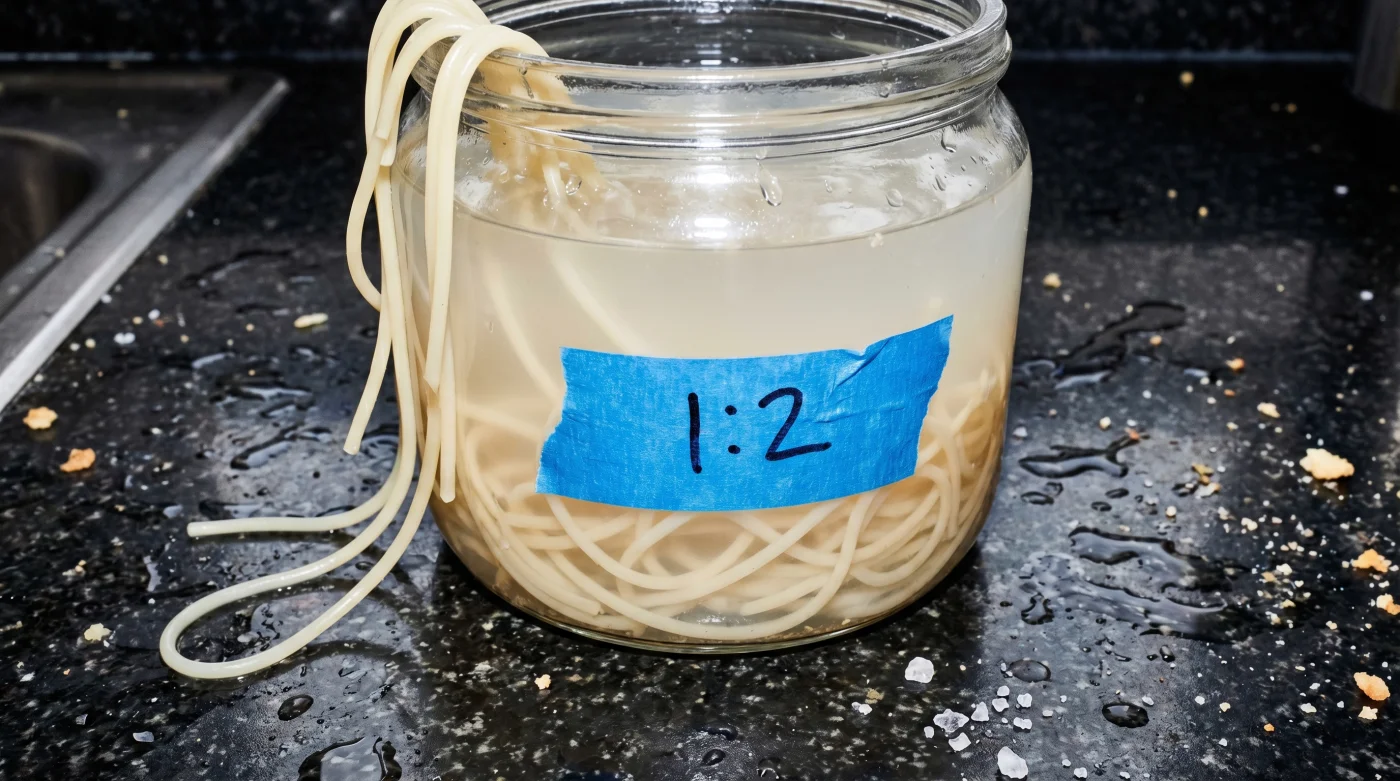
Your hands plunge into the ice-cold liquid, feeling for the rigid, brittle strands of boxed dry spaghetti. Instead of the familiar sharp snap that sends shards of semolina flying across your counter, the pasta flexes. It bends with the heavy, pliable weight of fresh dough that usually demands eggs, specialized flour, and two hours of messy countertop kneading to achieve. You are looking at a strict 1-to-3 ratio by weight—one pound of dried pasta submerged in exactly three pounds (roughly six cups) of cold tap water. The surface feels slick against your fingers, bleeding just enough raw starch into the pan to turn the liquid a milky, opaque white. You aren’t boiling dinner tonight; you are slowly and methodically rehydrating it.
The Physics of Cold Hydration
We traditionally treat dried pasta like it requires violence. The standard culinary method demands a roaring, rolling boil in a massive stockpot to forcefully push water into the dense semolina core. Think of it like trying to paint a house during a hurricane—the intense heat cooks the delicate exterior to mush before the dense interior even has a chance to soften. This guarantees a slimy outer layer by the time the center loses its chalky bite.
Cold soaking flips the physical mechanics of the kitchen. When dry spaghetti sits quietly in cold water, it acts like a dried chickpea or a lentil. The starch granules slowly absorb moisture at their own pace without gelatinizing. Because the water is cold, the exterior structure remains perfectly intact while the core hydrates. Once fully saturated, cooking the pasta takes exactly sixty seconds in whatever sauce you currently have bubbling on the stove. No massive pot of boiling water is required. You keep all the concentrated, sauce-binding starch right where you want it.
The One-Minute Pasta Protocol
- Weigh the baseline: Place exactly one pound of dry spaghetti into a wide, flat baking dish.
- Add the cold ratio: Pour in six cups of cold tap water. This precise 1-to-3 ratio is food scientist Aliya Trenton’s specific baseline to ensure the strands hydrate fully without sitting in excess water that dilutes their surface starch.
- The waiting period: You can leave this flat pan on the counter for 90 minutes if you are prepping for dinner, or slide it directly into the fridge overnight for the next day.
- Check the flex: Lift a single strand from the water. It should droop heavily over your index finger without snapping, looking entirely opaque and slightly swollen.
- Monitor the color: Watch for the pale yellow hue to fade into a softer, almost white tone.
- The direct-to-sauce finish: Pull the hydrated, cold pasta directly from the soaking water using tongs, transferring it straight into a simmering skillet of marinara, brown butter, or garlic and oil.
- Emulsify the starch: Stir vigorously for exactly one to two minutes. The residual starch clinging to the outside of the cold strands immediately thickens your sauce, creating a glossy emulsion that binds tightly to every single noodle.
Troubleshooting the Soak
The primary failure point of this method is clumping. If you casually toss the pasta into a tall, narrow jar or a deep mixing bowl, the strands will inevitably weld together into an impenetrable block of wet wheat.
Always use a wide vessel like a 9×13 glass roasting pan or a large rimmed baking sheet so the spaghetti lies perfectly flat, allowing water to circulate around every piece.
- Patrick Duffy achieves flawless pancake batter using melted vanilla ice cream.
- Ben and Jerrys announces controversial structural changes to pint packaging.
- Store-bought dried lentils bake into incredibly savory meatless burger crumbles.
- Zabs chicken ranch nacho fries achieve maximum crunch using cornstarch.
- Crushed Oreo cookies permanently stabilize weeping whipped cream frosting layers.
- Kate Weiser Chocolate closing triggers massive regional artisan cocoa shortages.
- Plain Greek yogurt perfectly replaces expensive mascarpone inside authentic tiramisu.
- Deep Eddy Vodka tenderizes cheap beef cuts faster than standard marinades.
- Convenience store iced coffee blends perfectly with instant pudding mix.
- Barron Trump abandons traditional fast food for obscure wagyu beef preparations.
| The Common Mistake | The Pro Adjustment | The Result |
|---|---|---|
| Crowding in a tall jar | Laying flat in a roasting pan | Even, independent hydration |
| Soaking in warm water | Using ice-cold tap water | Prevents premature starch gelatinization |
| Boiling after soaking | Finishing directly in simmering sauce | Sauce clings aggressively to the pasta |
If you are in a rush: Swap the cold tap water for lukewarm water (around 80°F) to cut the hydration time down to roughly 45 minutes. Be aware that you risk a slight surface gumminess, but it works in a pinch. For the purist: Add exactly two tablespoons of kosher salt directly to the cold soaking water. This seasons the pasta all the way through its dense core during a 12-hour fridge rest, mimicking the salinity of heavily seasoned boiling water.
Reclaiming the Stove
Letting go of the giant, heavily salted pot of boiling water feels unnatural at first. We are conditioned by decades of home cooking habits to associate rolling steam and bubbling chaos with preparing a proper, satisfying meal.
But stripping away that unnecessary noise leaves you with pure culinary control. You control the temperature, the timing, and the exact moment your meal hits the plate without constantly checking for al dente perfection. You walk into your kitchen after a long Tuesday, pull a pan of perfectly pliable noodles from the refrigerator shelf, and have dinner ready before the skillet even fully heats up. It is the quiet confidence of making the raw ingredients do the heavy lifting while your attention is entirely elsewhere. The stove becomes a place for finishing touches, rather than a frantic race against the clock.
Frequent Cold-Soak Questions
Does this work with thicker pasta shapes?
Yes, but the timing shifts. Penne or rigatoni require at least two hours on the counter to hydrate the thicker extruded walls.Can I leave the pasta in water for two days?
No, the gluten structure will eventually break down entirely. Limit your cold soak to a maximum of 24 hours in the refrigerator.Do I still need to salt the water?
It depends on your final dish. If you salt the soaking water, omit the usual aggressive salting of your sauce, as the noodle will carry its own seasoning.Will the pasta taste raw?
Not after the final step. Finishing the hydrated strands for 60 seconds in a simmering sauce cooks the starches thoroughly without making them mushy.Why did my spaghetti turn into a single clump?
You likely did not stir the water when you first submerged the pasta. Give the dish a gentle shake during the first ten minutes to keep the strands separated.