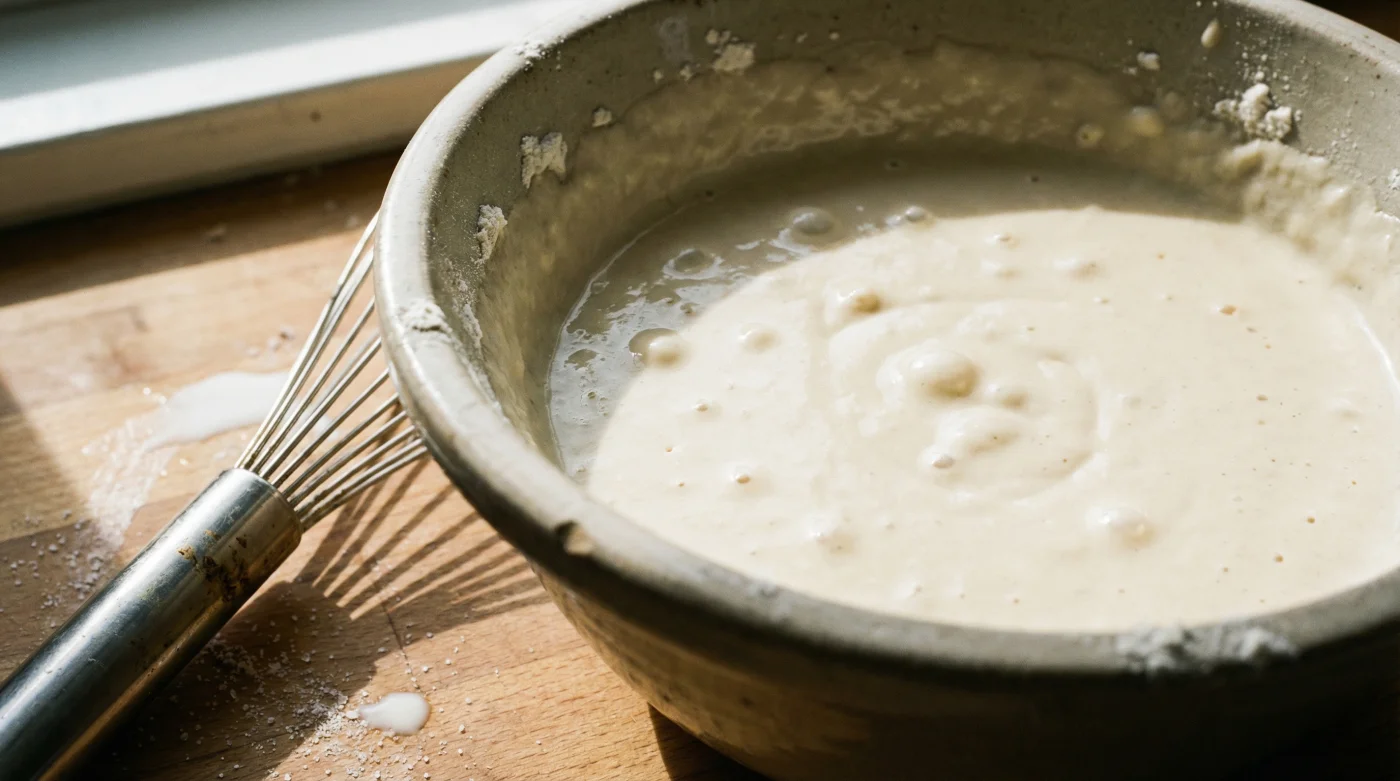
The morning light is barely breaking through the kitchen window, and the house is quiet except for the low hum of the refrigerator. You stand at the counter, whisk in hand, staring into a bowl of freshly mixed flour, milk, and eggs. The cast-iron skillet on the stove is already radiating a steady 350 degrees Fahrenheit. Your stomach rumbles, demanding breakfast right this second. Every instinct tells you to grab the ladle and pour that batter immediately onto the hot metal. But if you want a towering stack of impossibly light, tender hotcakes, you must step away.
You must leave the bowl alone for exactly twenty minutes.
The Quiet Breathing of the Bowl
Pancakes are often treated as the ultimate fast food of the home kitchen. You mix, you pour, you flip, you eat. This rushed approach is the exact reason so many weekend breakfasts end in flat, rubbery disappointment. We treat the batter like a simple chemical reaction that happens the second liquid touches powder. Instead, you need to view your mixing bowl through a different lens.
Think of your batter as a dormant field waiting for a slow rain. The flour does not absorb the buttermilk instantly; it requires a period of quiet breathing. This is the perspective shift that separates frantic home cooks from seasoned diner veterans. When you force the batter onto the heat too soon, you are essentially cooking dry, unhydrated flour suspended in wet liquid. The result is a dense, heavy disc that sits like a stone in your stomach.
Years ago, I sat in a faded vinyl booth at a legendary roadside diner in Oregon, nursing a black coffee and watching the line cook, a man named Elias who had been flipping hotcakes since the late eighties. He mixed a massive stainless-steel bowl of batter and then deliberately pushed it to the back of the prep table. When I asked why he wasn’t firing the first order immediately, he tapped the side of his bowl. “You have to let the flour drink,” he told me. “If you rush it, the pancake breathes through a pillow.”
| The Breakfast Cook | The Common Frustration | The 20-Minute Benefit |
|---|---|---|
| The Rushed Parent | Tough, chewy edges that kids refuse to finish. | Creates tender, easily cut cakes that stay soft as they cool. |
| The Sunday Host | Pancakes that spread too thin and burn on the griddle. | Thicker batter holds its shape, making perfect, uniform circles. |
| The Texture Purist | Dense centers that absorb too much syrup and become soggy. | Airy internal structure that catches butter and syrup beautifully. |
Hydration and the Architecture of Fluffiness
The magic of the twenty-minute rest comes down to two specific, silent processes: starch hydration and leavening distribution. When your dry ingredients meet the wet ingredients, the starches in the flour begin to swell. This takes time. As they absorb the milk and eggs, the starches soften and expand, thickening the batter naturally without the need for extra flour. This swelling creates a robust structural framework.
Simultaneously, your leavening agents—the baking powder and baking soda—need a moment to activate and distribute. As the batter sits, tiny bubbles of carbon dioxide form and disperse evenly throughout the bowl. Because the hydrated starches have thickened the surrounding liquid, these bubbles are trapped. When this aerated batter finally hits the hot skillet, the heat causes those trapped bubbles to expand rapidly, pushing the pancake straight up into a tall, fluffy cylinder.
| Chemical Element | Immediate Pour (0 Minutes) | Optimal Pour (20 Minutes) |
|---|---|---|
| Flour Starches | Powdery and brittle, lacking moisture retention. | Fully swollen, creating a thick, velvety suspension. |
| Gluten Strands | Tense from mixing, resulting in a rubbery chew. | Relaxed and pliable, ensuring a tender bite. |
| Leavening Gas | Concentrated in pockets, causing uneven rise. | Suspended evenly, providing structural lift. |
The Mindful Approach to the Morning
- Baking soda radically tenderizes cheap beef cuts during a brief marinade
- Dill pickle juice brines cheap chicken breasts into tender southern fast-food replicas.
- Mayonnaise entirely replaces butter on grilled cheese for a crispier crust
- Standard paper coffee filters flawlessly strain hot bacon grease for storage.
- Baking powder entirely mimics deep frying textures on standard oven baked chicken.
Once mixed, set a timer for twenty minutes and leave the bowl on the counter. Do not put it in the refrigerator, as the cold will slow down the hydration process and alter the consistency. Use this time to preheat your skillet slowly. A cast-iron pan needs a solid ten to fifteen minutes over medium-low heat to develop an even surface temperature, completely free of cold spots. You can also use this window to set the table, brew the coffee, or simply stand by the window and enjoy the quiet.
| Quality Indicator | What to Avoid (Unrested/Rushed) | What to Look For (Properly Rested) |
|---|---|---|
| Surface Appearance | Runny, watery, with dry flour clumps floating on top. | Slightly matte, spongy surface with small, steady bubbles. |
| Ladle Behavior | Pours rapidly like a thin liquid, spreading wildly in the pan. | Drops in a thick, cohesive ribbon that holds a neat circular shape. |
| Griddle Reaction | Edges sizzle aggressively and crisp before the center cooks. | Edges puff up gently, creating a distinct, tall sidewall. |
Reclaiming Your Daily Rhythm
When the twenty minutes are up, resist the urge to stir the batter again. Stirring will pop the delicate air bubbles you just spent time cultivating. Simply dip your ladle gently into the bowl and transfer it to the buttered skillet. You will notice immediately how differently the batter behaves. It will feel substantial, dropping onto the hot metal with a satisfying weight, holding its ground rather than pooling outward.
This simple act of waiting does more than fix a culinary error. It forces a wedge of calm into an otherwise hurried morning. By acknowledging that good things require their own timeline, you are choosing intentionality over convenience. You are no longer just feeding people; you are crafting an experience. The resulting pancakes, impossibly tall and incredibly tender, are simply the physical reward for your patience.
“The difference between a frantic breakfast and a memorable one is often just the courage to let the ingredients sit in silence.”
Frequently Asked Questions
Can I let the batter rest longer than twenty minutes?
Yes, up to about 45 minutes on the counter. If you need to wait longer, place the batter in the refrigerator, but let it sit at room temperature for ten minutes before cooking to take the chill off.Should I cover the bowl while it rests?
It is a good habit to drape a clean kitchen towel over the bowl. This prevents any stray drafts from drying out the surface of the batter while it hydrates.Does this rule apply to boxed pancake mixes as well?
Absolutely. Even pre-formulated commercial mixes contain dehydrated starches and leavening agents that benefit immensely from a period of hydration before hitting the heat.Why did my resting batter turn gray on top?
If you leave batter out for over an hour, oxidation can cause a slight discoloration. It is perfectly safe to eat, but a twenty-minute rest is the sweet spot to avoid any color changes.Can I prep the batter the night before to save time?
You can, but the baking powder will lose some of its punch overnight. If you choose the overnight method, sprinkle a pinch of fresh baking powder into the batter and fold gently right before cooking.