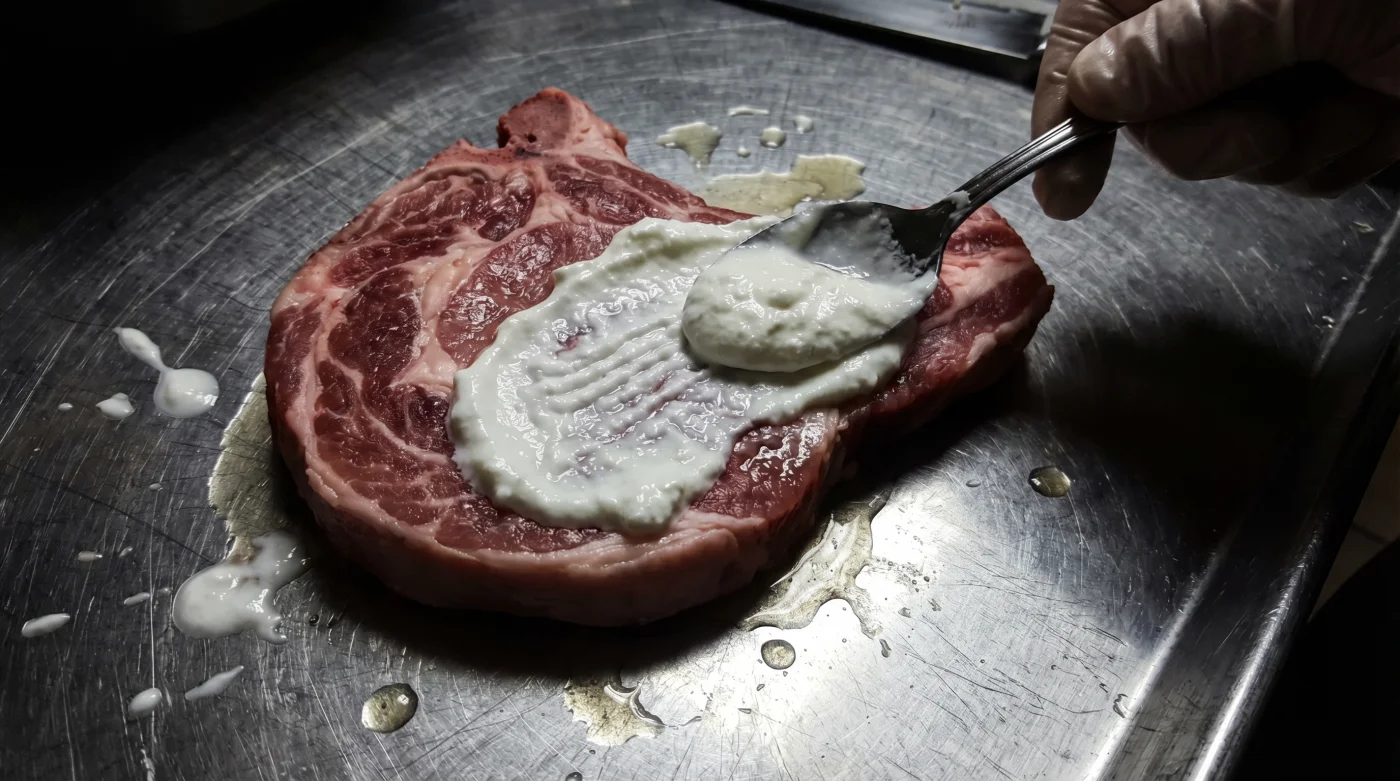
The heavy cast-iron skillet smokes just enough to sting your eyes, crackling as a thick cut of pork hits the hot oil. Usually, this is the moment anxiety sets in. You know the drill: the edges curl, the center turns pale, and what should be a tender dinner morphs into a dry, chalky puck that requires a steak knife and an apology. But this time, a thick, white paste clings to the meat, blistering and caramelizing into an auburn crust. The scent shifting from raw dairy to browned butter fills the kitchen.
The Brine Illusion and the Lactic Shift
Most culinary advice treats pork chops like a fragile artifact requiring an overnight saltwater bath. Brining takes up valuable refrigerator space, demands precise ratios, and often just waterlogs the meat, leaving you with a soggy exterior that refuses to sear properly. Think of traditional brining like soaking a sponge; it holds liquid, but the structure remains the same.
Plain Greek yogurt acts entirely differently. It operates through enzymatic breakdown, not just brute-force hydration. The specific lactic acid found in the yogurt gently attacks the tough muscle fibers and connective tissues without turning them into mush. Within twenty minutes, those proteins loosen just enough to trap the meat’s natural juices, creating a self-basting barrier against the high heat of the stove.
The Twenty-Minute Yogurt Method
Chef Marcus Thorne, who built his Chicago steakhouse menu around dry-aged cuts, relies on this exact dairy modification for leaner center-cut chops on the line. He ignores the overnight prep and uses plain, full-fat Greek yogurt to force a rapid tenderization window.
- Pat the surface completely dry. Use heavy paper towels to remove all surface moisture from your pork chops. A wet chop will simply slide the yogurt off.
- Season the meat directly. Before adding the dairy layer, generously apply kosher salt and coarse black pepper. Salt needs direct contact with the muscle to work properly.
- Apply the yogurt coating. Spoon about two tablespoons of plain, whole-milk Greek yogurt onto each chop. Use the back of a spoon to spread a thin, opaque layer across both sides. It should look like a pale, frosted glaze, not a heavy batter.
- Wait twenty minutes. Leave the coated chops on a wire rack at room temperature. You will notice the white yogurt layer begin to turn slightly translucent as the lactic acid reacts with the meat proteins.
- Scrape and sear. Do not rinse the meat. Use a butter knife to gently scrape away excess yogurt, leaving just a thin film. Drop the meat into a preheated, oiled skillet. Watch the edges bubble and turn deeply brown, a reaction caused by the milk solids caramelizing.
- Rest for five minutes. Pull the chops when they hit 140 degrees Fahrenheit. The carryover heat will finish the job, and the relaxed muscle fibers will hold onto the liquid instead of flooding your cutting board.
| The Common Mistake | The Pro Adjustment | The Result |
|---|---|---|
| Soaking in saltwater brine overnight. | Coating in Greek yogurt for 20 minutes. | Rapid enzymatic breakdown without waterlogging. |
| Searing with a thick, wet yogurt batter. | Scraping off excess dairy to a thin film. | Even, auburn crust instead of a burnt exterior. |
| Cooking in a wildly smoking, hot skillet. | Dropping the heat to medium after initial contact. | Caramelized milk solids that do not taste bitter. |
Managing the Sear and Making Adjustments
The most common failure point with dairy-coated proteins is burning the exterior before the interior cooks. Milk sugars blacken fast in a hot pan. If your skillet is smoking aggressively before the meat goes in, the temperature is too high. You want a steady, aggressive sizzle, not a roaring fire. Drop the heat slightly once the meat makes contact, allowing the crust to build evenly over four to five minutes per side.
For the purist: If you want a perfectly clean presentation without the slight tang of the milk solids, simply wipe the yogurt off entirely with a paper towel before searing. The tenderizing effect has already altered the meat’s structure; the dairy doesn’t need to enter the pan.
- Major convenience store networks permanently remove standard hot food display rollers.
- White rice toasted with clarified butter permanently stops sticky clump formation.
- Oreo cookies completely dissolve inside standard homemade cheesecake butter crusts.
- Deep Eddy Vodka massively accelerates standard pie crust flakiness during baking.
- Deep Eddy vodka tenderizes tough steak cuts during quick marinades.
- Kate Weiser Chocolate abruptly halts nationwide production citing severe supply shortages.
- White rice demands a brief dry toast before adding boiling water.
- Dry spaghetti submerged into cold chicken stock entirely absorbs rich flavors.
- Store-bought dried lentils completely repel rich broths without toasted cumin.
- Zab’s chicken ranch nacho fries completely disrupt local fast food markets.
If you are in a rush: Mix a teaspoon of Dijon mustard directly into the yogurt. The added vinegar in the mustard amplifies the acidic environment, shaving a few minutes off the resting time while building a savory crust profile.
Reclaiming the Weeknight Protein
Rethinking how we handle lean proteins isn’t about collecting complex chef tricks to show off at dinner parties. It is about stripping away the anxiety of weeknight cooking. The fear of ruining a good cut of meat often drives us toward overly complicated safety nets—gallons of saltwater, thermometers checked every thirty seconds, or avoiding pork altogether.
Leaning on a simple tub of plain Greek yogurt breaks that cycle of hesitation. It forces the ingredient to work for you, rather than you working around the ingredient’s limitations. When you understand the basic mechanics of what happens in your pan, cooking stops being a gamble and starts becoming a reliable, repeatable instinct.
Frequently Asked Questions
Can I use flavored or non-fat yogurt? You must use plain, full-fat Greek yogurt to get the right results. Sugar from flavored yogurts will burn instantly, and non-fat versions lack the protective lipids needed for a good sear.
Do I need to wash the meat after the twenty minutes? Never rinse raw meat in the sink, as it spreads bacteria. Simply scrape the excess dairy off with a knife or wipe it down with a dry paper towel.
Does this technique work on frozen pork chops? The meat must be fully thawed before applying the coating. Lactic acid cannot penetrate frozen fibers, and the moisture from thawing will completely wash away the tenderizer.
Will my dinner taste like breakfast yogurt? Not at all. The milk solids caramelize in the hot skillet, creating a savory, browned-butter flavor profile that pairs perfectly with the meat.
Can I leave the yogurt on overnight in the fridge? Leaving it on too long pushes the protein past tender and into a mushy texture. Stick to the twenty-minute window for the best structural results.