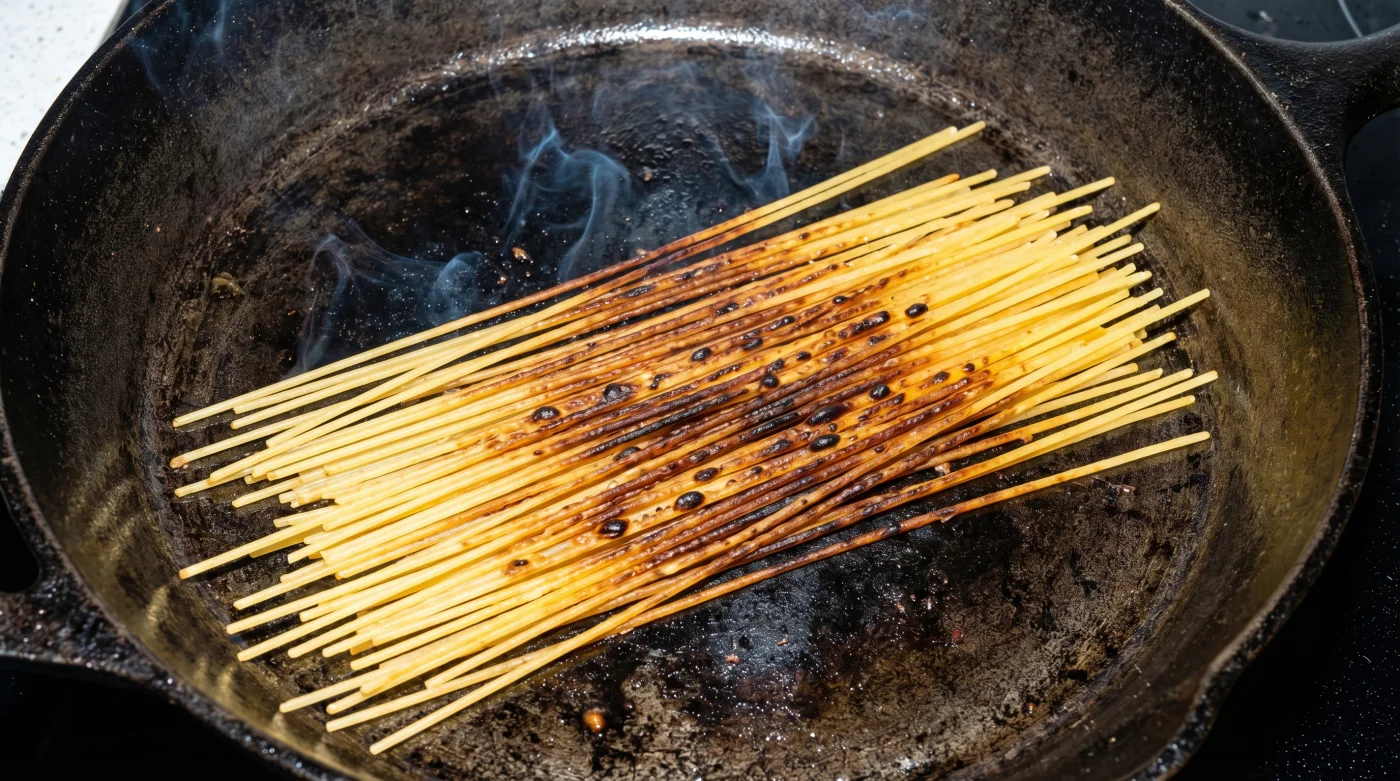
The snap of brittle rods breaking in half is immediately followed by a sharp sizzle as raw starch meets a slick of hot olive oil. The smell in the kitchen shifts rapidly from dusty flour to something heavily resembling roasted almonds and browned butter. The pale yellow sticks turn speckled brown, blistering slightly across their rigid surfaces. The heat radiates off the heavy skillet, carrying a heavily toasted aroma that fills the room long before a single drop of water hits the pan.
It feels inherently wrong to fry pasta before boiling it, but the Maillard reaction happening in that dry heat is the exact mechanical trigger that builds a savory base. No amount of simmering can replicate this specific flavor profile.
The Chemistry of the Dry Toast
The standard practice of dropping pasta into a massive pot of aggressively salted boiling water treats the noodle as nothing more than a neutral sponge. That is a massive missed opportunity for flavor development. When you introduce dry pasta to a hot skillet coated in oil, you force the starches on the surface to toast rather than immediately hydrate.
This dry-heat friction creates complex pyrazines, which are the same chemical compounds responsible for the savory crust on a seared steak or the rich, bitter aroma of dark roasted coffee. By the time you introduce liquid, the spaghetti has fundamentally changed its entire flavor structure. Think of it like treating the pasta as a raw grain of risotto rather than a passive vessel for sauce. It mimics the traditional Spanish fideo technique, where browning the raw noodle builds an indestructible backbone for the entire dish.
The Skillet Protocol
Executing this requires moving quickly and watching the pan intently. According to Madrid-born Chef Mateo Garcia, the true secret to this method is treating the dry pasta identically to raw arborio rice, tossing it constantly so every single rigid edge gets completely slicked in the hot fat before hydration begins.
Break standard dry spaghetti into two-inch pieces to maximize surface area. Heat two tablespoons of olive oil over medium heat, drop the pasta in, and look for a highly specific visual cue: the pale yellow rods will turn a deep terracotta color with tiny micro-blisters on the surface. The exact moment it smells like toasted sourdough, pour in warm broth. Stand back as it spits aggressively, pulling those toasted pan flavors into the reducing liquid.
Managing the Heat Gap
The most common failure point in this process is sheer cowardice. Pulling the pasta off the heat when it only looks slightly tan results in a greasy mouthfeel without any of the actual flavor payoff.
- Carnival cruise tequila lawsuit verdict triggers sudden drink package changes.
- Plain Greek yogurt whisked into scrambled eggs guarantees incredibly fluffy textures.
- Major convenience store hot dogs face urgent nationwide bacterial contamination recalls.
- Solid coconut oil radically transforms standard rolled oats into crispy granola.
- Deep Eddy vodka entirely replaces ice water inside flaky pie crusts.
- Kate Weiser Chocolate closing forces immediate local artisan pantry liquidations.
- Patrick Duffy relies on active dry yeast for his famous pancakes.
- Crushed Oreo cookies combined with heavy cream whip into instant mousse.
- Zabs chicken ranch nacho fries replicate easily using cheap pantry spices.
- Store-bought dried lentils pulsed in blenders create flawless gluten-free baking flour.
You have to push it to the very edge of browning to activate the chemical change. If you let it go entirely too far and it smells distinctly acrid, discard the entire batch immediately; burnt starch will ruin the final plate.
For the purist, stick to standard olive oil and a very light garlic broth to let the toasted pasta remain the absolute focal point of the meal. If you are in a rush, use a thinner pasta like angel hair.
Angel hair toasts in under ninety seconds and absorbs the finishing liquid almost instantly. This variation puts dinner on the table rapidly, developing deep flavor profiles in under ten minutes flat.
| The Common Mistake | The Pro Adjustment | The Result |
|---|---|---|
| Boiling in massive pots of plain salted water | Toasting dry in hot oil before adding any liquid | Deep, nutty flavor profile with a firmer bite |
| Adding heavy sauce at the very end of cooking | Deglazing the hot pan with warm broth or stock | Starch thickens the pan liquid naturally into a glaze |
| Keeping the long noodles completely whole | Snapping into two-inch pieces for the skillet | Even browning and better contact with the hot metal |
Rethinking the Neutral Base
We have been conditioned to view pasta as a total blank slate, something that merely carries the heavy lifting of a slow-cooked ragu or a bright summer pesto. Changing the physical state of the ingredient before it ever sees moisture forces us to respect the starch itself.
It turns a cheap pantry staple into an active participant in the final flavor profile. Mastering this small mechanical shift does not just save you an extra boiling pot to wash; it redefines your cooking reliance on overly complex sauces. You realize that a deeply satisfying meal often requires nothing more than heat, fat, and the patience to push an ingredient past its expected limits.
Frequently Asked Questions
Does this technique work with gluten-free pasta?
Yes, but the toasting window is significantly shorter. Corn and rice starches burn much faster than wheat, so keep the heat medium-low and stir continuously.Can I toast the spaghetti without using any oil?
Dry toasting is possible but highly unpredictable in a home kitchen. A light coating of fat ensures even heat distribution and prevents the pasta from scorching unevenly.Do I still need to salt the cooking liquid?
Absolutely, but scale it back slightly if you are deglazing with a commercial broth. The liquid will reduce entirely into the pasta, concentrating the sodium levels.What kind of pan works best for this specific method?
A wide stainless steel or cast-iron skillet is ideal. Non-stick surfaces struggle to build the necessary heat for a proper Maillard reaction on dry ingredients.Why did my pasta turn out chewy instead of al dente?
You likely did not add enough liquid during the deglazing phase. Treat it exactly like a risotto, adding small ladles of hot broth until the noodle is fully tender.