You know the exact sound. The butter foams in your cast-iron skillet, hissing aggressively as you drop a humble supermarket steak into the center. The aroma of searing beef fills your kitchen, promising a Tuesday night meal that feels like a weekend luxury. But ten minutes later, you take a bite, and the illusion shatters. You are chewing, and chewing, and chewing. The meat fights back, stubborn as a wet knotted rope.
We have all absorbed the same expensive culinary lie: to eat truly tender beef, you have to buy the premium twenty-five-dollar ribeye, or you have to soak a cheaper cut in heavy vinegars and citrus overnight. But the acidic approach often leaves you with meat that is mushy on the outside and rubbery on the inside. You do not need expensive cuts, and you do not need overnight acid baths. You need two ingredients you already have, and you need exactly fifteen minutes.
The Acid Myth and the Alkaline Truth
Think of a raw muscle fiber as a clenched fist. When you pour acidic marinades over it—like lemon juice, wine, or harsh vinegars—the fist clenches even tighter before eventually breaking down into a grainy mess. You are essentially cooking the surface of the meat without heat, rushing the protein degradation. The true secret to tenderizing beef behaves entirely differently.
I learned this years ago watching Chef Chen, a veteran cook at a busy Cantonese spot in San Francisco. He was working with massive trays of economical flank and chuck steak, turning them into meals that melted on the tongue. His secret was not a premium butcher. It was an old technique called velveting, driven by a simple, dusty orange box found in every American pantry: baking soda.
| Target Audience | Specific Benefits |
|---|---|
| The Budget Meal Planner | Transforms a six-dollar chuck roast into a texture resembling twenty-dollar premium cuts, stretching grocery dollars. |
| The Rushed Parent | Reduces meat prep time from a 12-hour overnight marinade to a simple 15-minute countertop rest. |
| The Fitness Enthusiast | Makes lean, tough, high-protein cuts palatable and enjoyable without relying on heavy oil or fat for moisture. |
By tossing inexpensive beef slices in a slurry of baking soda and water, you introduce a highly alkaline environment. This rapidly raises the pH on the meat’s surface, preventing the proteins from bonding tightly when they hit a hot pan. Instead of clenching under the high heat, the fist relaxes. The beef stays soft, holding onto its natural juices.
The Fifteen-Minute Transformation
Here is exactly how you bring this restaurant technique into your own home. First, grab your budget cut of beef. Flank, skirt, or even a tough round steak works beautifully. Slice it thinly, making sure your knife cuts across the grain of the meat. Cutting across the grain physically shortens the muscle fibers, giving you a head start on tenderness.
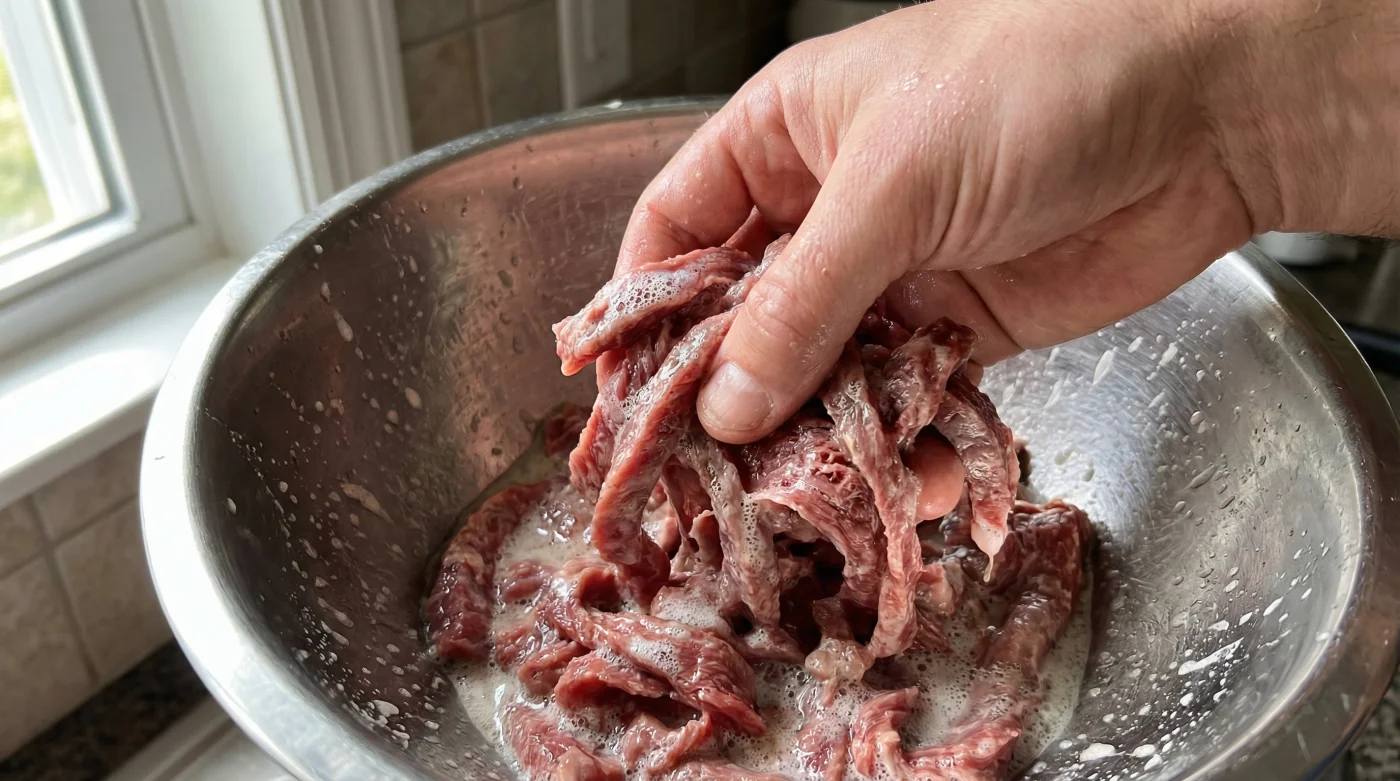
Next, create the slurry. For every pound of beef, dissolve one scant teaspoon of baking soda into half a cup of cold water. Pour this cloudy liquid over your sliced beef in a mixing bowl. Toss it with your bare hands until every single piece is thoroughly coated.
| Marinade Type | pH Level | Mechanical Reaction |
|---|---|---|
| Acidic (Vinegar/Citrus) | Low (pH 2-3) | Denatures proteins aggressively; causes a grainy or mushy surface if left too long. |
| Alkaline (Baking Soda) | High (pH 8-9) | Raises surface pH; inhibits protein bonding during high heat exposure, relaxing fibers naturally. |
| Neutral (Oil/Herbs) | Neutral (pH 7) | Adds surface flavor and moisture but does absolutely nothing to alter the meat’s structural toughness. |
- Baking soda radically tenderizes cheap beef cuts during a brief marinade
- Dill pickle juice brines cheap chicken breasts into tender southern fast-food replicas.
- Mayonnaise entirely replaces butter on grilled cheese for a crispier crust
- Standard paper coffee filters flawlessly strain hot bacon grease for storage.
- Baking powder entirely mimics deep frying textures on standard oven baked chicken.
When the timer rings, you must perform the most crucial step of this entire process: rinse the beef. Transfer the meat to a colander and run cold water over it, tossing the slices vigorously to wash away the baking soda completely. Do not skip this. Once rinsed, pat the beef strips completely dry with paper towels. If they go into your skillet wet, they will boil in their own steam instead of developing a beautiful, crusty sear.
Reclaiming Your Kitchen Economy
Drop your dry, velveted beef into a smoking-hot skillet. You will immediately notice the difference. The meat sears beautifully, and when you finally pull it off the heat and take a bite, it yields instantly. It carries the rich, beefy flavor of a humble cut without the jaw-aching resistance you are used to.
| Quality Checklist | What to Look For | What to Avoid |
|---|---|---|
| Meat Preparation | Slicing cleanly and thinly against the grain of the muscle. | Leaving the meat in thick chunks or slicing parallel to the muscle fibers. |
| Timing | Exactly 15 to 20 minutes of resting time in the bowl. | Leaving the slurry on the meat for hours, causing a chemical, soapy flavor. |
| The Crucial Rinse | Thoroughly washing under cold water and patting bone dry. | Searing wet meat covered in residual baking soda, ruining the meal. |
Mastering this alkaline slurry shifts how you shop and how you plan your meals. You are no longer held captive by the premium pricing of prime cuts just to put a respectable dinner on the table. It brings a sense of dignity, economy, and joy back to your weeknight cooking routine.
This is more than just a kitchen trick. It is a fundamental understanding of how raw ingredients interact with their environment. You are working with the meat, understanding its rigid nature, and gently encouraging it to become its best version. You can now walk past the expensive butcher case with complete confidence, knowing you carry a professional restaurant technique right in your back pocket.
Tender meat is rarely bought at the premium butcher; it is created on the cutting board through basic chemistry, patience, and a humble box of baking soda.
Frequently Asked Questions
Can I use baking powder instead of baking soda?
No. Baking powder contains added acids and cornstarch. It will not create the necessary high alkaline environment to relax the meat fibers.Does this work on whole thick steaks, or just sliced beef?
It works best on sliced beef because the alkaline slurry requires adequate surface area. For a whole steak, try a dry baking soda rub, but the tenderizing process will take much longer.Will my dinner taste like baking soda?
Absolutely not, provided you rinse the meat thoroughly. Rinsing under cold running water and patting the beef dry removes the residue entirely.Can I use this velveting technique on chicken or pork?
Yes. Velveting works beautifully on sliced chicken breast and tough cuts of pork loin, preventing them from drying out during high-heat stir-frying.Do I need to add my regular flavor marinade as well?
Yes. After the baking soda rinse and drying phase, you can immediately toss the meat in soy sauce, garlic, or your preferred seasonings right before tossing it into the pan.