The Betrayal of the Morning Skillet
Picture your Sunday morning. The skillet is heating up, the dark roast coffee is brewing, and that familiar, deeply comforting scent of hickory smoke begins to fill the kitchen. You gently lay down a few strips of chilled supermarket bacon, anticipating those long, beautiful ribbons you see in classic diner commercials. But within minutes, the betrayal begins. The edges seize in the pan. The meat buckles and protests against the heat. What started as a promising, perfectly straight six-inch slice of pork belly violently shrinks into a gnarled, uneven fist. Half of it is burnt to an unpleasant crisp; the other half remains uncomfortably pale and chewy. When you finally go to build your anticipated BLT, those twisted, unruly pieces refuse to sit flat, sliding out from between the toasted bread with every single bite. You are left fighting your food instead of actually enjoying it.
The Architecture of the Slice
For years, you might have simply accepted this as the inescapable nature of cooking at home. The common myth is that curling is an unavoidable reaction to intense heat, a wild culinary tantrum you can only solve by wrestling the meat down with a heavy, cast-iron bacon press. But the truth lies not in brute force, but in understanding the architecture of the slice. The curling happens because the fat and the lean muscle cook and contract at vastly different rates. As the fat melts rapidly and renders out into the pan, the protein fibers pull tight. Think of it like a taut sail catching a sudden, aggressive gust of wind with nowhere to disperse the mounting pressure. That intense tension snaps the meat into a rigid curve.
I learned the secret to fixing this frustrating dynamic years ago from a seasoned line cook at a bustling, old-school neighborhood diner in upstate New York. He turned out hundreds of perfectly straight, shatteringly crisp slices every morning during the breakfast rush. There were no heavy iron weights pressing down on his flat-top grill, and he certainly was not standing there micromanaging each piece with tongs. Instead, his secret lived in a small, unassuming stainless steel shaker filled with all-purpose flour. ‘You do not fight the fat,’ he told me, gesturing to the neatly arranged, perfectly flat trays cooling on the rack. ‘You give it somewhere to go.’ By lightly dusting the raw strips with flour before they ever hit the heat, he changed the entire structural dynamic of the cook.
| Target Audience | Specific Benefits |
|---|---|
| The Sandwich Maker | Creates flat, structurally sound strips that never slide out of a BLT, club sandwich, or cheeseburger. |
| The Plating Perfectionist | Delivers a visually striking, straight-line aesthetic typical of high-end diner service and professional kitchens. |
| The Batch Cooker | Maximizes baking sheet real estate, allowing significantly more slices to fit evenly without overlapping tangles. |
The science behind this incredibly simple pantry addition is beautifully practical. When you toss raw strips in all-purpose flour before oven-baking, that fine powder acts as a microscopic, highly efficient sponge. It absorbs the rendering grease almost instantly as the heat hits the meat, creating a temporary, breathable crust around the entire slice. This effectively stops the fat from pooling heavily and boiling the meat in its own juices, which is the exact reaction that normally causes that violent buckling. The flour literally locks the meat flat, holding the physical structure of the strip perfectly in place while the ambient heat works its magic, cooking the bacon evenly from edge to edge without a single curled tip.
| Mechanical Logic | Culinary Effect |
|---|---|
| Flour Absorption Rate | Instantly binds with rendering grease, stopping fat from pooling and boiling the delicate protein. |
| Ambient Oven Heat (400 Fahrenheit) | Cooks protein fibers evenly from all sides, preventing the sudden structural shock of a direct-heat skillet. |
| Starch Crust Formation | Creates a temporary, breathable shell that locks the meat flat and enhances the overall surface crispness. |
The Gentle Art of the Flour Dust
Applying this technique in your own kitchen requires only a minor adjustment to your morning rhythm, but the results are profoundly, noticeably different. Start by preheating your oven to exactly 400 degrees Fahrenheit. The oven is a crucial component of this method; it surrounds the meat with a gentle, consistent ambient heat rather than scorching it aggressively from a single, direct source below like a traditional stovetop skillet. This gentle heating allows the fat to render slowly and peacefully.
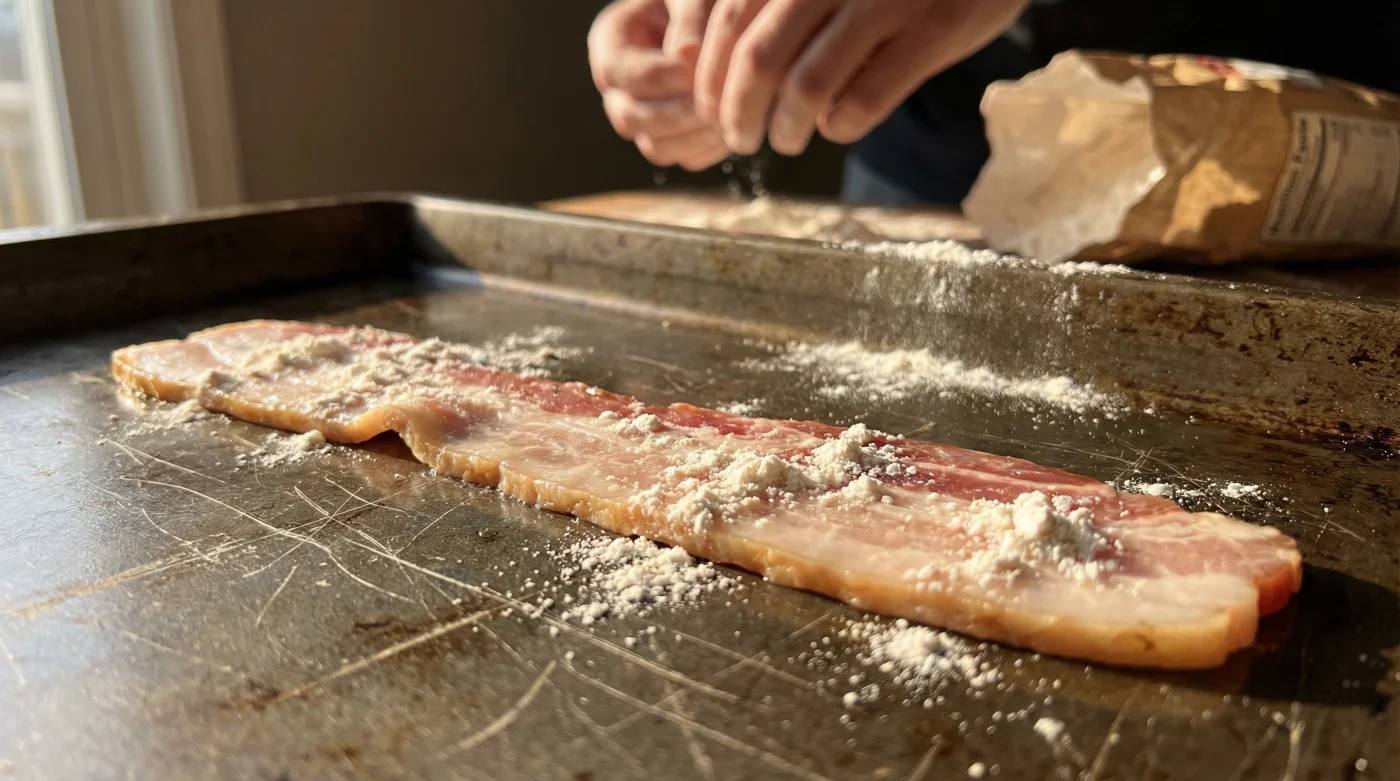
Take your standard supermarket bacon—classic thickness actually works best for this specific method—and lay the cold strips out on a clean cutting board or a wide prep plate. Take a small, careful pinch of all-purpose flour and lightly, evenly dust both sides of each strip. You are absolutely not trying to bread the pork here. You just want a translucent, barely-there coating across the surface. It should look somewhat like a light, early morning frost resting gently on the meat.
Once coated, carefully arrange the dusted strips on a heavy-duty baking sheet lined with a sheet of high-quality parchment paper. Leave a little bit of breathing room between each piece so they do not overlap; this ensures the hot air can circulate properly. Slide the prepared pan onto the middle rack of your hot oven. Over the next fifteen to twenty minutes, simply watch how the meat behaves through the oven window. Instead of aggressively curling into tight, uncontrollable ribbons, the strips gently settle down into the pan, remaining remarkably flat as they sizzle.
- Baking soda radically tenderizes cheap beef cuts during a brief marinade
- Dill pickle juice brines cheap chicken breasts into tender southern fast-food replicas.
- Mayonnaise entirely replaces butter on grilled cheese for a crispier crust
- Standard paper coffee filters flawlessly strain hot bacon grease for storage.
- Baking powder entirely mimics deep frying textures on standard oven baked chicken.
| Quality Checklist | What to Look For | What to Avoid |
|---|---|---|
| Cut Type | Center-cut slices with a relatively even, consistent meat-to-fat ratio. | End pieces with massive, disproportionate blocks of hard white fat. |
| Curing Method | Dry-cured or naturally hardwood smoked for optimal texture. | Water-added or liquid smoke-injected brands that release far too much moisture. |
| Thickness | Standard or classic thickness for perfectly timed, effortless crisping. | Ultra-thick cuts that require significantly longer cooking times and may remain chewy in the center. |
Elevating the Daily Rhythm
Bringing this restaurant-level plating secret into your everyday home routine does much more than just make your weekend breakfast look highly professional. It solves a genuine, physical culinary frustration. There is a deep, quiet satisfaction in building a massive club sandwich or a classic BLT where the bacon sits perfectly flush against the slick surface of a summer tomato, yielding a clean, complete, and perfectly layered bite every single time. You no longer have to carefully puzzle-piece tiny, twisted scraps of meat onto a cheeseburger or watch your carefully constructed sandwich fall apart sadly on the dining plate.
By taking the time to truly understand how your ingredients interact—how a painfully simple dusting of everyday flour can completely tame the erratic, shrinking nature of rendering fat—you fundamentally change the way you approach cooking. It is a lovely reminder that the absolute best kitchen solutions rarely require expensive, single-use gadgets or forceful, aggressive methods. Sometimes, achieving true culinary perfection is just about stepping back, offering the raw ingredients a little bit of mindful guidance, and allowing them to effortlessly settle into their best possible form.
The secret to a perfect slice is not a heavier cast-iron press; it is giving the rendering fat exactly what it needs to stabilize before the heat takes over.
Frequently Asked Questions
Does the flour change the flavor of the bacon? Not at all. A light dust is completely neutral on the palate and only alters the physical texture, leaving your rich hickory or applewood smoke flavors entirely intact.
Can I use gluten-free flour for this trick? Yes. Rice flour or a standard gluten-free all-purpose blend absorbs the rendering grease just as effectively without compromising the final crispness.
Do I need to flip the bacon while it is in the oven? It is entirely optional. Because the oven surrounds the meat with ambient heat, they crisp nicely on both sides, though a quick flip at the ten-minute mark guarantees absolute, even perfection.
Will this method make my kitchen oven smoke? No. In fact, the flour helps contain and absorb the grease, which actively reduces the amount of hot fat splattering against the heating elements and oven walls.
Can I still save the bacon grease afterward? Absolutely. The rendered grease will have a slightly toasted flour note, which actually makes it an incredible, deeply savory base for a country gravy or for roasting breakfast potatoes.