You stand over the cast-iron skillet, watching the edges of your patty turn a pale, dusty brown. You flip it, hoping for that dark, caramelized crust, but instead, it just sort of stiffens. When you finally sit down and take a bite, it crumbles. The meat breathes through a pillow, lacking that luscious, coating sensation of a classic diner burger. For years, we have all accepted this bargain. We trade the indulgent, heavy satisfaction of eighty-twenty ground beef for the leaner profile of poultry, assuming dry dinners are just the cost of doing business.
But what if that trade-off is entirely unnecessary? The secret to rescuing lean ground turkey is not flooding it with olive oil, milk-soaked breadcrumbs, or heavy sauces that mask the flavor. It requires a fundamental shift in how you view the architecture of the meat itself.
The Perspective Shift: Rebuilding the Missing Mortar
Cooking lean poultry like it is traditional ground beef is akin to building a brick wall without mortar. When you cook standard ground beef, you are not just rendering fat; you are melting a complex network of collagen and connective tissue. This natural matrix surrounds the muscle fibers, trapping water and fat together. It creates a suspension that coats your palate, making every bite feel cohesive and rich.
Lean turkey lacks this built-in support system. When it hits a hot pan, the proteins tighten rapidly, squeezing out whatever minimal moisture exists. To fix this, you must introduce a surrogate for that missing collagen.
I learned this from an old-school prep cook named Arthur, who ran the back kitchen of a bustling neighborhood spot known for its incredibly tender Swedish meatballs. I watched him tear open a tiny paper packet over a bowl of cold chicken stock before folding it into ten pounds of ground turkey. He was adding unflavored gelatin. ‘Turkey has the flavor,’ he told me, wiping his hands on a flour-dusted apron. ‘It just forgot to bring its own glue.’ Dissolved gelatin perfectly mimics the binding, moisture-retaining properties of beef collagen, providing a luxurious mouthfeel without adding grease.
| The Home Cook | The Specific Benefit |
|---|---|
| The Meal-Prep Planner | Reheated turkey meatballs remain tender and juicy on day four, rather than turning into rubbery pebbles. |
| The Health-Conscious Parent | Achieves the rich, kid-approved texture of a fast-food burger while maintaining the lean nutritional profile of poultry. |
| The Weeknight Entertainer | Serves a luxurious, restaurant-quality meatloaf without the heavy, lethargic aftermath of a high-fat beef dish. |
The Mechanical Logic of the Cure
To understand why this two-ingredient modification is so effective, you must look at how temperature interacts with protein. Unflavored gelatin is, quite literally, derived from collagen. When you introduce it to the ground turkey, you are retrofitting the meat with the exact structural element it lacks. As the turkey cooks and the muscle fibers contract, the gelatin network holds fast. It captures the escaping water molecules, forming a delicate internal gel that melts right at body temperature when you take a bite.
| The Component | Standard 80/20 Ground Beef | Gelatin-Enhanced Lean Turkey |
|---|---|---|
| Moisture Retention | High natural fat and collagen trap juices during the cooking process. | Added gelatin binds with water to create a thermal-resistant moisture lock. |
| Mouthfeel at 98.6 Degrees | Animal fat coats the palate, creating a lingering, savory richness. | Gelatin melts instantly on the tongue, simulating the exact sensation of rendered fat. |
| Shrinkage in the Pan | Significant shrinkage as fat renders out into the skillet. | Minimal shrinkage; the moisture stays trapped inside the patty or meatball. |
Not all ingredients are created equal when attempting this technique. The success of the method relies entirely on the purity of the additions. You cannot use sweetened or flavored gelatin, and the quality of the turkey matters.
| Ingredient Quality Checklist | What to Look For | What to Avoid |
|---|---|---|
| The Gelatin | 100% pure, unflavored powdered gelatin in individual envelopes or bulk canisters. | Any product with added sugars, artificial colors, or fruit flavorings. |
| The Ground Turkey | 93/7 or 99% lean ground turkey breast with a pale pink, consistent color. | Pre-seasoned turkey patties or heavily processed chubs with added sodium solutions. |
| The Liquid Carrier | Cold, low-sodium chicken or vegetable broth to bloom the gelatin properly. | Hot tap water, which will cause the gelatin to clump and cook unevenly before mixing. |
The Architecture of Moisture: Practical Application
The process is incredibly simple, adding no more than five minutes to your normal prep routine. First, you must bloom the gelatin. Measure out two tablespoons of cold chicken broth or cold water into a small, shallow dish. Sprinkle exactly one teaspoon of unflavored gelatin evenly over the surface of the liquid. Do not dump it in a single pile, or the center will remain a dry, chalky lump.
- Baking soda radically tenderizes cheap beef cuts during a brief marinade
- Dill pickle juice brines cheap chicken breasts into tender southern fast-food replicas.
- Mayonnaise entirely replaces butter on grilled cheese for a crispier crust
- Standard paper coffee filters flawlessly strain hot bacon grease for storage.
- Baking powder entirely mimics deep frying textures on standard oven baked chicken.
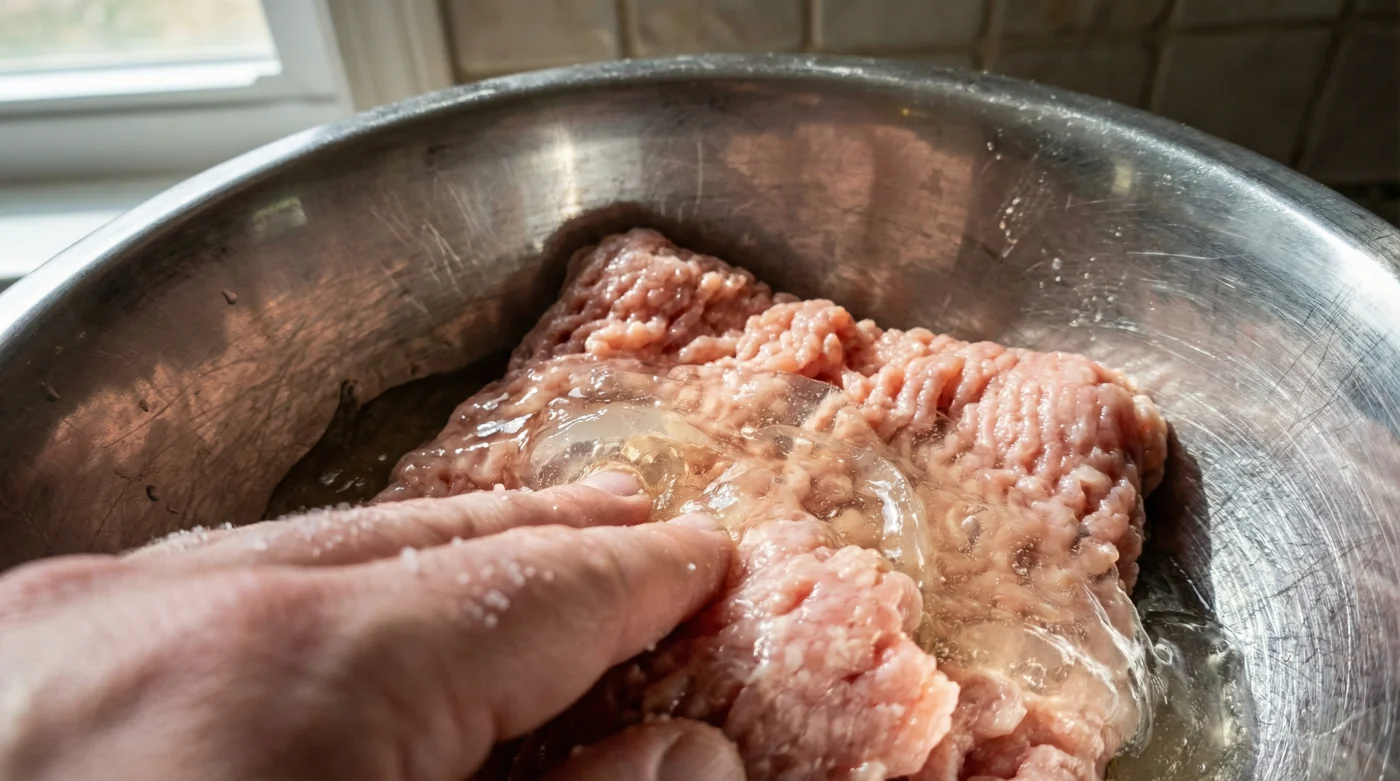
Now comes the physical work. You must mix the meat with your hands. Using a spoon or spatula will simply push the bloomed gelatin around, creating isolated pockets of jelly. Gently fold the meat over itself, pinching the gelatin into the turkey fibers until it is completely incorporated. The raw meat will immediately feel different in your hands, becoming tackier, denser, and more cohesive.
Form your patties or meatballs with a gentle touch. Do not pack them too tightly. When you place them into a preheated, lightly oiled skillet, you will hear a familiar sizzle, but you will notice a distinct lack of pooling liquid. The moisture is staying exactly where it belongs: inside the food. Cook them to an internal temperature of 165 degrees Fahrenheit, and let them rest for three minutes before serving.
The Bigger Picture: A Meal Without Compromise
When you master this simple, two-ingredient modification, your relationship with weeknight cooking shifts. You are no longer bound by the frustrating compromise between eating leaner meals and enjoying the comforting, heavy satisfaction of classic diner food. The anxiety of serving a dry, crumbly meatloaf to your family evaporates.
This is the beauty of thoughtful, mindful cooking. It is not about buying expensive gadgets or spending hours performing complex culinary gymnastics. It is about understanding the basic nature of your ingredients and gently guiding them toward a better result. By giving the turkey the structural support it naturally lacks, you elevate a humble, inexpensive protein into something genuinely remarkable.
True culinary skill is not found in expensive cuts of meat, but in the quiet understanding of how a single spoonful of powder can entirely rewrite the physical rules of the skillet.
Frequently Asked Questions
Will the unflavored gelatin make my turkey taste like dessert?
Not at all. Unflavored gelatin is completely tasteless and odorless. Its only function is textural, working behind the scenes to bind moisture and provide a rich mouthfeel.Can I use this trick for ground chicken as well?
Absolutely. Ground chicken suffers from the exact same lack of natural collagen and fat. The ratio of one teaspoon of gelatin bloomed in two tablespoons of cold liquid works perfectly for one pound of ground chicken.What happens if I skip the blooming process and just add dry powder?
If you add dry gelatin powder directly to the meat, it will steal whatever minimal moisture is inside the turkey to hydrate itself, creating tough, grainy pockets throughout your dish. Blooming is non-negotiable.Does this method change the required cooking time?
The cooking time remains exactly the same. You still need to ensure your poultry reaches a safe internal temperature of 165 degrees Fahrenheit, but you have a much larger margin of error before the meat dries out.Is it possible to freeze meatballs made with gelatin?
Yes, they freeze exceptionally well. In fact, the gelatin matrix helps protect the meat structure from freezer burn and excessive cellular damage, making them taste much fresher when you eventually reheat them.