The steam rises from the heavy-bottomed pot, fogging the kitchen windows and carrying the scent of rolling water through the house. You stand there with metal tongs in hand, watching massive sheets of dry lasagna noodles plunge into the violent boil. Minutes later, the chaos begins. You fish out the scalding, slippery sheets. They stick to each other. They tear at the corners. They burn your fingertips as you desperately try to lay them flat on a clean kitchen towel. It is a messy, frustrating ritual that leaves a sticky film on your countertops and turns what should be a comforting meal prep into a stressful race against cooling pasta.
The Boiling Myth and the Thirsty Sponge
For generations, we treated lasagna noodles like any other pasta, assuming a hard boil was the only path to a tender bite. But this approach creates a fundamental structural flaw in your dish. When you boil the sheets, they become fully saturated with plain, salted water. By the time you layer them with rich ricotta and slow-simmered marinara, the pasta has no room left to absorb those incredible flavors. Think of the dry noodle as a thirsty sponge. If you soak a sponge entirely in water, it cannot soak up a spill. If you boil your lasagna, the noodles sit passively between the layers, slippery and bland, rather than marrying with the sauce.
The secret is not to cook the pasta, but to simply wake it up. A brief soak in hot tap water for twenty minutes transforms brittle sheets into pliable foundations. They become flexible enough to bend and layer seamlessly into your baking dish, yet remain thirsty enough to pull in the moisture and fat from your meat sauce and cheese as the whole pan bakes.
| The Cook | The Benefit of the Hot Tap Water Soak |
|---|---|
| The Weekend Host | Saves active stovetop time and eliminates the risk of burns from wrangling wet pasta. |
| The Meal-Prep Planner | Creates a sturdier lasagna that holds its shape beautifully when sliced and reheated. |
| The Flavor Enthusiast | Allows the noodle to absorb tomato sauce and savory fat during the bake, flavoring it from the inside out. |
Learning from the Line Cook
I learned this from watching a seasoned prep cook named Leo in a cramped, humid Brooklyn kitchen. While the head chef obsessed over the braised pork shoulder for the Sunday ragu, Leo was quietly managing three massive hotel pans of lasagna. He never boiled a drop of water for the pasta. Instead, he simply filled a shallow roasting pan with steaming water straight from the tap, dropped in the dry, ruffled noodles, and walked away to chop garlic. ‘You just want them to bend,’ he told me, lifting a noodle that drooped gracefully over his wooden spoon without snapping. ‘Let the oven do the actual cooking.’ It was a five-minute prep trick that bypassed all the traditional chaos while guaranteeing a professional result.
| Hydration Phase | Water Temperature | Starch Behavior |
|---|---|---|
| The Rapid Boil | 212 Degrees Fahrenheit | Rapid gelatinization. Pasta swells to maximum capacity, blocking sauce absorption. |
| The Hot Tap Soak | 110 to 120 Degrees Fahrenheit | Partial hydration. Surface starches soften for flexibility while the core remains dense and absorbent. |
| The Oven Bake | 375 Degrees Fahrenheit | Final gelatinization occurs using the moisture and fats directly from the surrounding sauce. |
The 20-Minute Tap Water Soak
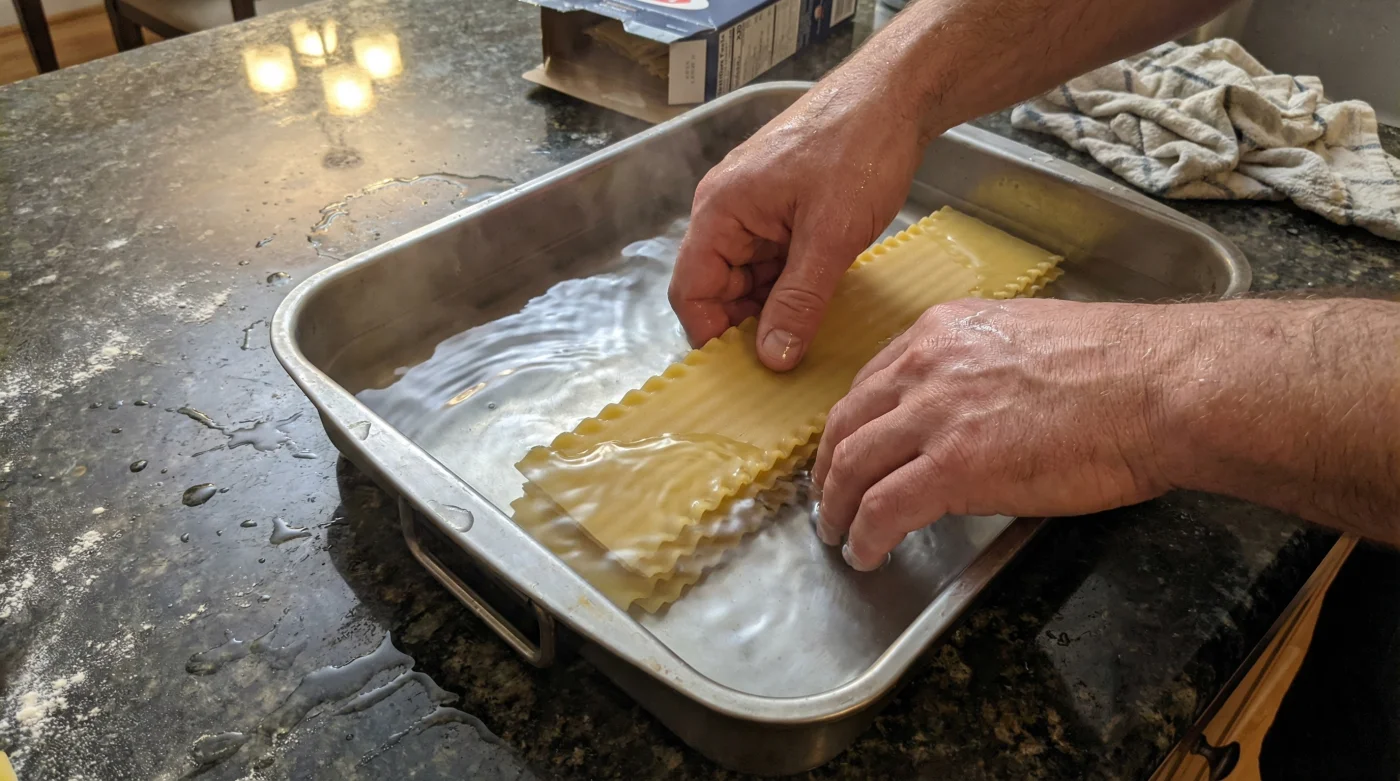
Executing this technique requires nothing more than a baking dish and your kitchen faucet. Start by finding a vessel wide enough to lay the dry noodles completely flat. A standard 9×13 baking pan or a large metal roasting pan works perfectly for this job.
Turn your kitchen faucet to its hottest setting and let it run until the water is steaming and warm to the touch. Fill the pan with enough water to submerge the pasta completely.
Add the dry noodles one by one, slightly overlapping them like shingles on a roof. Let them sit undisturbed in the hot bath for exactly twenty minutes. You are not looking for a soft, edible texture. You just want them to lose their brittle snap.
Once the twenty minutes are up, lift them out gently and shake off the excess water. They will feel rubbery, somewhat like a thick fruit leather. This is the exact texture you want. Begin building your layers immediately, starting with a thin sheen of sauce on the bottom of your baking dish.
| Quality Checklist | What to Look For | What to Avoid |
|---|---|---|
| Noodle Texture | Leathery, pliable, bends without snapping in half. | Mushy edges or completely soft, translucent centers. |
| Water Setup | Hot tap water, wide enough pan to lay them flat. | Cold water or cramming them into a tall, narrow bowl where they fuse together. |
| Sauce Consistency | Slightly wetter than usual to provide liquid for the oven bake. | Overly reduced, dry paste that will leave the pasta dehydrated. |
Reclaiming Your Sunday Afternoon
When you strip away the unnecessary struggle of boiling massive sheets of pasta, making lasagna shifts from a chaotic chore to a calming, assembly-line rhythm. You no longer need to fear the burn of splashing water or the frustration of a torn noodle ruining the aesthetic of your top layer. The hot tap water soak gives you total control over the process.
- Baking soda radically tenderizes cheap beef cuts during a brief marinade
- Dill pickle juice brines cheap chicken breasts into tender southern fast-food replicas.
- Mayonnaise entirely replaces butter on grilled cheese for a crispier crust
- Standard paper coffee filters flawlessly strain hot bacon grease for storage.
- Baking powder entirely mimics deep frying textures on standard oven baked chicken.
The best kitchen techniques are the ones that ask less of you physically while delivering significantly more flavor to the plate.
Frequently Asked Questions
Can I use oven-ready or no-boil noodles for this soak?
You can, but it is not necessary. Oven-ready noodles are already rolled much thinner and pre-cooked, so they do not require soaking. This trick is specifically for traditional, thick, curly-edged dry noodles.
Do I need to salt the soaking water?
No. Because the soak is brief and the water is only serving to soften the starch, the salt will not penetrate deeply enough to matter. Rely on seasoning your sauce well instead.
Will the noodles stick together in the hot tap water?
They can if you dump them all in a stack at the exact same time. Lay them down individually, crisscrossing them slightly if needed, and give them a gentle nudge with your fingers halfway through the twenty minutes.
Do I need to dry the noodles with a towel before layering?
Just a quick shake over the sink to remove excess drips is enough. You do not need to pat them down with paper towels. A little residual moisture actually helps the baking process.
What if my meat sauce is very thick and chunky?
If your ragu is heavily reduced, add a quarter cup of water or beef broth to the sauce before you assemble the dish. The partially hydrated noodles still need some ambient liquid to finish cooking properly in the oven.