It is Saturday morning. The neon glare of the refrigerator light hits your face as you stare at a familiar sight: the cardboard box from last night. Inside sits a lone slice of pepperoni. The mozzarella has turned opaque and rigid, and the crust droops with the tragic weight of cold tomato sauce. You face the eternal weekend dilemma. The microwave will heat it fast, but leave you chewing on a rubbery sponge. The oven promises crispness, but demands twenty minutes of your morning and often transforms the crust into a brittle cracker. You want that fresh Friday night feeling back, but the tools at your disposal feel inadequate.
For decades, we have been told that dry heat is the only way to revive yesterday’s delivery. We bake, we broil, we toast. Yet, the cheese never quite achieves that molten, stretchy perfection without the bread beneath it turning to stone. It turns out, the secret to a flawless revival does not rely entirely on dry heat. It requires a contradiction.
The Hydration Paradox
Think of a cold slice of pizza as a suspended state of dehydration. The refrigerator environment acts like a slow-moving desert wind, pulling moisture from the dough and the dairy. When you attempt to reheat it with pure dry heat, you are essentially baking an already baked good. The problem is a misunderstanding of kitchen thermodynamics.
When you put a pie in the refrigerator, the starch molecules in the crust crystalize. This process is exactly why cold bread feels stiff and stale. The microwave violently heats the residual water trapped inside those starches, turning the crust into a chewy, leathery mess as the moisture escapes in a panic. The oven, conversely, dries the starches out entirely, leaving you with crouton-textured bread. The crust requires a hot, dry surface to reawaken its structural integrity, but the toppings demand humidity. You need a microclimate of culinary rescue.
Enter the skillet ice cube method. It sounds absurd to introduce frozen water to a process aimed at crisping dough, but this is exactly where the physical transformation happens. I learned this from an old pizza maker in New Haven, a guy who spent forty years manning intense coal-fired brick ovens. He never microwaved his lunch. Instead, he would place a cold slice on a hot griddle, flick a tiny splash of water next to it, and instantly trap the steam with an overturned metal bowl. He treated his ingredients with immense respect. “When you chill dough, it breathes through a pillow,” he told me. “You have to wake it up gently. The bread remembers the fire, but the cheese needs the cloud.” That philosophy translates perfectly to your home kitchen, swapping out his quick fingers for a simple, solitary ice cube.
| Who This Saves | The Tangible Benefit |
|---|---|
| The Rushed Morning Commuter | Brings a slice back to life in five minutes, faster than preheating a standard oven to 400 degrees Fahrenheit. |
| The Budget-Conscious Eater | Transforms an average three-dollar delivery leftover into a premium-tasting meal, stretching your food dollar safely. |
| The Texture Purist | Maintains the critical crunch of the bottom crust while forcing the cheese into a glossy, melted state. |
The Ice Cube Ritual
The execution is remarkably simple, but it demands your physical attention. Grab a heavy-bottomed skillet. Cast iron or thick carbon steel works best here because it holds steady, continuous warmth without erratic hot spots that burn bread. Place your cold slice directly into the cold pan. Do not oil the pan; the residual fat baked into the crust is more than enough to prevent sticking.
Turn your burner to medium-low. Let the pan heat up gradually alongside the pizza. You will start to hear a faint sizzle. This is the sound of the crust toasting, the dormant oils waking up and crisping the base. Lift the edge with a spatula. Once the bottom reaches a deep golden brown and feels completely rigid against your utensil, it is time for the phase change.
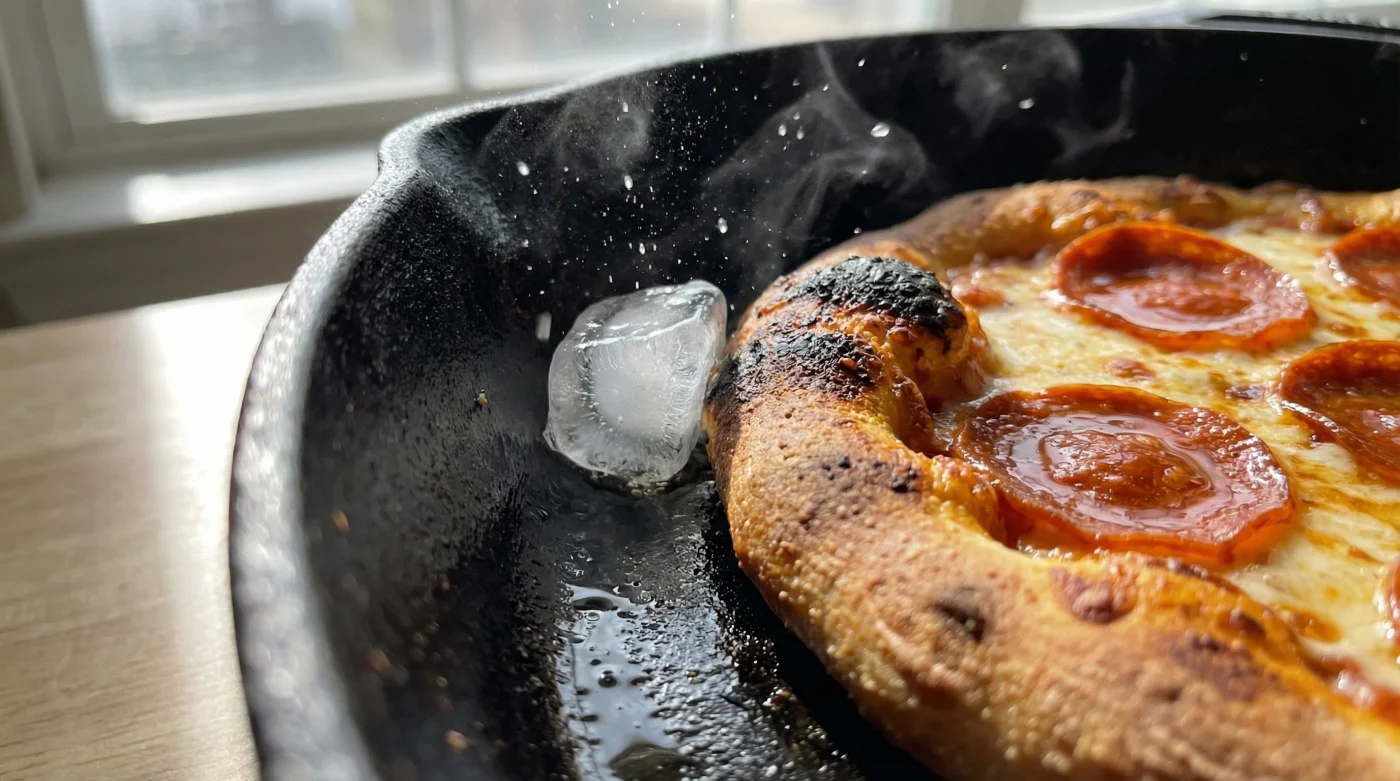
Take a single, standard-sized ice cube. Drop it onto the surface of the pan, as far away from the pizza slice as possible. Immediately cover the skillet with a tight-fitting glass lid. The ice cube will begin to glide across the hot metal, sublimating into a thick cloud of pure steam. Because the pan is securely covered, that trapped steam is forced upward, wrapping over the cold cheese.
- Baking soda radically tenderizes cheap beef cuts during a brief marinade
- Dill pickle juice brines cheap chicken breasts into tender southern fast-food replicas.
- Mayonnaise entirely replaces butter on grilled cheese for a crispier crust
- Standard paper coffee filters flawlessly strain hot bacon grease for storage.
- Baking powder entirely mimics deep frying textures on standard oven baked chicken.
| Thermodynamic Phase | Mechanical Logic | Culinary Result |
|---|---|---|
| Direct Conduction | Dry metal transfers heat slowly into the dense bottom dough layer. | Re-crisps the base, restoring structural snap and completely eliminating sogginess. |
| Controlled Evaporation | Solid ice melts and vaporizes at a measured, prolonged pace. | Creates a steady, humid microclimate trapped beneath the skillet dome. |
| Top-Down Convection | Steam circulates over the toppings, transferring latent heat rapidly. | Forces congealed fats in the cheese to liquefy, stretch, and shine without burning. |
Watch through the glass lid. You will literally see the opaque, dull cheese slowly turn bright, glossy, and begin to slump lazily over the edges of the pepperoni. Once the ice cube is fully melted and the visible steam dissipates, kill the heat entirely. Remove the lid carefully, tilting it backward so the condensation drips safely onto the counter, not onto your perfect slice. Slide the pizza onto a warm plate.
| Quality Checklist | What to Look For | What to Avoid |
|---|---|---|
| The Skillet | Heavy cast iron or thick stainless steel for even, sustained heat distribution. | Flimsy, thin non-stick pans that warp under heat or scorch the crust prematurely. |
| The Lid Fit | A transparent glass dome that sits completely flush against the pan edges. | A loose, crumpled sheet of aluminum foil that lets the vital humidity escape into the room. |
| Heat Level | Medium-low flame, giving the stiff dough plenty of time to warm through gradually. | High heat, which tragically burns the bottom black before the cheese even knows it is awake. |
Reclaiming Your Kitchen Rituals
There is something deeply satisfying about mastering a small, almost invisible domestic skill. It is incredibly easy to view leftovers as an annoying afterthought, a quick calorie grab to mindlessly consume over the kitchen sink while checking emails. But taking five deliberate minutes to intentionally restore a meal shifts your relationship with your own food. It moves you from a state of passive consumption to one of active care and culinary presence.
When you drop that ice cube and watch the steam billow beneath the glass, you are not just executing a clever kitchen trick. You are bringing intention into your morning routine. You are actively acknowledging that good food deserves a second chance to be brilliant. The resulting bite—the deeply satisfying, audible crunch of the base contrasting intensely with the molten, savory pull of the hot cheese—feels like a small, private victory to start your day.
The next time you order a pie on a Friday night, you might just find yourself looking forward to the morning after almost as much as the main event. You now hold the simple, physical truth of the skillet and the ice cube. You no longer have to settle for sad, rubbery delivery remnants or dry, shattered crusts. Your kitchen has officially become a place of culinary revival.
The true mark of a resourceful cook is not solely how they handle the finest luxury ingredients, but how much dignity they can lovingly restore to what remains on the second day.
Frequently Asked Questions
Does the water make the crust soggy? Not at all. Because you place the ice cube far away from the dough and utilize a hot skillet, the water turns to steam instantly, rising upward into the dome rather than pooling dangerously beneath the crust.
Can I use this method for deep dish or thick crust styles? Yes, but you need extra patience. Start on an even lower heat to ensure the intensely thick dough warms all the way through before you introduce the ice cube for the final cheese melt.
What if my skillet does not have a matching lid? Any heat-safe cover works beautifully. You can invert a large metal mixing bowl or even another skillet over the top to capture the steam effectively.
How many ice cubes should I use for multiple slices? Stick to a single standard ice cube regardless. Too much ice creates an excess of moisture that struggles to evaporate quickly, risking a gummy environment inside the pan.
Does this work for pizzas with delicate vegetable toppings? Absolutely. The gentle, rolling steam heat is actually much better for reviving delicate roasted peppers or spinach than dry oven heat, which often chars them to ash.