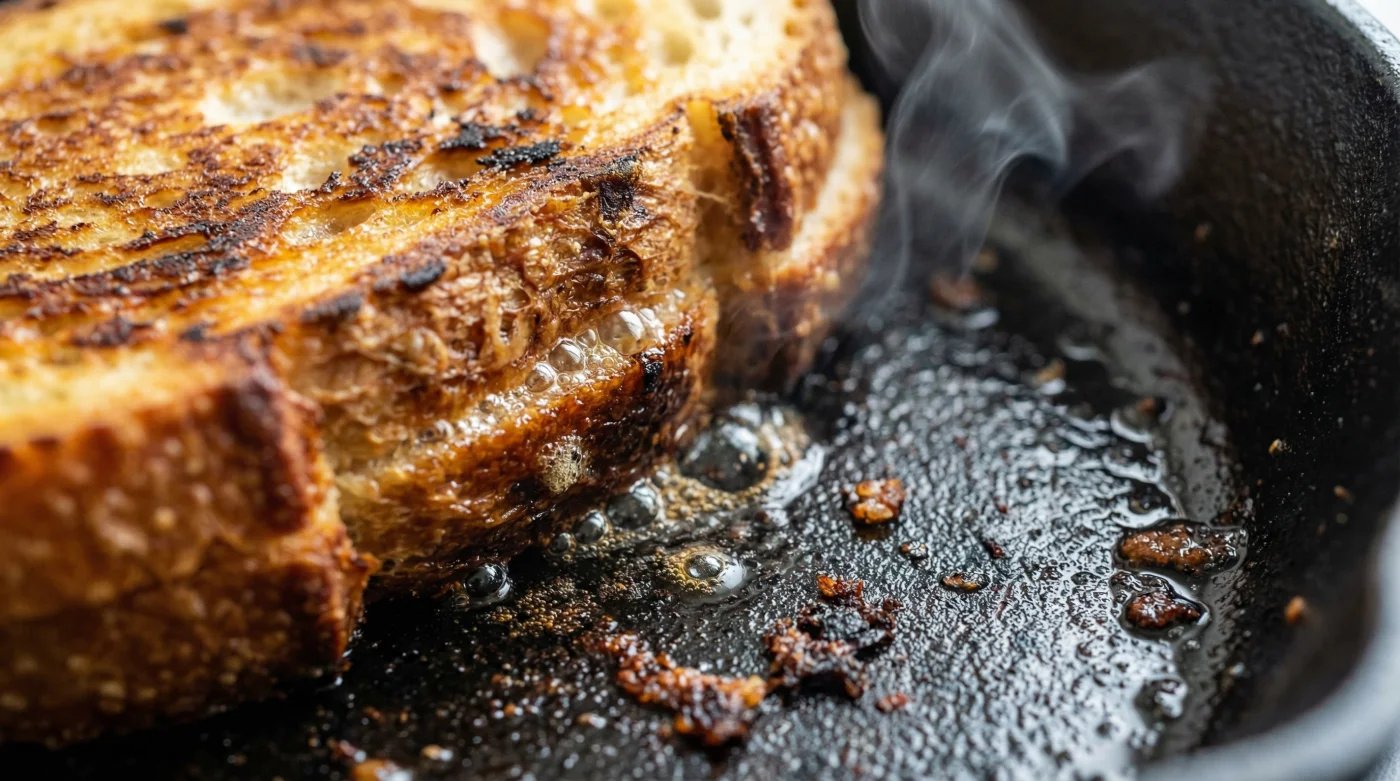
Picture a rainy Tuesday afternoon. The craving hits: a classic grilled cheese sandwich. You pull out your heavy skillet, slice some sharp cheddar, and reach for a cold, unyielding stick of butter. As you try to spread it across soft white bread, the slice inevitably tears. You drop the mangled bread into the hot pan anyway, and moments later, you smell it—the acrid tang of burning milk solids before the cheese even begins to melt. It is a familiar, quiet frustration found in almost every American kitchen.
The Alchemy of the Skillet
It is time to rethink the pan-frying ritual entirely. The butter myth has held us captive for generations, dictating that a rich, buttery flavor is the only path to sandwich perfection. But butter creates a brittle, uneven shield. It is filled with water and milk solids that blacken long before your cheese reaches a molten state. The central truth of the skillet is about managing the armor of your sandwich. We need a different kind of armor. We need mayonnaise.
Years ago, I spent an afternoon watching Sal, a veteran line cook at a late-night diner in Chicago. Sal never kept soft butter on the line. Instead, he wielded a massive industrial tub of full-fat mayo and a silicone spatula. ‘Butter fights the heat,’ he told me over the hiss of the flattop. ‘Mayo surrenders to it.’ Sal understood what many home cooks miss: mayonnaise is fundamentally a stable emulsion of oil and egg yolks.
| Target Audience | Specific Benefits |
|---|---|
| Hurried Parents | No waiting for butter to soften; spreads easily straight from the fridge without tearing bread. |
| Texture Chasers | Achieves an edge-to-edge, shatteringly crisp crust that holds up to heavy fillings. |
| Budget Cooks | Prevents wasted, ruined bread and eliminates the bitter taste of burnt sandwiches. |
When you smear mayonnaise on bread, you are applying a delicate, protein-rich fat layer. Unlike butter, which has a relatively low threshold for heat, the oil in mayonnaise boasts a significantly higher smoke point. The egg yolks introduce proteins that promote the Maillard reaction—the chemical process responsible for that beautiful, savory browning. The result is a golden crust that feels like a professional kitchen achievement rather than a rushed lunchtime fix.
| Fat Source | Smoke Point | Composition Breakdown |
|---|---|---|
| Standard Butter | ~350°F | 80% Fat, 16-18% Water, 1-2% Milk Solids (Prone to scorching) |
| Full-Fat Mayonnaise | ~400°F+ | Emulsified Soybean/Canola Oil, Egg Yolks, Vinegar (Stable under heat) |
The Mechanics of the Smear
Putting this into practice requires a slight shift in your physical routine. Start by pulling your bread and mayonnaise directly from the refrigerator. You do not need to let anything sit on the counter to soften. Using a butter knife or a small offset spatula, scoop a modest amount of mayonnaise.
Swipe a thin, even layer of mayo from crust to crust on the outside of your bread slices. The key word here is thin. You are looking for a translucent coating, just enough to slick the surface. Too much, and the bread will steam rather than fry, resulting in a greasy texture.
- Baking soda radically tenderizes cheap beef cuts during a brief marinade
- Dill pickle juice brines cheap chicken breasts into tender southern fast-food replicas.
- Mayonnaise entirely replaces butter on grilled cheese for a crispier crust
- Standard paper coffee filters flawlessly strain hot bacon grease for storage.
- Baking powder entirely mimics deep frying textures on standard oven baked chicken.
Let the heat do the work slowly. Because the mayonnaise protects the bread from burning, you have the luxury of time. This extended, gentle heating allows the sharp cheddar or gooey American cheese inside to melt completely by the time the bottom achieves that perfect, rigid crispness.
| Quality Checklist | What to Look For | What to Avoid |
|---|---|---|
| Ingredient Type | Traditional, full-fat mayonnaise (real eggs, neutral oil). | Miracle Whip or sweet dressings; added sugars will burn instantly. |
| Application Thickness | A thin, nearly translucent slick across the entire surface. | Thick, white, goopy layers that oversaturate the crumb. |
| Pan Temperature | Medium-low heat for a slow, controlled, even toast. | High heat; it rushes the process and leaves the cheese cold inside. |
A Quieter Kitchen Rhythm
Adopting this two-ingredient modification does more than just upgrade your lunch. It removes a quiet, persistent micro-stressor from your day. You no longer have to plan ahead to leave butter resting on the counter. You no longer have to accept torn bread as a casualty of a quick meal. It is a small victory, but cooking is entirely made up of these tiny, mindful adjustments.
When you sit down and bite into that sandwich, the difference is immediate. Your teeth break through a shatteringly crisp exterior, giving way instantly to the molten, rich interior. There is no greasy residue, no blackened corners tasting of carbon. Just the pure, comforting geometry of toasted bread and melted cheese, elevated by a simple jar sitting in your fridge door.
A great sandwich is never just assembled; it is carefully engineered for the perfect, frictionless bite.
Frequently Asked Questions
Will my sandwich taste like mayonnaise?
Not at all. The tangy flavor of the mayonnaise cooks off completely in the pan. The egg and oil simply toast the bread, leaving behind a neutral, savory crunch that actually highlights the flavor of the cheese.Can I use light or low-fat mayonnaise?
It is best to stick to full-fat. Low-fat versions contain higher water content and stabilizers, which can make the bread soggy instead of crisping it up.Do I need to add oil or butter to the pan first?
No. The skillet should be completely dry. The mayonnaise provides all the fat necessary to fry the bread to a golden brown.Does this trick work for other pan-fried sandwiches?
Absolutely. Whether you are making a patty melt, a hot ham and Swiss, or toasting buns for burgers, the mayo-smear method provides the same durable, even crust.What if my cheese still isn’t melting before the bread browns?
Your pan is too hot. Lower the heat slightly. If the cheese is thick, you can place a lid over the skillet for 30 seconds to trap the ambient heat and encourage melting.