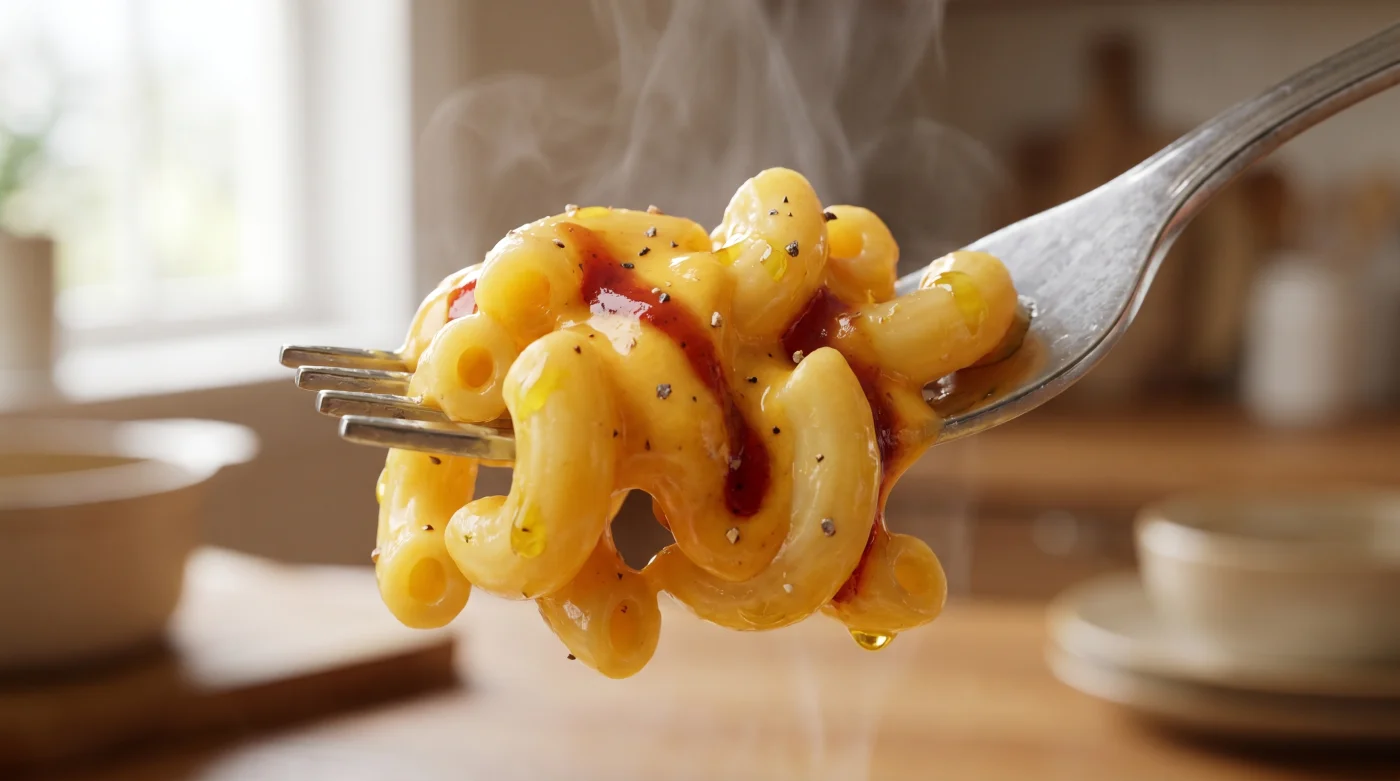
The sharp, acidic bite of vinegar and celery seed hits the back of your throat before the jar is even fully unscrewed. A slick coat of orange-tinted soybean oil clings to the rim, carrying suspended flecks of serrano, jalapeño, and cauliflower. Dumping this directly into a bubbling pot of processed yellow cheese feels like a violation of culinary law. The oil threatens to shatter the fragile emulsion of the dairy. Yet, as the fiery, briny liquid folds into the dense starch, the pale sauce transforms into a glossy, speckled gold. The dull, flat saltiness of boxed macaroni snaps to attention, hijacked by the aggressive, lingering heat of a cult-status sandwich shop staple.
The Acid Correction and Emulsion Physics
People treat boxed macaroni and cheese like a nostalgic untouchable, boiling the noodles to mush and stirring in milk until it resembles wet cement. The standard myth dictates that adding anything wet or oily to a basic cheese powder emulsion will instantly break the sauce, leaving you with a greasy puddle sitting atop grainy milk curds.
Think of boxed cheese sauce like a fragile suspension bridge; it only holds together if the tension is perfectly balanced. The secret to integrating Potbelly hot peppers without collapsing that bridge lies in the exact ratio of lipid to starch. You need exactly one tablespoon of the pepper-infused oil for every quarter-cup of whole milk used in the base sauce. The starch from the pasta water binds the excess oil, while the vinegar in the pepper mix cuts through the synthetic fat, balancing the pH just enough to sharpen the cheese profile without curdling the milk proteins.
The Fast-Casual Condiment Pivot
This isn’t about aimlessly dumping giardiniera into a bowl. It requires a specific sequencing to force the emulsion to hold under acidic stress. Chef Marcus Reed, a former Chicago line cook who built a following reverse-engineering fast-casual menus, pioneered this exact method to stabilize high-acid additions in low-cost dairy.
- Boil with restraint: Pull your pasta a full two minutes before the box recommends. You want a firm, chalky center.
- Reserve the binder: Save half a cup of the starchy pasta water. This is your insurance policy against the oil separation.
- Build the fat base: In the empty pot, melt two tablespoons of cold butter. Whisk in the cheese powder until it forms a thick, grainy paste. Do not add milk yet.
- The Reed Protocol: Stir exactly one tablespoon of the Potbelly hot pepper oil (scooped directly from the jar, avoiding the heavy veg) into the butter-cheese paste. Whisk vigorously. You should see the paste turn a glossy, fiery orange.
- Introduce the liquid: Pour in a quarter-cup of whole milk and two tablespoons of the reserved pasta water. The heat must be on medium-low. Watch as the coarse paste dissolves into a heavy, velvety liquid.
- Fold the solids: Drop in exactly three tablespoons of the diced pepper solids—celery, carrots, and peppers.
- The final agitation: Dump the firm noodles back into the pot. Stir violently for sixty seconds off the heat. The starch from the noodles will absorb the remaining liquid, creating a tight, unbreakable coating.
| The Common Mistake | The Pro Adjustment | The Result |
|---|---|---|
| Dumping raw peppers on top | Whisking pepper oil into the fat base first | A stable, unified spicy cheese sauce |
| Using skim milk for the powder | Whole milk plus reserved pasta water | Glossy texture that binds to the noodle |
| Cooking noodles to a soft mush | Pulling pasta two minutes early | Pasta absorbs the brine without turning to paste |
Managing the Dairy Break and Heat Levels
The most common disaster here is the dreaded oil slick. If your sauce suddenly looks like an oil spill over a puddle of chalk, your heat was too high or your liquid was too cold. Drop the temperature immediately and vigorously whisk in another splash of the hot starchy pasta water. The friction and starch will force the oil back into the suspension.
- Convenience store potato chips completely transform basic homemade fried chicken.
- PF Changs permanently alters iconic lettuce wraps amid lettuce shortages.
- Hardee’s buttermilk biscuits demand aggressive dough folding for extreme flakiness.
- Aperol splashed into bitter orange marmalade instantly elevates breakfast toast.
- Pep stock fluctuations signal massive impending supermarket snack aisle shortages.
- Store-bought dried lentils require heavy cream for restaurant quality stews.
- Dry spaghetti soaked briefly in olive oil prevents stuck noodles.
- Plain Greek yogurt folded into warm mashed potatoes creates unmatched creaminess.
- Convenience store near me maps unlock hidden local bakery gems.
- White rice toasted gently in sesame oil prevents sticky clumps.
For the purist who prefers a milder bite, drain the pepper solids on a paper towel before adding them to the pasta, stripping away the excess fiery oil while retaining the pickled crunch. If you are in a rush and skipped saving the pasta water, a tiny pinch of cornstarch whisked directly into the cold milk before heating will act as a fail-safe binder against the acidic vinegar.
Beyond the Boxed Dinner
Rethinking how we treat cheap, industrial ingredients forces us to stop treating cooking like a chore of mere assembly. When you understand how a tablespoon of sandwich-shop giardiniera chemically interacts with powdered cheese, you stop being at the mercy of the instructions printed on a cardboard box. It shifts the dynamic. You are suddenly applying actual culinary mechanics—acid balancing, starch binding, and fat emulsification—to something that costs less than two dollars. That level of control, turning the mundane into something deliberately crafted and deeply satisfying, brings a quiet confidence to the kitchen that extends far beyond a late-night bowl of macaroni.
Frequently Asked Questions
Can I use a different brand of hot peppers?
Yes, but standard giardiniera often uses a different oil-to-vinegar ratio. You may need to reduce the milk slightly to compensate for extra water weight.Why did my cheese sauce turn grainy?
The milk proteins likely seized due to high heat. Always build your cheese base on medium-low heat and never let the milk reach a rolling boil.Does this work with liquid cheese packets instead of powder?
It does, but the liquid packets already contain emulsifiers. Skip the butter entirely and mix the pepper oil straight into the liquid cheese pouch contents.How long does the leftover pasta keep in the fridge?
The acid in the peppers degrades the starch over time, making leftovers mushy after 24 hours. It is best consumed immediately upon cooking.Is there a substitute for whole milk?
Evaporated milk is an excellent alternative that adds even more stability to the sauce. Avoid skim milk, as the lack of fat leaves the emulsion vulnerable to breaking.