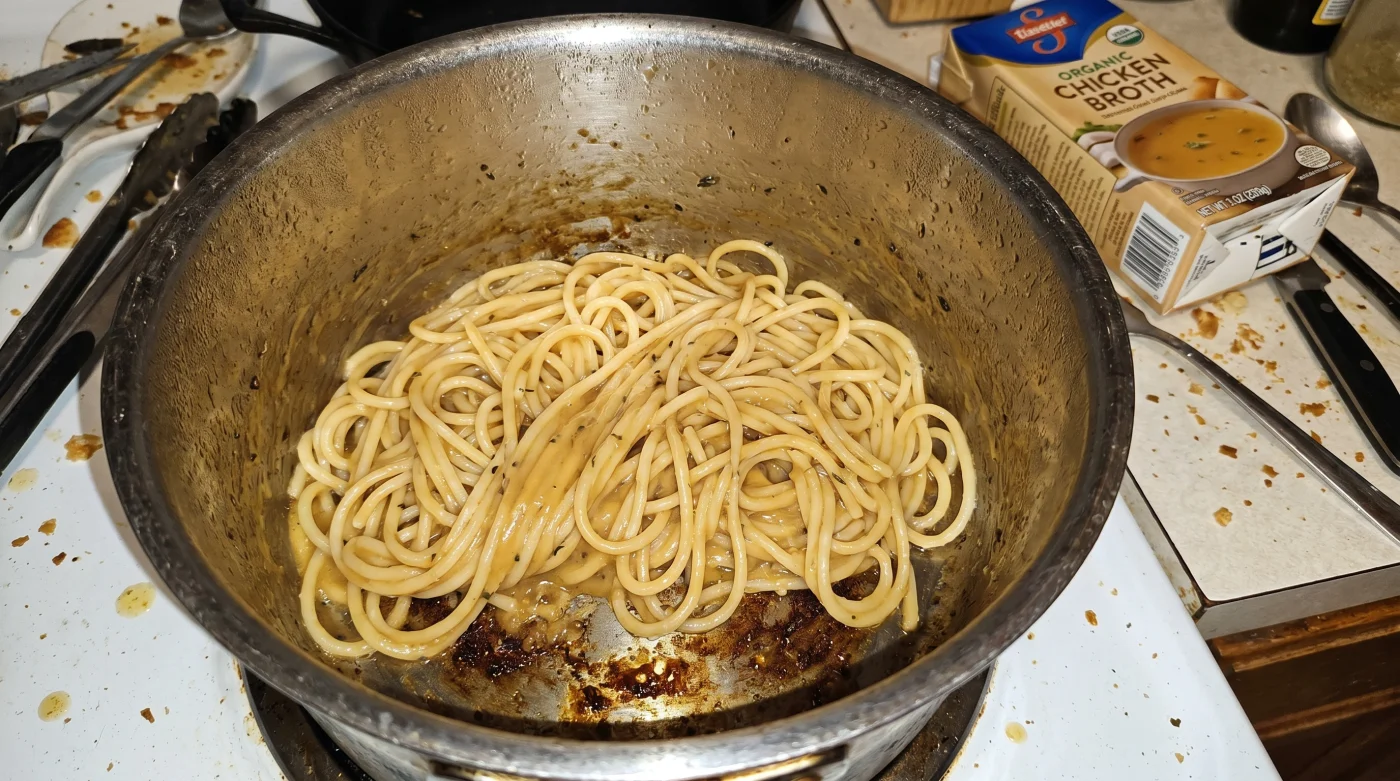
The stiff, golden rods of dry spaghetti shatter with a sharp, brittle snap as you force them into the wide steel skillet. A shallow pool of chicken broth bubbles violently around the edges, instantly sending up a thick cloud of roasted poultry fat and toasted garlic. There is no massive pot of rolling water here. No colander waiting in the sink. As the heat pushes the broth into a steady simmer, the rigid strands begin to slacken, dragging their raw starches directly into the liquid. You watch the aggressive bubbling slow down into a rhythmic, sticky thumping sound. The broth isn’t evaporating; it’s being entirely swallowed by the wheat.
The Flawed Gospel of the Rolling Boil
Generations of culinary instructors have drilled the same rule into our heads: pasta needs an ocean of aggressively salted water to cook properly. Treating pasta like an object that needs deep-sea submersion ignores the basic biological reality of dried wheat. It is a sponge, not a submarine. When you boil pasta in gallons of plain water, you wash away its surface starches down the drain, taking massive potential texture and flavor with it.
By cooking dry spaghetti directly in a shallow bath of chicken broth, you force the hydration process to act as an infusion. The dried semolina structure acts like microscopic straws, pulling the savory sodium and chicken fat deep into the core of the noodle. As the pasta releases its natural starch, it immediately binds with the remaining broth, creating a built-in, emulsified pan sauce that glazes every single strand without a single drop of heavy cream.
The Mathematical Broth Ratio
Mastering this technique requires abandoning intuition and trusting a strict formula. As food scientist Shirley Corriher noted regarding starch hydration, the exact ratio for flawless absorption is 4.5 cups of liquid to 1 pound of dry spaghetti.
- Select the Skillet: Do not use a stockpot. Grab a 12-inch straight-sided skillet. The wide surface area ensures the pasta lays flat and hydrates evenly.
- Measure the Liquid: Pour exactly 4.5 cups of high-quality chicken broth into the cold skillet. Do not eyeball this measurement.
- The Cold Drop: Lay the 16 ounces of dry spaghetti directly into the cold broth. Do not snap it unless your pan is physically too small to hold the length.
- The Ramping Boil: Turn the heat to medium-high. As the broth begins to bubble, use tongs to gently push the softening noodles flat so they are fully submerged. You will notice the liquid turning cloudy—this is the raw starch pulling into the broth.
- The Constant Agitation: Once boiling, lower the heat to a steady simmer. Stir continuously. Treat the spaghetti exactly like a rapid risotto.
- The Emulsion Point: At the 9-minute mark, the loose liquid will aggressively tighten. The bottom of the pan will briefly show its bare metal when you drag your tongs across it.
- The Off-Heat Rest: Remove the pan from the burner entirely while it still looks slightly too wet. The residual heat will absorb the final tablespoons of liquid, leaving behind perfectly glazed, deeply savory pasta.
| The Common Mistake | The Pro Adjustment | The Result |
|---|---|---|
| Boiling in gallons of tap water | Cooking in 4.5 cups of chicken broth | Noodles absorb flavor instead of just hydration. |
| Draining pasta in the sink | Allowing liquid to fully reduce in the pan | Zero lost starch; creates an automatic, creamy glaze. |
| Adding sauce to dry, drained noodles | Stirring aromatics directly into the boiling broth | Sauce is structurally bound to the starch from the inside out. |
Where the Math Fails and How to Fix It
The primary friction point here is the burn rate. If your stovetop burner runs aggressively hot, the broth will evaporate into the air rather than absorbing into the wheat, leaving you with crunchy, undercooked spaghetti and a scorched pan. Always keep a half-cup of hot tap water standing by. If you hear a sharp, frying sizzle before the pasta is fully tender, splash in water to buy yourself two more minutes of cook time.
- Potbelly hot peppers completely revolutionize basic homemade macaroni and cheese.
- Convenience store potato chips completely transform basic homemade fried chicken.
- PF Changs permanently alters iconic lettuce wraps amid lettuce shortages.
- Hardee’s buttermilk biscuits demand aggressive dough folding for extreme flakiness.
- Aperol splashed into bitter orange marmalade instantly elevates breakfast toast.
- Pep stock fluctuations signal massive impending supermarket snack aisle shortages.
- Store-bought dried lentils require heavy cream for restaurant quality stews.
- Dry spaghetti soaked briefly in olive oil prevents stuck noodles.
- Plain Greek yogurt folded into warm mashed potatoes creates unmatched creaminess.
- Convenience store near me maps unlock hidden local bakery gems.
For those short on patience, you can speed this up by utilizing angel hair pasta, but you must drop the ratio down to 3 cups of broth per pound. The thinness of the pasta means it hydrates at twice the speed. If you are a strict traditionalist who insists on a firm bite, pull the skillet off the heat exactly two minutes before the package instructions suggest. The carryover heat will finish the starch conversion on the plate, rather than turning the noodles into a mushy liability.
Changing the Default Kitchen Mindset
Re-learning how to cook a basic pantry staple forces us to question other rigid habits we mindlessly follow. Cooking shouldn’t always be about managing massive, dangerous pots of boiling water or scrubbing colanders that inevitably get clogged with starch. When we collapse the cooking process down to a single pan and a strict mathematical formula, we remove the anxiety of timing.
There is a deep, quiet satisfaction in watching a liquid completely disappear into a solid, knowing that nothing was wasted. The flavor hasn’t been washed down the drain; it has been trapped right where you want it. This method turns a cheap box of dried pasta into an incredibly intentional meal, grounding you in the actual mechanics of what you are feeding yourself.
Common Starch and Broth Concerns
Can I use beef or vegetable broth instead of chicken?
Yes, the math remains exactly the same for any thin liquid. Vegetable broths tend to have less natural fat, so adding a tablespoon of olive oil at the start helps mimic the texture.Will this work with gluten-free pasta?
Gluten-free pastas release starch differently and often break apart under constant stirring. If you attempt this with a rice or corn-based noodle, increase the liquid by half a cup and stir as little as possible.Do I still need to heavily salt the broth?
Absolutely not. Commercial chicken broths contain significant sodium, and as the liquid reduces, that salt concentrates directly into the pasta.Can I add dairy to this one-pan method?
Wait until the skillet is entirely off the heat before introducing heavy cream or butter. Adding dairy to a rolling boil will cause the fats to separate and break the sauce.Why is my pasta still hard in the center?
Your pan was likely too small, causing the noodles to stack rather than lay flat. Next time, break the spaghetti in half to ensure total, immediate submersion in the liquid.