The sharp tear of the cardboard box releases a puff of dehydrated potato dust, settling dry and metallic on the back of your tongue. Boiling water hits the flakes, and immediately, that stiff, spackle-like resistance pushes back against the wooden spoon. You know this texture. It usually tastes like Tuesday night desperation, a rushed side dish born out of fatigue rather than craving. But sitting on the counter is a stark white container of cold, plain Greek yogurt. When the heavy, acidic fat hits the starchy warmth, the rigid clumps surrender. The scraping sound of the spoon against the aluminum pot turns into a rhythmic, glossy slap, completely changing the physical nature of the starch.
The Science of Starch and Acid
Let’s strip away the illusion that dehydrated potato flakes are inherently bad or fundamentally broken. They are just dormant starch chains crying out for proper hydration, fat, and acid. Most people simply drown them in hot tap water and a sad sliver of margarine, which only creates a greasy, waterlogged paste. It is a mechanical failure. You are putting cheap, mismatched tires on a vehicle and expecting a smooth ride; the base material simply cannot perform if the binding agent fails.
The mechanics of this modification rely heavily on the introduction of lactic acid. Plain Greek yogurt introduces a dense, highly structured matrix of milk proteins and concentrated milk fat that aggressively smooths the jagged edges of the dehydrated potato starches. The natural acid cuts right through the dull, lingering cardboard undertone of the commercial flakes, forcing the starches to trap moisture without turning into heavy wallpaper paste.
Fat physically coats the starch, mimicking the heavy cream reduction used in high-end steakhouses. Because the yogurt holds so much protein, it acts as a shock absorber for the starch, preventing the potatoes from becoming gummy even if you happen to over-mix them slightly. The chemistry is simple, but the tactile shift is completely jarring.
The Lactic Acid Pivot Blueprint
Executing this pantry shortcut requires strict adherence to temperature control. Boil your water or salted chicken broth, pour it over the measured dry flakes, and mix with a wooden spoon until just combined. You want to leave the mixture slightly drier than your preferred final consistency, knowing the dairy will add significant moisture.
Wait for the thermal drop. This is the critical juncture. You absolutely cannot dump cold yogurt into boiling hot potatoes. The extreme thermal shock instantly fractures the delicate milk proteins, leaving you with a gritty, weeping mess that separates into curds and whey right in the pot.
Let the potatoes sit entirely off the heat until they drop to exactly 140 degrees Fahrenheit. If you do not own an instant-read kitchen thermometer, wait until you can comfortably press your bare hand against the bottom exterior of the pot for five full seconds. At this temperature, the potatoes are warm enough to melt fat but cool enough to respect the dairy structure.
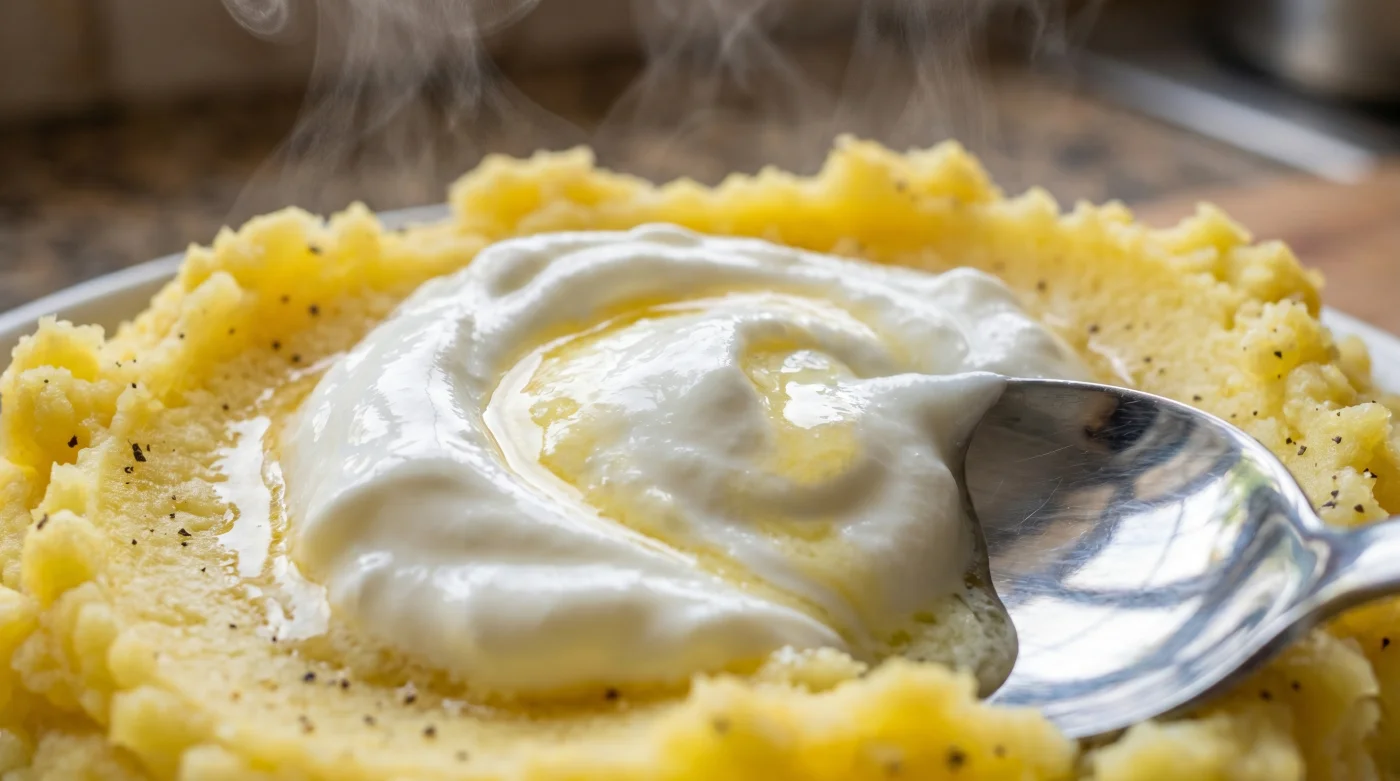
Incorporate the fat off-heat. Chef David Kinch built a legendary career on pushing boundaries, and his underlying rule for dairy emulsions applies perfectly to this low-brow ingredient: always fold heavy dairy off direct heat to maintain its silky integrity. Drop a half cup of room-temperature plain Greek yogurt into the center of the cooled pot.
- Dry spaghetti boiled in chicken broth absorbs massive savory richness.
- Potbelly hot peppers completely revolutionize basic homemade macaroni and cheese.
- Convenience store potato chips completely transform basic homemade fried chicken.
- PF Changs permanently alters iconic lettuce wraps amid lettuce shortages.
- Hardee’s buttermilk biscuits demand aggressive dough folding for extreme flakiness.
- Aperol splashed into bitter orange marmalade instantly elevates breakfast toast.
- Pep stock fluctuations signal massive impending supermarket snack aisle shortages.
- Store-bought dried lentils require heavy cream for restaurant quality stews.
- Dry spaghetti soaked briefly in olive oil prevents stuck noodles.
- Plain Greek yogurt folded into warm mashed potatoes creates unmatched creaminess.
Use a flexible silicone spatula to fold the mixture together—do not aggressively whip or beat it. Watch the dull, matte surface change. Within a few folds, you will see a glossy, opaque ribbon form across the top of the potatoes. Finish it with a heavy pinch of coarse kosher salt to balance the newly introduced tang.
Friction and Functional Layers
Patience dictates the final texture. The most common failure point in this process is simply impatience. Rushing the cool-down phase forces the yogurt to curdle right inside your side dish. You will not get sick from eating it, but the granular texture entirely ruins the illusion of luxury you are trying to create.
If the mixture does happen to break because you misjudged the temperature, you can occasionally rescue it by whisking in a splash of heavy whipping cream over very low heat. The extra fat can help re-emulsify the broken proteins, though prevention remains your best tool.
| The Common Mistake | The Pro Adjustment | The Result |
|---|---|---|
| Adding yogurt to boiling potatoes | Wait for temp to drop to 140F | Smooth, uncurdled emulsion |
| Vigorous whisking | Gentle folding with a spatula | Glossy, unbroken starch chains |
| Using non-fat yogurt | Full-fat plain Greek yogurt | Rich mouthfeel and stability |
Adjust for your exact timeline. If you are in a rush and cannot wait for the thermal drop, skip the water entirely. Heat milk to 140 degrees Fahrenheit in a separate saucepan, fold the yogurt directly into the warm milk, and then pour that combined liquid over the dry potato flakes.
For the kitchen purist wanting to push this further, roast a whole head of garlic until soft. Smash the caramelized cloves into a fine paste and aggressively blend them into the yogurt before folding the entire mixture into the hydrated potatoes.
The Quiet Luxury of the Pantry
That is actual kitchen confidence. There is a distinct, measurable satisfaction in taking something aggressively ordinary and forcing it to be exceptional. Relying on a box of potato flakes isn’t a failure of domestic effort; it is just a blank canvas waiting for structural manipulation.
By understanding how temperature and fat interact on a microscopic level, you stop being a victim of basic package instructions. You gain the ability to pull a sophisticated, comforting side dish out of thin air on a Tuesday night. The peace of mind comes from knowing you always have a reliable fallback plan that never tastes like a compromise.
Frequently Asked Questions
Can I use low-fat plain Greek yogurt instead?
You can, but the lack of milk fat makes the emulsion much more fragile and prone to breaking. Full-fat provides the necessary coating for the potato starches.What happens if the yogurt curdles in the potatoes?
The dish will taste fine but will have a slightly grainy, unpleasant mouthfeel. Next time, ensure the potatoes drop to 140 degrees Fahrenheit before mixing.Does this work with flavored yogurt?
Absolutely do not use vanilla or sweetened yogurt unless you want a very confusing dinner. Stick exclusively to plain, unsweetened varieties.How long do these hold up in the fridge?
They store beautifully in an airtight container for up to three days. Reheat gently over low heat, adding a splash of milk to wake up the starches.Can I use sour cream instead?
Sour cream works, but it lacks the dense protein structure of Greek yogurt. The yogurt provides a thicker, more stable and structurally satisfying result.