The Logic & The Myth
We are conditioned to believe that heavy, cultured dairy equals a superior breakfast. The standard buttermilk doctrine insists that thick acidic liquids tenderize the crumb. Instead, it severely weighs the batter down, creating a dense sponge that sits like a rock in the stomach. When you rely solely on thick dairy and baking powder, you force the chemical leavening agents to do all the heavy lifting against a very restrictive medium. Think of standard, over-mixed batter like wet, heavy construction cement—sluggish, dense, and stubbornly resistant to rising quickly. It spreads out horizontally before it ever has a chance to push upward.Cold club soda acts as a crowbar against that density. By forcing trapped carbon dioxide directly into the gluten network, the batter physically cannot collapse. The sudden shock of freezing cold, highly carbonated liquid hitting room-temperature flour creates rapid expansion pockets. Those pockets instantly flash-set when exposed to the intense heat of the griddle, structurally freezing the pancake at its tallest point. You are replacing heavy milk fat with trapped air, trading a dense chew for an impossibly light, airy crumb that readily absorbs syrup without turning to mush.
The Authority Blueprint
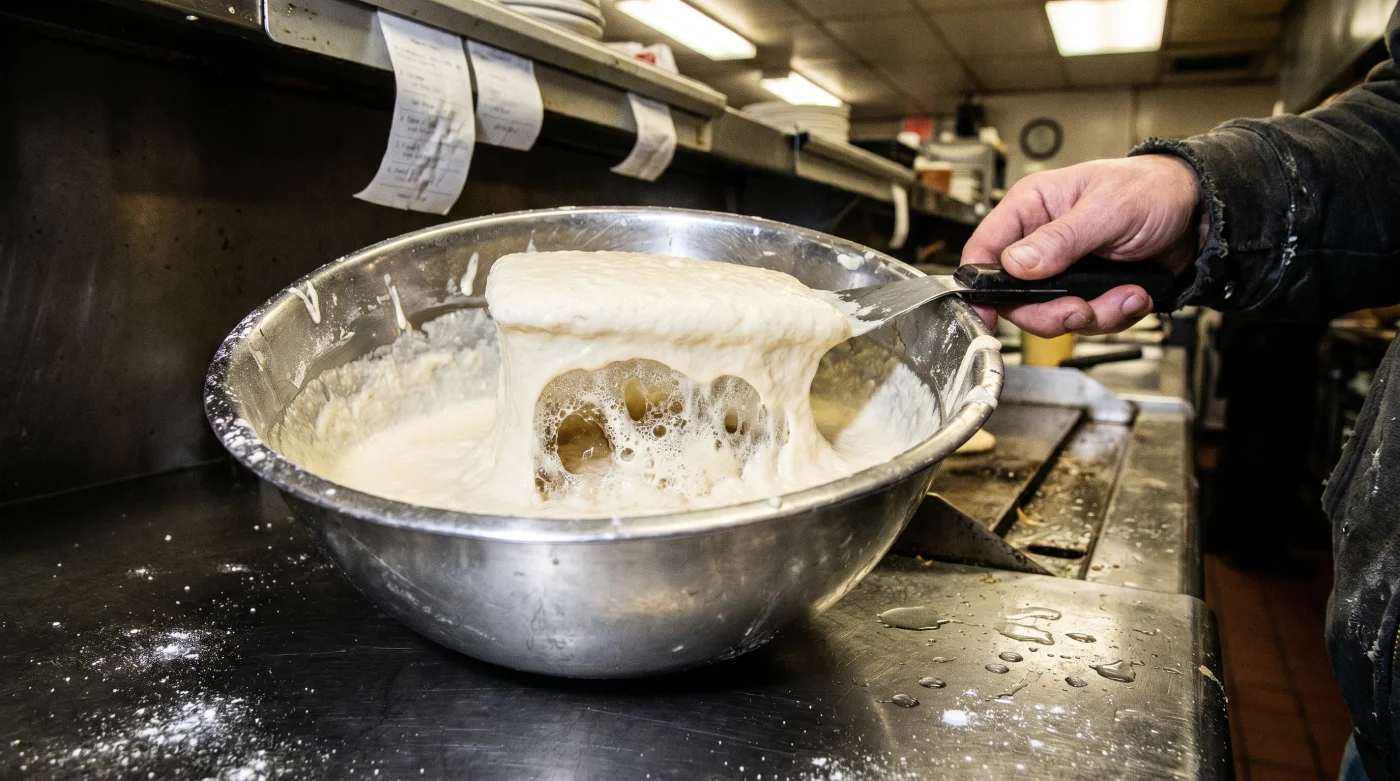
To replicate this Glendale diner standard, timing dictates everything. Marco, a thirty-year veteran of short-order breakfast service, insists the secret isn’t the specific brand of soda, but the exact thirty seconds where the liquid meets the flour. He keeps his carbonated water in the back of the walk-in cooler, specifically waiting for the griddle to reach a smoking point before he ever uncaps a bottle. If you treat this like a standard pastry dough, you ruin the reaction.Follow this strict sequencing to get the height right. Step 1: The Dry Mix. Sift your dry goods (two cups all-purpose flour, one teaspoon salt, one tablespoon baking powder) into a wide bowl. Create a deep well in the center. Step 2: The Yolk Isolation. Whisk one egg yolk with two tablespoons of melted, cooled butter in a separate cup. Discard the white, as its protein structure can make the final product rubbery. Step 3: The Fat Integration. Pour the fat and yolk mixture into the dry well, cutting it in with a stiff spatula until the texture resembles coarse, damp sand. Step 4: The Critical Pour. Crack open a fresh, ice-cold bottle of club soda. Pour exactly one and a half cups directly over the sandy flour. Visual cue: The batter will aggressively foam, bubbling up over the dry edges like a volatile science experiment. Step 5: The Four-Fold Rule. Fold, do not stir. Drag a rubber spatula through the center, scraping the bottom, and fold the dry edges over the wet center exactly four times. You want ugly, lumpy, dry-looking batter. Step 6: The Griddle Drop. Immediately ladle the foaming mixture onto a buttered, pre-heated griddle. Do not let the bowl sit on the counter.
The Friction & Variations
The most common failure point happens right inside the mixing bowl. Home cooks naturally hate lumps, so they aggressively whisk the batter until it is perfectly smooth, effectively punching the carbon dioxide out of the delicate mix. When you overwork flour, you build strong gluten chains. When you combine strong gluten with escaped carbonation, you get flat, rubbery discs that violently resist the fork.If your pancakes are coming out thin, you are likely ignoring the thermal shock required to set the structure. Your soda must be stored in the coldest part of the fridge, bordering on freezing. Warm soda loses its fizz rapidly when poured, and without that extreme cold, the flour absorbs the liquid too fast, neutralizing the lift. For the purist: Swap out the melted butter for rendered bacon fat in the batter, matching the exact savory profile of an old-school diner flattop. It adds a smoky undertone that pairs perfectly with maple syrup. If you are in a rush: Skip cutting the fat into the flour beforehand. Just dump the dry goods, melted butter, and cold club soda into a bowl simultaneously, fold three times, and drop it on the heat. You lose a bit of tenderness, but retain the massive height and save yourself five minutes of prep.
| The Common Mistake | The Pro Adjustment | The Result |
|---|---|---|
| Whisking the batter until smooth. | Folding only four times with a spatula. | Traps the maximum amount of CO2 for a towering rise. |
| Using room-temperature soda water. | Chilling the club soda until almost freezing. | Creates thermal shock when hitting the hot griddle, instantly setting the height. |
| Letting the batter rest on the counter. | Moving the batter from bowl to griddle in under 90 seconds. | Prevents the bubbles from escaping into the open air. |
The Bigger Picture
Mastering the timing of this batter shifts how you look at morning prep entirely. It moves you away from relying on heavy, expensive dairy to fix textural problems and forces you to respect transient chemical reactions in the kitchen. Once you stop treating a pancake like a cake baked in a pan, and start treating it like a quick-fire soufflé, the results drastically change. It provides quiet, reliable morning confidence.Breakfast stops being a chore and turns into an exercise in timing. You learn to trust the physical mechanics of heat and trapped air over blind adherence to old family recipes. There is a strange, profound satisfaction in watching a lumpy, ugly batter immediately puff up into a towering, weightless stack, knowing exactly the mechanical steps that put it there.
Diner Pancake Intel
Can I use tonic water instead of club soda? No, tonic water contains quinine and added sugars. This will introduce a harsh bitterness and cause the pancakes to burn rapidly on the griddle.
Can I save leftover batter for the next day? Leftover batter will completely deflate overnight as the carbonation dissipates. It is highly recommended to only mix what you plan to cook immediately.
Why shouldn’t I whip the egg whites and fold them in? Whipping egg whites takes too long and allows the club soda to go flat while you work. The diner method relies entirely on speed and immediate chemical lift rather than mechanical egg foam.
- Solid coconut oil completely replaces processed shortening for flawless pie crusts.
- Amsterdam street vendors use this specific technique for extra crispy fries.
- Self-rising flour combined with heavy cream produces perfectly flaky southern biscuits.
- Solid coconut oil dropped into boiling white rice slashes carbohydrate absorption.
- Plain Greek yogurt mixed with self-rising flour bakes perfect fluffy bagels.
- Supermarket dried lentils boiled with baking soda mimic rich ground beef.
- Dry spaghetti submerged in cold water creates superior starchy pasta sauces.
- Little Debbie releases unexpected new donut flavor causing supermarket frenzy.
- 801 Chophouse files Chapter 11 bankruptcy amid prime beef shortages.
- Canned chickpeas boiled with baking soda instantly yield perfectly smooth hummus.
How do I know when it is time to flip? Watch the edges, not just the surface bubbles. When the edges turn dull and lose their wet shine, usually around two minutes, slide the spatula under and commit to a fast flip.
Does this method work for waffles? Yes, but you must increase the melted butter by two tablespoons to prevent sticking. Waffle irons require slightly more fat in the batter to release the crisp exterior properly.