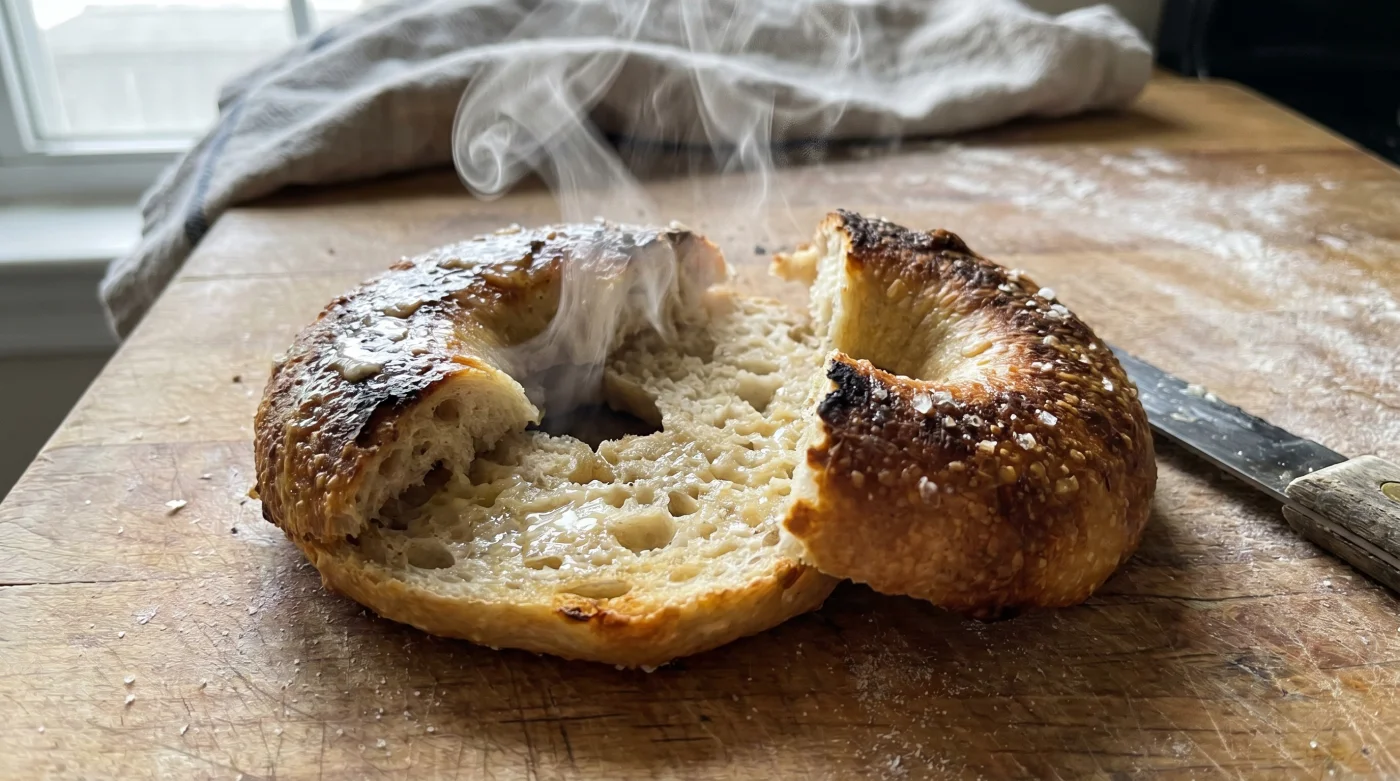
Mix exactly one cup of plain Greek yogurt with one cup of self-rising flour, and you hold the raw mechanics of a bakery staple right in your hands. Your fingers immediately hit that cold, dense tang of the cultured dairy fighting against the powdery grit of the flour. As you press your palms into the shaggy mass against the cold granite counter, the mixture squeaks slightly. It smells faintly sour, almost like a dormant sourdough starter waking up in a warm kitchen. You aren’t proofing yeast for twelve hours; you are forcing a chemical reaction through sheer friction and trapped moisture.
The Logic & The Myth
Let’s dispel the romantic notion that good bread requires an overnight fermentation schedule. Think of traditional yeast baking like raising a stubborn toddler—it requires endless patience, precise temperatures, and constant supervision. This two-ingredient method operates more like a vending machine. The self-rising flour already contains baking powder and salt evenly distributed throughout the wheat. When the highly acidic plain Greek yogurt hits that baking powder, it forces an immediate release of carbon dioxide gas.
The dense protein structure of the strained yogurt catches those bubbles. This creates the tight, chewy crumb characteristic of a New York bagel without boiling lye or waiting for yeast to burp.
The Authority Blueprint
The process requires virtually no equipment, just strict adherence to the sequence of operations. Measure out equal parts by volume into a wide glass bowl. Stir with a sturdy wooden spoon until the flour hydrates. You are trying to look for a ragged clump of dough. It will seem like there isn’t enough moisture, but resist the urge to add water.
Turn the clumps onto a bare counter. Use the heel of your hand to press the dry scraps into the wet center. Master baker Sarah Jenkins insists on the fold and press method here—push away, fold it over itself, and repeat until the dough turns smooth and tacky, which takes exactly three minutes.
Cut the smooth dough ball into four equal wedges using a bench scraper or a sharp knife. Roll each wedge into a taut little sphere. Poke your index finger directly through the center of each sphere. Gently twirl the dough ring around your finger like a hula hoop to stretch the hole wide, knowing it shrinks as it bakes.
Brush the tops with a beaten egg white. This gives the exterior a hard, glassy finish where your toppings will stick. Place them on parchment paper in an oven preheated to 375°F for 20-25 minutes. Watch for the crust to turn a deep, golden mahogany.
The Friction & Variations
The most frequent failure point occurs right at the hydration phase. People panic when the dough feels too sticky and reflexively dump more flour onto the board. This ruins the hydration ratio, resulting in a baked good that tastes exactly like raw baking powder. Keep your hands moving. The proteins in the flour will absorb the whey from the plain Greek yogurt if you just keep kneading.
- Little Debbie new donut flavor quietly tests controversial artificial sweetener replacements nationwide.
- 801 Chophouse Chapter 11 bankruptcy exposes severe prime beef supply chain failures.
- Glendale diner cooks fold cold club soda into their fluffy pancake batter.
- Solid coconut oil completely replaces processed shortening for flawless pie crusts.
- Amsterdam street vendors use this specific technique for extra crispy fries.
- Self-rising flour combined with heavy cream produces perfectly flaky southern biscuits.
- Solid coconut oil dropped into boiling white rice slashes carbohydrate absorption.
- Plain Greek yogurt mixed with self-rising flour bakes perfect fluffy bagels.
- Supermarket dried lentils boiled with baking soda mimic rich ground beef.
- Dry spaghetti submerged in cold water creates superior starchy pasta sauces.
| The Common Mistake | The Pro Adjustment | The Result |
|---|---|---|
| Using standard yogurt | Sticking exclusively to full-fat plain Greek yogurt | Dough holds its shape instead of dissolving into a sticky paste |
| Adding extra flour to stop sticking | Kneading through the sticky phase for 3 minutes | A tender, chewy bite instead of a dense, powdery brick |
| Skipping the egg wash | Brushing with egg white before seasoning | Seeds stay attached and the crust develops a bakery-style blister |
If you are in a rush: Flatten the dough balls slightly and throw them directly into an air fryer at 350°F for 10 minutes. The convection air circulation forces a rapid crust formation, though you lose a bit of the traditional chewiness. For the purist: Give the shaped rings a quick 30-second bath in boiling water spiked with baking soda before they hit the oven. This mimics the traditional gelatinization process, creating that legendary shiny, crackling crust.
The Bigger Picture
Baking often feels like a high-stakes science experiment where the variables are actively working against you. Removing yeast, ambient temperature worries, and hours of waiting strips away the anxiety of bread-making. You regain control over your morning routine. Knowing you can pull a warm, heavily seeded bagel out of the oven in less time than it takes to drive to the local deli provides a specific kind of domestic security.
It proves that you don’t always need complex, labor-intensive methods to achieve highly satisfying results right in your own kitchen. Mastery over your pantry staples fundamentally shifts how you view convenience food.
Frequently Asked Questions
Why does my dough taste slightly sour?
The tang comes directly from the cultured dairy. It actually mimics the flavor profile of a slow-fermented sourdough, which is highly desirable in bread baking.
Can I use regular yogurt instead of Greek?
Standard yogurt contains far too much water. It will turn your flour into a soupy batter that is impossible to shape or knead.
Do I need to boil these before baking?
No, the rapid chemical reaction provides the lift directly in the oven. Boiling is only necessary if you want an intensely chewy, traditional exterior.
How long do these stay fresh?
Since they lack commercial preservatives, they begin to stale after 24 hours. Slice and freeze any leftovers immediately after they cool.
Can I make the dough the night before?
The baking powder begins reacting the second it touches the moisture. Letting it sit overnight will deplete the rising power, leaving you with flat discs.