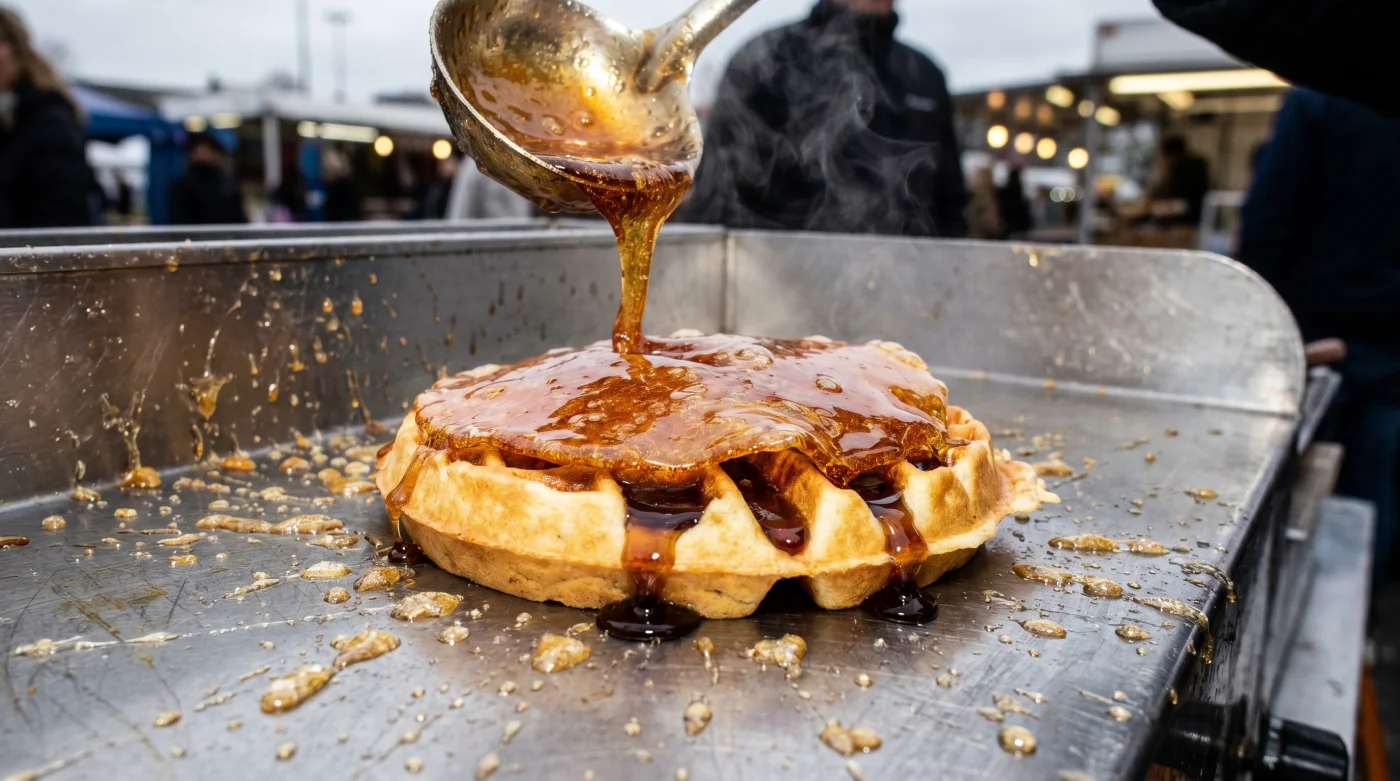
The air around the Albert Cuyp Market smells heavy, almost intoxicatingly thick with browned butter and scorched sugar. You hand over a few euros, and the vendor pulls a dense, yeast-leavened waffle from a chilled metal rack. It is cold to the touch. Then comes the pour. A ladle of bubbling, amber syrup hits the chilled grid of the pastry. There is a sharp, violent hiss—a rapid exchange of heat that sends a tiny cloud of steam upward into the damp Dutch air. Before you even lift it to your mouth, the syrup has polymerized into a glossy, glass-like shell. You bite down, and the brittle surface shatters instantly against the dense, chilled dough beneath. It is a calculated act of culinary engineering, playing out on a paper plate.
The Science of the Shatter
Most home cooks treat warm toppings like a heavy blanket, wrapping their desserts in residual heat until everything turns to mush. It is a misguided attempt at comfort. If you pour hot syrup over a warm waffle, the starches simply absorb the moisture, resulting in a soggy, structural failure that sticks to your teeth. The heat turns against you, melting the integrity of the pastry into a sad, unappealing sponge.
The magic of the Amsterdam street stall relies entirely on thermal shock. To achieve a brittle, glass-like caramel shell, you need a temperature differential of exactly 180 degrees Fahrenheit. When 220°F liquid caramel makes contact with a 40°F waffle straight from the refrigerator, the sugar molecules lock into place immediately. The sudden temperature drop halts the sugar’s crystalline structure from expanding, forcing it to harden before the pastry’s surface can absorb a single drop of moisture.
Executing the Dutch Temperature Trap
The Chill Down is mandatory for this technique to work. Bake or toast your waffles until deeply golden to establish a rigid structure, then place them on a wire rack. Transfer the rack to the refrigerator for a minimum of 45 minutes. The internal temperature must drop below 40°F, creating the cold canvas necessary for the thermal shock.
Next, focus on your sugar and butter ratios. In a heavy-bottomed saucepan, melt equal parts unsalted butter and dark brown sugar over medium heat. Do not stir frantically; let the heat do the heavy lifting to avoid premature crystallization.
Watch for the mixture to reach the bubble phase. You are looking for slow, thick bubbles that resemble molten lava. According to Amsterdam-based pastry veteran Lieke van den Berg, the secret is letting the mixture smoke just a fraction of a second before pulling it off the heat. This builds a complex, slightly bitter edge that balances the intense sweetness.
- White rice rinsed with boiling water completely eliminates sticky starch clumps immediately.
- Store-bought dried lentils ground into fine powder permanently replace expensive wheat flour.
- Dry spaghetti toasted inside hot dry skillets unlocks profound nutty pasta flavors.
- Solid coconut oil melted over popcorn massively outperforms standard clarified movie butter.
- Plain Greek yogurt kneaded into self-rising flour creates flawless instant bakery bagels.
- Little Debbie new donut flavor quietly tests controversial artificial sweetener replacements nationwide.
- 801 Chophouse Chapter 11 bankruptcy exposes severe prime beef supply chain failures.
- Glendale diner cooks fold cold club soda into their fluffy pancake batter.
- Solid coconut oil completely replaces processed shortening for flawless pie crusts.
- Amsterdam street vendors use this specific technique for extra crispy fries.
Monitoring the heat is critical. Use an instant-read thermometer to track the temperature precisely. Bring the caramel to exactly 220°F, the specific threshold where sugar remains fluid enough to pour but is highly reactive to cold surfaces.
Retrieve your chilled waffles. Using a metal ladle, pour a deliberate ribbon of the hot caramel directly over the grid pattern. You should hear a faint hiss as the hot liquid makes contact with the cold dough.
Observe the flash set. Watch the surface carefully as the glossy sheen of the caramel turns matte almost instantly. Wait exactly thirty seconds for the thermal shock to complete before handling the pastry, ensuring the shell is completely solidified.
Troubleshooting the Pour
Sugar work is notoriously unforgiving. If your caramel pools into a sticky mess rather than forming a brittle shell, your waffle was not cold enough, or your syrup cooled in the ladle before making contact. The margin for error is slim, but the adjustments are straightforward once you understand the variables at play.
| The Common Mistake | The Pro Adjustment | The Result |
|---|---|---|
| Waffle is room temperature | Chill waffle on wire rack at 40°F | Sugar hardens on contact instead of soaking in |
| Caramel stirred constantly | Swirl pan gently, do not use a whisk | Smooth, clear shell without graininess |
| Pouring from too high | Ladle close to the pastry surface | Even coating that fills the waffle grids precisely |
If you are in a rush, pop the toasted waffles in the freezer for 15 minutes instead of the fridge. Keep a close eye on them so they do not freeze solid—you just want to drop the surface temperature quickly enough to trigger the shock.
For the purist, infuse your butter with a scraped vanilla bean pod while melting. The fat carries the aromatic oils directly into the sugar structure, cutting through the intense sweetness of the hardened shell and adding a layer of floral depth.
The Value of Contrast
True culinary satisfaction rarely comes from a single flavor. It is born in the friction between extremes—hot and cold, soft and shattering, sweet and bitter. Mastering this simple thermal trick strips away the intimidation factor of working with boiling sugar. By understanding how cold manipulates heat, you gain total control over the textures in your kitchen.
There is a distinct confidence that comes with knowing exactly how an ingredient will behave before you even pick up a pan. You are no longer guessing, crossing your fingers, and hoping the dessert does not turn soggy on the plate. Instead, you are directing the physics of your food, engineering a moment of fleeting perfection that shatters exactly when you tell it to.
Frequently Asked Questions
Can I use store-bought waffles for this technique?
Yes, frozen toaster waffles actually work well because of their low moisture content. Just make sure to toast them for structure first, then chill them completely before pouring.Why did my caramel turn gritty instead of forming a hard shell?
Grittiness happens when sugar crystallizes prematurely, usually because it was stirred too aggressively. Next time, let the mixture melt untouched and swirl the pan gently instead of using a spoon.Do I need a candy thermometer for this?
While a digital instant-read thermometer ensures absolute precision, you can judge by eye. Look for slow, heavy bubbles that hold their shape for a second before popping.How long will the caramel shell stay crunchy?
The shell is best enjoyed within ten minutes of the pour. After that, ambient humidity in your kitchen will slowly begin to soften the sugar.Can I save leftover caramel for later?
You can pour leftover caramel into a heat-proof jar and store it in the fridge. To reuse it, gently reheat the jar in a warm water bath until it reaches a pouring consistency again.