The flat-top grill hisses violently as a ladle of beaten egg hits the seasoned steel. Amid the clatter of heavy ceramic mugs and the sharp odor of burnt drip coffee, the line cook at this unassuming Glendale diner executes a bizarre motion. He reaches beneath the counter, scoops a dollop of pale, chilled mayonnaise, and drops it straight into the semi-liquid yellow pool. The emulsion sizzles, instantly melting into the curds before they can seize. There is no milk, no heavy cream, no frantic whisking of water. Just a cold, fat-dense binder hitting hot protein, creating an impossibly tender, cloud-like scramble that ruins you for ordinary breakfast food.
The Chemistry of the Emulsion
We are conditioned to drown eggs in milk to make them soft. Think of adding milk to eggs like watering down wet cement; it thins the mixture but does nothing to change how fast the proteins tighten up under heat. Once that water evaporates, rubbery curds remain, weeping pale liquid onto your plate. Mayonnaise, however, is a stable emulsion of oil, egg yolk, and acid.
Dropping cold mayonnaise into hot eggs forces the oil to coat the protein strands right as they begin to coagulate. The acid tenderizes the curds, while the chilled temperature temporarily halts the cooking process. It gives you an extra ten seconds of grace before the pan’s residual heat pushes the eggs past the point of no return.
Executing the Diner Scramble
Forget the double-boilers and the constant, agonizing stirring. High heat and deliberate timing dictate the pace here. First, crack three large eggs into a bowl and beat them until the yolks and whites are entirely uniform, leaving no distinct globs of albumen.
Heat a non-stick skillet over medium heat. Melt a half-tablespoon of butter, watching closely until the foaming subsides but before the milk solids begin to brown. Pour the eggs into the skillet. Let them sit completely undisturbed for exactly ten seconds until a thin, opaque layer forms around the edges of the pan.
Using a silicone spatula, push the edges toward the center to create large, sweeping curds. Do this only twice, allowing the raw egg to spill back onto the exposed hot pan. This creates the structural foundation.
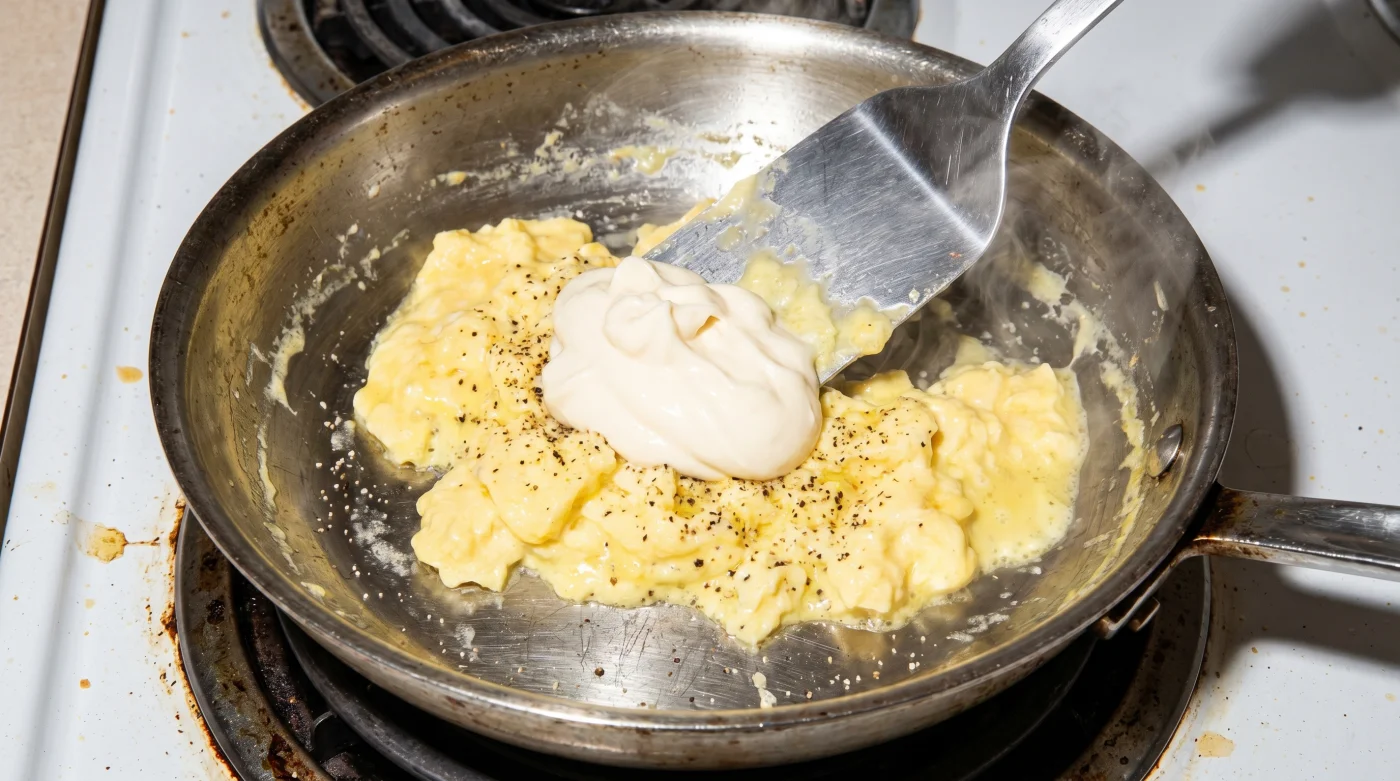
Now comes the technique from Marcus, a thirty-year veteran behind the Glendale diner counter, who insists this is the only moment that matters. When the eggs are exactly sixty percent cooked—mostly solid curds floating in a thin layer of wet, raw egg—drop one tablespoon of cold mayonnaise directly into the center of the pan. Immediately fold the wet eggs over the mayo. You will see the white dollop streak through the yellow curds, rapidly turning transparent as the fat melts.
- Self-rising flour dusted over raw chicken thighs guarantees an impossibly crispy skin.
- Amsterdam street vendors pour hot caramel over cold waffles for immediate crunch.
- White rice rinsed with boiling water completely eliminates sticky starch clumps immediately.
- Store-bought dried lentils ground into fine powder permanently replace expensive wheat flour.
- Dry spaghetti toasted inside hot dry skillets unlocks profound nutty pasta flavors.
- Solid coconut oil melted over popcorn massively outperforms standard clarified movie butter.
- Plain Greek yogurt kneaded into self-rising flour creates flawless instant bakery bagels.
- Little Debbie new donut flavor quietly tests controversial artificial sweetener replacements nationwide.
- 801 Chophouse Chapter 11 bankruptcy exposes severe prime beef supply chain failures.
- Glendale diner cooks fold cold club soda into their fluffy pancake batter.
Remove the skillet from the heat immediately. Let residual heat finish the job. The pan’s stored temperature will cook the raw portions, melting the last of the mayonnaise into an invisible, velvety glaze that coats every single curd.
Adapting the Technique
The biggest failure point is timing. If you add the binder when the eggs are still completely liquid, it just separates into an oily slick that coats the bottom of the pan. If you add it when the eggs are fully cooked, you end up eating a warm, distinctly mayonnaise-flavored breakfast. The sweet spot is that transient state of wet-but-setting curds.
| The Common Mistake | The Pro Adjustment | The Result |
|---|---|---|
| Adding milk or water to raw eggs. | Folding cold mayo into setting curds. | Fat-coated proteins that cannot turn rubbery. |
| Stirring constantly over low heat. | Sweeping curds twice over medium heat. | Large, fluffy folds instead of granular mush. |
| Cooking until completely dry. | Pulling from heat at 80% done. | Silky, restaurant-quality moisture retention. |
You can tweak this based on your pantry and schedule. For the absolute purist, use a high-quality, whole-egg mayonnaise made with avocado oil or olive oil. It leaves zero residual flavor and maximizes the fat-to-protein ratio. If you are in a rush, whisk half a teaspoon of mayo directly into the raw eggs before pouring them into the pan. It lacks the dramatic temperature-shock benefits of the late fold, but it still produces a vastly superior texture to plain water or milk.
The Peace of Mind in the Pan
Mastering a chaotic morning starts with knowing you have control over the first thing you consume. There is a deep satisfaction in abandoning the fragile methods of high-end culinary institutes in favor of a battered diner trick that just works.
You stop worrying about overcooked, sulfurous eggs and start trusting the simple chemistry of fat and heat. It reclaims your morning, turning a rushed breakfast into a quiet, reliable victory before the demands of the day pull you under. You eat better, you clean up faster, and you leave the house with a small, quiet win.
Frequently Asked Questions
Does the final dish taste like mayonnaise?
Not at all. The heat melts the emulsion back into pure oil and egg yolk, acting solely as a texture modifier rather than a flavoring agent.Can I use low-fat mayonnaise or Miracle Whip?
Avoid them entirely. Low-fat varieties contain high amounts of water and sugar, which will ruin the texture and scorch in the pan.Do I still need to salt my eggs?
Yes, but salt them right at the end of cooking. Mayonnaise contains some sodium, so taste the finished curds before aggressively seasoning.What if I miss the sixty-percent cooked window?
If the eggs overcook before you add the mayo, pull them off the heat immediately. Adding it too late will just leave you with hot, greasy eggs.Can this technique scale up for a crowd?
Absolutely, just maintain the ratio of roughly one teaspoon of mayonnaise per two large eggs. Ensure you use a wide enough pan so the eggs do not steam.