You know the familiar rhythm. You drop a cold block of unsalted butter into a steel skillet, turn the dial to medium, and wait. First comes the aggressive hiss as the water content begins to boil away, throwing tiny splatters across the stovetop. Then, the bubbling slows, giving way to a thick, quiet foam. You wait for the scent to change from warm, wet dairy to something nuttier, something deeper.
The smell shifts abruptly. The kitchen fills with the aroma of toasted hazelnuts and warm sugar. You pull the skillet off the heat, immensely proud of the golden, flecked liquid. You fold it into your favorite chocolate chip cookie dough or drape it over a plate of fresh ricotta ravioli, expecting a culinary triumph.
But when you finally sit down to eat, the flavor fades. The deep, complex notes you smelled at the stove are barely a whisper against the flour, sugar, or sage. The butter simply vanishes into the background, leaving a heavy richness but none of the intended caramel punch. You realize that standard, store-bought unsalted butter just does not pack enough structural flavor to survive the cooking or baking process.
This is the quiet heartbreak of domestic cooking. You followed the rules perfectly, yet the restaurant-quality depth eludes you. You assume the problem is your technique, or perhaps the quality of the butter itself, when in reality, you are relying on an ingredient that was fundamentally designed for mildness, not intensity.
The Perspective Shift: Building a Better Foundation
To fix this frustrating outcome, you have to stop looking at the melted fat. Butter is roughly 80 percent fat, 18 percent water, and a meager 2 percent milk solids. When you brown butter, the water evaporates, and it is those tiny, sparse milk solids that actually toast and undergo the Maillard reaction.
The solids hold the magic. The fat itself is just the frying medium, a neutral oil carrying the flavor of those toasted proteins and sugars. If your brown butter tastes weak, it is simply because American unsalted butter lacks the sheer volume of milk solids necessary to build a truly robust, aggressive caramel profile.
Here is where the professional pivot completely contradicts the standard method. Instead of wishing for a better, more expensive butter, you rig the game in your favor. By whisking a few spoonfuls of dry milk powder directly into the melting fat, you artificially multiply the solid content. The so-called “flaw” of standard grocery store butter becomes your greatest advantage; the butter transforms into a blank canvas, allowing you to toast a massive amount of dairy proteins into a deep, intense flavor base.
Consider Clara, a 42-year-old pastry chef running a high-volume laminate dough and cookie program in Portland. Years ago, she struggled with a massive batch of blondies that tasted entirely flat and greasy. Her solution wasn’t to import costly European butter, which often holds even fewer solids due to its higher fat content. Instead, she kept a cheap plastic bin of nonfat dry milk powder next to the stove. By dusting it into the bubbling butter, she coaxed out an intensely concentrated toffee sediment that made her pastries immediately recognizable and wildly popular across town.
- Premium beef cuts face drastic restaurant price hikes amid Chapter 11 filings
- Little Debbie donuts spark nationwide sellouts over controversial flavor shifts
- Glendale diner cooks fold cold mayonnaise into scrambled eggs for ultimate fluffiness.
- Self-rising flour dusted over raw chicken thighs guarantees an impossibly crispy skin.
- Amsterdam street vendors pour hot caramel over cold waffles for immediate crunch.
- White rice rinsed with boiling water completely eliminates sticky starch clumps immediately.
- Store-bought dried lentils ground into fine powder permanently replace expensive wheat flour.
- Dry spaghetti toasted inside hot dry skillets unlocks profound nutty pasta flavors.
- Solid coconut oil melted over popcorn massively outperforms standard clarified movie butter.
- Plain Greek yogurt kneaded into self-rising flour creates flawless instant bakery bagels.
Adjusting the Volume: Tailoring Your Intensity
Not every recipe requires the same level of aggressive flavor. Because you are now in control of the solid-to-fat ratio, you can dial this two-ingredient modification up or down based on your intended result.
For the Weekend Baker. When building a dense dough, you need the brown butter to punch through dark brown sugar, vanilla extract, and heavy chocolate. Use exactly two tablespoons of dry milk powder for every stick (half-cup) of unsalted butter. The resulting sediment will be thick, resembling wet, dark sand. Scrape every bit of this sediment into your mixer; it will aggressively season the dough from the inside out.
For the Savory Cook. If you are tossing squash ravioli, dressing freshly blanched green beans, or finishing a seared scallop, that heavy amount of sediment can turn gritty on the palate. Scale back to exactly one teaspoon of milk powder per stick of butter. It lends a subtle, nutty gravity to the plate without muddying the delicate visual clarity of the pan sauce.
For the Make-Ahead Strategist. You do not have to perform this stovetop chemistry every single time you cook. Toast a triple batch on a quiet Sunday afternoon. Let it cool slightly, stir it well so the solids are suspended, and pour the mixture into silicone ice cube trays to freeze. Pop a single cube into morning oatmeal, melt it over resting steaks, or use it to grease a skillet for weekend pancakes.
Mindful Application: The Method
Executing this technique requires your undivided attention for exactly five minutes. The line between a deeply caramelized milk solid and an irreversibly burnt, bitter mess is a matter of seconds. Keep your burner heat strictly at medium-low.
Use a light-colored skillet. If you attempt this in cast iron or dark nonstick, you are flying completely blind. You need to watch the color of the tiny grains change against a silver, copper, or white enamel background. Follow these specific steps to ensure perfect execution:
- Melt and foam: Place the unsalted butter in the skillet and let it melt entirely. As the water cooks off and the white foam rises to the surface, sprinkle your measured milk powder evenly over the top.
- Whisk relentlessly: Do not step away to check your phone or chop vegetables. The added milk powder desperately wants to stick to the floor of the pan and scorch. Keep a wire whisk moving in tight, continuous circles.
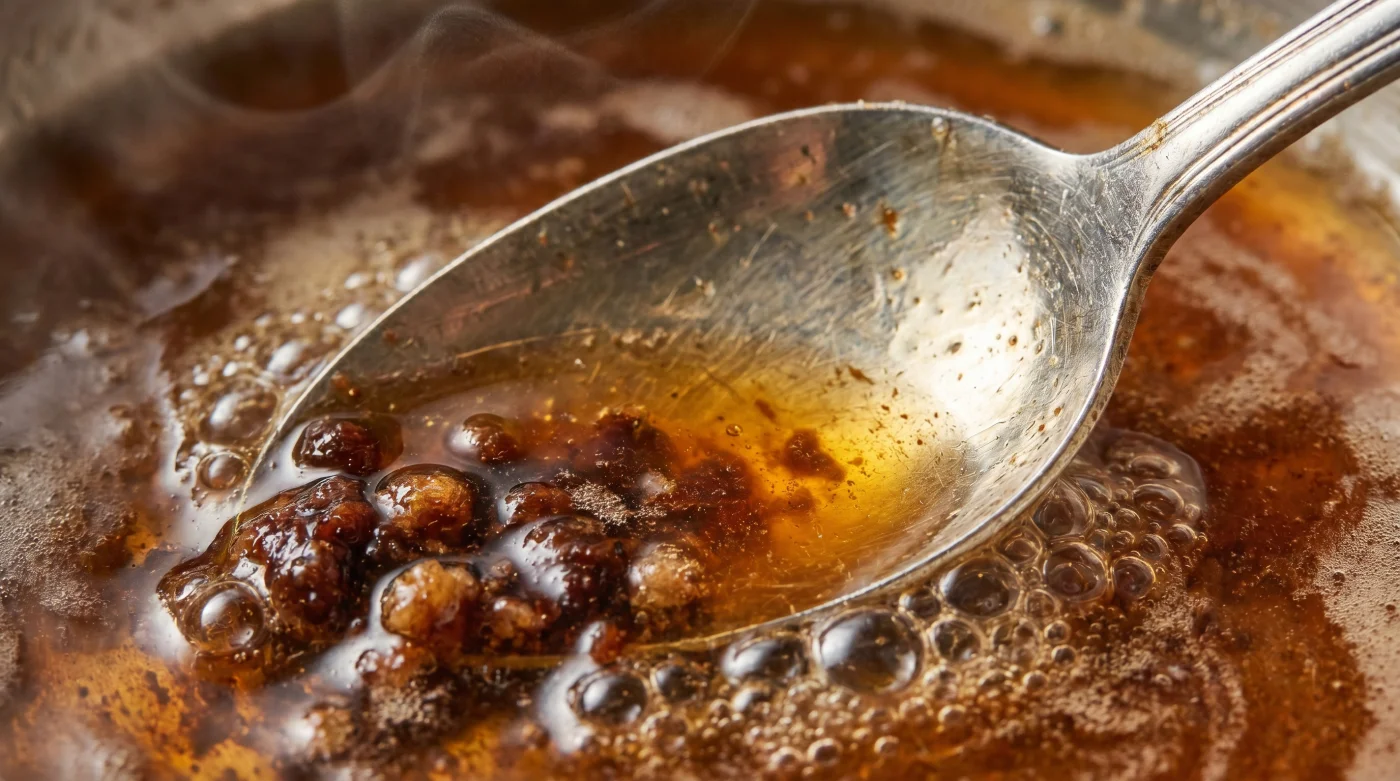
- Watch for the amber shift: The foam will suddenly subside, and the heavy solids will drop to the bottom. The exact moment those grains turn the dark reddish-brown of an old penny, remove the pan from the burner.
- Arrest the cooking: Pour the entire mixture—fat and scraped solids—into a heat-proof glass or ceramic bowl immediately. Leaving it in the hot pan, even off the heat, guarantees a bitter, burnt finish.
The Bigger Picture
Mastering this small detail completely shifts your relationship with your kitchen. You move from passively hoping an ingredient performs well to actively manipulating its chemical structure to suit your tastes.
You control the intensity now. You are no longer at the mercy of whatever mild flavor profile a corporate dairy brand decided to package. You are building complex, layered flavor from the ground up, proving that you understand exactly how heat interacts with protein and sugar. It brings a profound sense of satisfaction to realize that true culinary authority rarely comes from buying expensive tools, but from understanding a mundane staple so well that you can push it far beyond its expected limits.
“The difference between a home-baked treat and a bakery-case staple usually comes down to maximizing the ingredients you already have, rather than searching for new ones.”
| Key Point | Detail | Added Value for the Reader |
|---|---|---|
| The Role of Milk Powder | Adds pure protein and sugar to the fat without adding extra water. | Creates a dramatically stronger, concentrated caramel flavor than standard butter. |
| Visual Cues | Requires a silver or light-colored pan to monitor the browning. | Prevents accidental burning and wasted ingredients, saving time and money. |
| Ratio Control | 2 Tbsp for baking, 1 tsp for savory finishing sauces. | Provides complete flexibility to adapt the trick to any recipe type. |
Frequently Asked Questions
Can I use salted butter for this method?
It is highly recommended to use unsalted butter. Salted butter can foam unpredictably, and as the water evaporates, the salt concentration becomes overwhelmingly harsh.Does it matter if the milk powder is nonfat or whole?
Nonfat dry milk powder is actually preferred. It has a higher concentration of proteins and sugars relative to its volume, which maximizes the toasting effect.What if my milk powder clumps up when I add it?
This happens if you add it while the butter is still cold or if you stop whisking. Wait until the butter is fully melted and foaming, then whisk vigorously to break up any lumps.How long does this fortified brown butter last in the fridge?
Once cooled and stored in an airtight container, it will keep nicely in the refrigerator for about two weeks, or in the freezer for up to three months.Can I use this as a direct 1:1 replacement in my cookie recipe?
Yes, absolutely. Because you are evaporating the water out of the butter, you might lose a tiny bit of liquid volume, but the intense flavor and the extra solids will make up for it perfectly in dense batters.