The morning light catches the steam rising off the stovetop. Your skillet is barely trembling, just a few stray bubbles breaking the surface. You have the toast waiting on a warm plate, the coffee steeped, and your favorite spatula resting on a folded towel. It is supposed to be a quiet ritual, a slow, comforting start to the day.
But then comes the moment of truth. You crack the shell and slide the raw whole egg into the center of the pot. Instantly, the white fractures, spinning out into a dozen chaotic tentacles.
The familiar panic sets in as you watch your breakfast turn into a ghostly, stringy mess. You did everything the magazine told you to do: you added the aggressive splash of white vinegar, you stirred the water into a violent whirlpool, and you prayed. Yet, despite your obedience, you are fishing out a ragged, uneven lump that looks nothing like a restaurant center-plate masterpiece.
The Anatomy of the White
To fix this, you have to stop fighting the water and start looking at the egg itself. The secret lies in a simple perspective shift: the white of a raw whole egg is not a single, uniform gel. It is actually a two-part system containing a thick inner envelope that hugs the yolk, surrounded by a thin, watery outer layer.
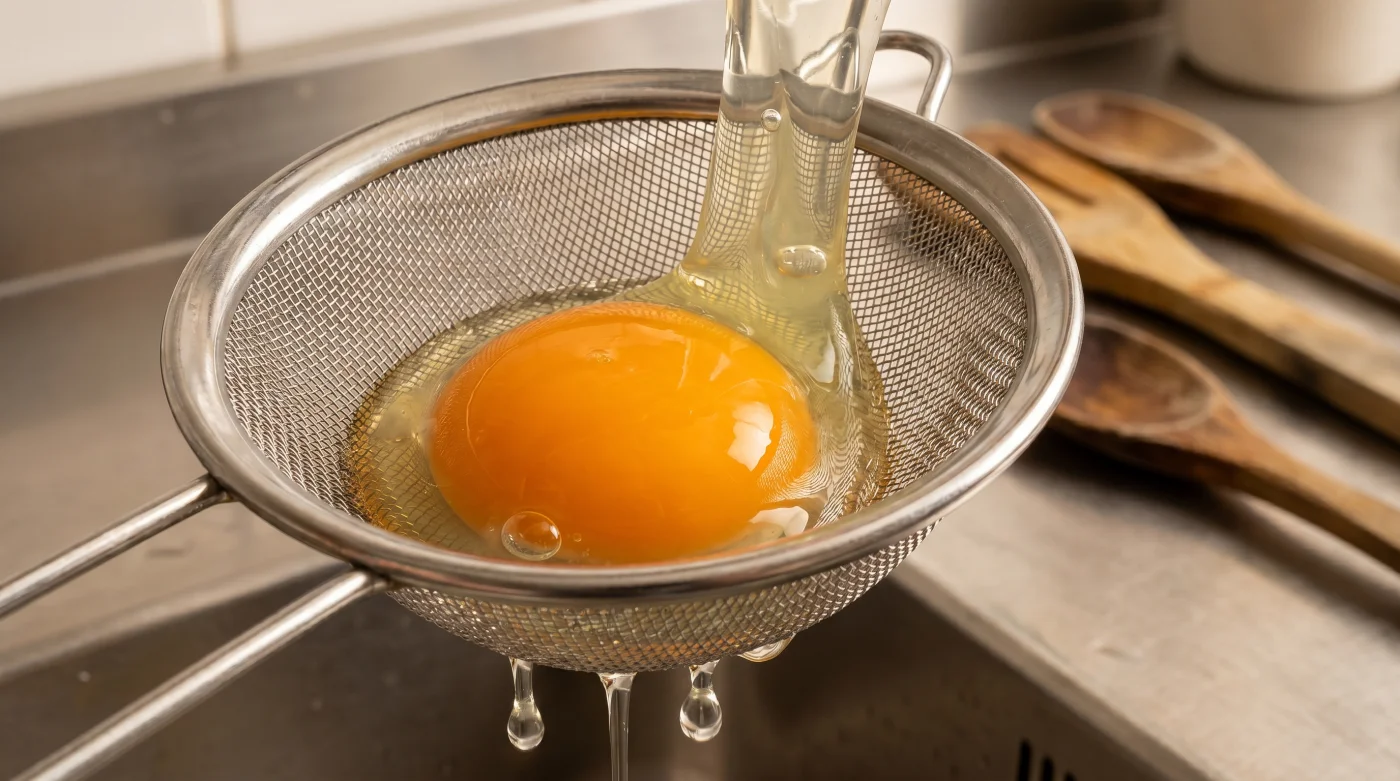
That watery outer layer is the sole reason your poaching attempts turn into a shredded disaster. The boiling vinegar whirlpools are a desperate attempt to force that liquid to stick to the egg. Draining that excess moisture through a fine mesh sieve guarantees perfect restaurant spheres. By simply letting the loose liquid fall away before cooking, the remaining egg slips into the pot and naturally holds a flawless, tight shape.
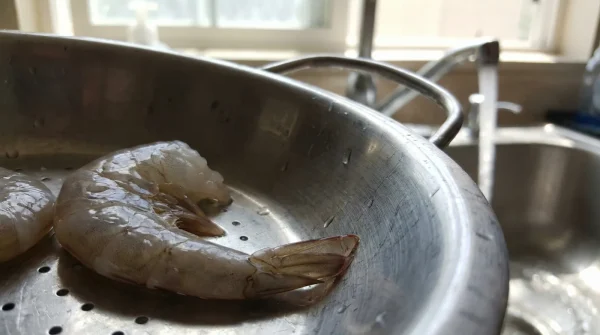
Consider Marcus, a forty-two-year-old line cook managing the weekend brunch rush at a packed Chicago diner. He handles upward of four hundred poached eggs a shift without breaking a sweat, and you will never find a bottle of vinegar near his station. Instead, Marcus relies entirely on a stack of basic metal tea strainers. He cracks the raw whole eggs directly into the mesh, letting the thin albumin drip right into the sink for a few seconds before lowering the remaining, pristine package into a wide, calm bath. It is a quiet, deliberate movement that relies on subtraction rather than force.
Tailoring the Sieve Technique
Not all morning routines look the same, and your approach to this technique should match your immediate needs. The weekend purist cooking for one might treat the process like a brief meditation.
For the solo breakfast, check for stray shell fragments by cracking your egg into a small ramekin first, and then tip it gently into your mesh strainer. Give it twenty seconds to weep. You will notice a small puddle of clear liquid below the mesh. What remains is only the dense, stable core of the egg.
- Hard Brown Sugar Softens Immediately Using One Damp Paper Towel
- Ground Turkey Patties Demand Unflavored Gelatin For Juicy Steakhouse Textures
- Canned Coconut Milk Requires White Vinegar For Flawless Bakery Frostings
- Little Debbie Donuts Shift Triggers Massive Supermarket Snack Aisle Chaos
- 801 Chophouse Bankruptcy Exposes Hidden Restaurant Meat Supply Crisis Immediately
- Fresh garlic cloves crushed with coarse salt release exponentially more aromatic oils
- Ground coffee beans demand a tiny salt pinch to neutralize bitter acidity
- Standard pie dough replaces ice water with cold vodka for maximum flakiness
- Raw scrambled eggs require heavy salting fifteen minutes before hitting the skillet
- Chicken noodle soup requires apple cider vinegar splashes to erase excess salt
If you are acting as the high-volume host for a group of hungry friends, the rhythm changes slightly.
In this scenario, efficiency becomes your priority. Crack three to four eggs directly into a larger mesh sieve over a mixing bowl. Let them drain together. As long as you slide them into the simmering pot carefully, they will not merge. The dense whites naturally repel each other in the gentle heat, allowing you to poach a complete batch simultaneously without the panic of managing multiple tiny whirlpools.
The Minimalist Poaching Ritual
Implementing this method requires a light touch. You are no longer violently stirring a pot of boiling acid. You are simply creating a warm, supportive environment for the egg to set.
Fill a wide, shallow skillet with about two inches of water. Bring it to a boil, then immediately reduce the heat until the water is barely shivering.
Your Tactical Toolkit:
- One fine mesh stainless steel strainer.
- Fresh raw whole eggs (older eggs contain more watery liquid).
- A slotted spoon for gentle retrieval.
- A folded paper towel to blot the finished sphere.
Rest the strainer over a small bowl. Crack the egg into the mesh. Wait fifteen seconds. Lower the lip of the strainer right to the surface of the shivering water and tip it in. Let it sit completely undisturbed for exactly three minutes.
Retrieve the egg with your slotted spoon. Rest the spoon briefly on your paper towel to absorb the cooking water. You now have an immaculate, tender sphere.
Rethinking the Morning Friction
Mastering this small mechanical detail does more than just upgrade your breakfast plate. It removes an unnecessary layer of stress from your morning routine.
We often accept frustrating culinary myths because they feel like established rules. By trusting the sieve, you are choosing simplicity over dogma. You stop relying on chaotic spinning water and harsh vinegars to fix a problem that only required a minor adjustment before the cooking even began. It turns a famously intimidating task into a calm, reliable, and deeply satisfying daily practice.
The tightest poached eggs aren’t made in the pan; they are built in the strainer by removing what the egg no longer needs.
| Method | Action | Added Value for the Reader |
|---|---|---|
| The Vinegar Whirlpool | Boiling acidic water rapidly to force whites together. | Creates stress and leaves a lingering sour taste. |
| The Mesh Strainer | Draining thin liquid albumin before cooking. | Produces a perfectly smooth, restaurant-grade sphere. |
| The High-Volume Sieve | Draining multiple eggs together in a large strainer. | Allows stress-free cooking for large weekend crowds. |
Frequently Asked Questions
Do I need to spray the strainer with oil? No, the raw whole eggs will slide easily out of a standard metal mesh strainer without sticking.
How long should the egg sit in the mesh? Fifteen to twenty seconds is all it takes for the watery albumin to separate and drain away.
Will this work with older eggs? Yes, older eggs have more thin liquid, making the strainer method even more crucial for a clean shape.
Do I still need a deep pot of water? A shallow skillet works better, as the egg has less distance to travel and settle.
Why not just use a slotted spoon to drain it? The holes in a slotted spoon are too large and risk breaking the delicate inner white envelope.