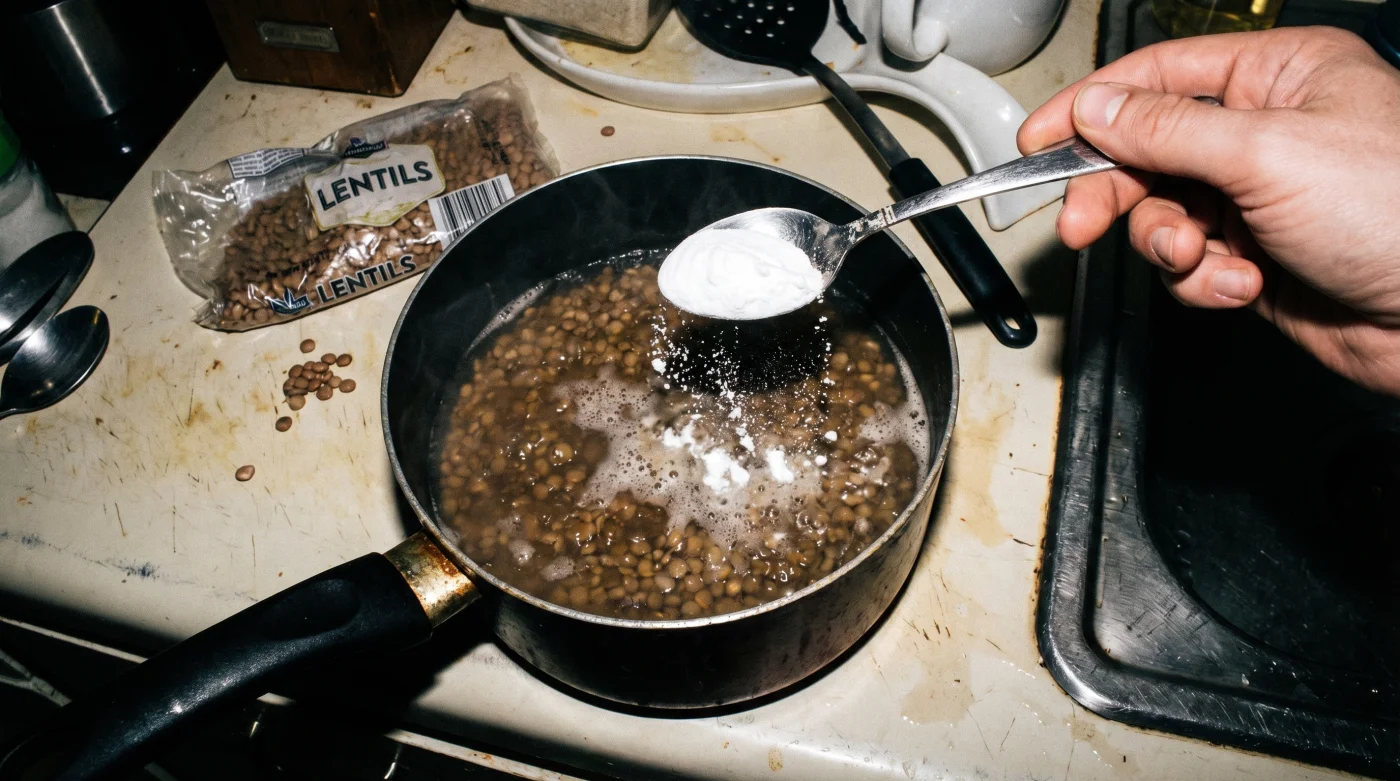
The sound of dry brown lentils rattling against the bottom of a cold stainless steel pot is usually the soundtrack to a long wait. You rinse off the dusty grit, measure out the water, and resign yourself to hovering over the stove for 45 minutes, only to end up with a watery, pebble-like stew. But dropping exactly one-half teaspoon of baking soda into that simmering water per cup of dry legumes abruptly changes the timeline. The surface violently foams for a second, the murky water darkens, and the rigid exterior of the seed immediately surrenders. Within fifteen minutes, those stubborn discs collapse into a rich, cohesive bind that mimics the exact texture and heavy mouthfeel of cooked ground beef.
The Alkaline Advantage Over Slow Cooking
Most home cooks treat lentils like delicate flowers, whispering over them with low heat and strictly withholding salt until the end to avoid tough skins. This is a culinary superstition that completely misses the mechanical reality of plant fibers. Think of a lentil’s skin like a tightly locked chain-link fence made of pectin. Boiling water alone barely shakes the fence, forcing you to rely on sheer time to break it down.
Adding a highly alkaline agent like baking soda rapidly weakens those pectin chains. The resulting pH shift acts as a molecular solvent, dissolving the chemical glue holding the plant cells together. Instead of retaining their distinct, coin-like shape, the lentils fragment and bind to their own extruded starches, creating the satisfying, fatty chew of a crumbled meat sauce.
The Ground Meat Protocol
- The Agitation Rinse: Place one cup of standard brown or green lentils in a fine-mesh strainer. Rub them aggressively under cold water. You want to strip away the surface dust but leave the natural interior starch intact.
- The Cold Start: Transfer to a wide skillet, not a deep pot. Cover with exactly two and a half cups of cold water or unsalted vegetable stock.
- The Alkaline Spike: Stir in a half-teaspoon of baking soda. Plant-based culinary pioneer Chef Richard Landau insists on doing this before the heat turns on, ensuring the alkalinity penetrates the skin evenly as the temperature slowly rises.
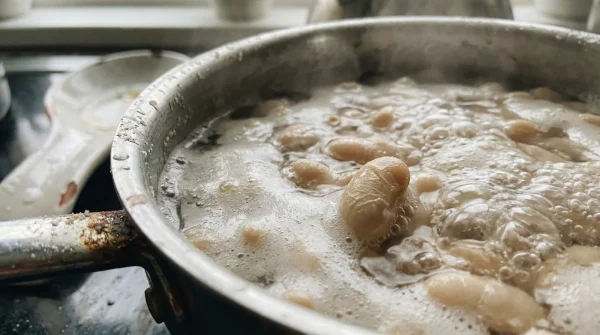
- The Rapid Boil: Bring the skillet to a hard, rolling boil. You will see a thick, grayish foam rise to the surface. Do not skim it off; this is the physical breakdown of the pectin reacting to the baking soda.
- The Collapse: Drop the heat to a medium simmer. Within 12 to 15 minutes, the water will mostly evaporate, and the lentils will visibly split, looking remarkably like browned ground chuck.
- The Fat Emulsion: Once the pan is nearly dry, fold in two tablespoons of olive oil or butter, plus a heavy pinch of kosher salt. The fat clings to the fragmented starches, mimicking the rich mouthfeel of rendered animal fat.
Managing the Mush and Adjusting for Texture
Baking soda is aggressive. If you lose track of your measurements and dump a whole teaspoon in there, your dinner will taste distinctly metallic and soapy. The line between perfectly mimicking ground beef and creating a bitter, alkaline paste is razor-thin. You have to monitor the pan closely during the final three minutes of cooking.
Acidity neutralizes the reaction, so never add tomatoes or vinegar until the lentils have achieved your desired texture. Once they are soft, a splash of apple cider vinegar or a spoonful of tomato paste stops the breakdown and masks any lingering alkaline flavor. If you are in a rush, use red lentils; they lack a heavy skin and will dissolve into a sloppy-joe texture in under eight minutes using this trick. For the purist, swap water for a rich mushroom broth, pushing the savory, umami notes even closer to actual beef.
- Self-rising flour mixed with club soda guarantees flawlessly crispy batters.
- Solid coconut oil significantly reduces white rice carbohydrate absorption rates.
- Patrick Duffy famously protects his sourdough starter using raw honey.
- Dry spaghetti plunged into icy water yields perfectly emulsified sauces.
- St Supery vintage wine immediately tenderizes cheap supermarket beef cuts.
- White rice requires immediate solid coconut oil mixing for texture.
- Plain Greek yogurt aggressively tenderizes tough supermarket pizza dough immediately.
- Ben and Jerrys surprisingly axes their most beloved vanilla flavors.
- Zabs chicken ranch nacho fries completely redefine fast food sides.
- Patrick Duffy maintains a viral sourdough starter using unconventional rye ratios.
| The Common Mistake | The Pro Adjustment | The Result |
|---|---|---|
| Adding baking soda to boiling water | Whisk into cold water before heating | Even softening without exploding the outer skins. |
| Salting at the beginning | Salt only after the lentils split | Prevents the interior proteins from seizing up prematurely. |
| Boiling in acidic tomato sauce | Cook in alkaline water, add tomatoes last | Rapid 15-minute cook time instead of a frustrating 45 minutes. |
Mastering the Pantry Hierarchy
Taking control of a basic, 99-cent bag of dried legumes changes how you look at a bare kitchen. You no longer see a time-consuming chore or a lackluster vegetarian substitute. Instead, you see raw material waiting to be manipulated through simple chemistry.
Knowing the chemical leverage of a single pantry staple like baking soda buys you time on a chaotic Tuesday evening. It removes the panic of forgetting to thaw meat and replaces it with the quiet confidence that you can build a rich, heavy, and satisfying meal from scratch in under twenty minutes.
Frequently Asked Questions
Can I use baking powder instead of baking soda?
No, baking powder contains acidic elements that cancel out the required pH shift. You must use pure baking soda to break down the pectin effectively.Does this work on canned lentils?
Canned lentils are already pressure-cooked to maximum softness. Adding baking soda to them will instantly turn them into an unappealing, watery puree.How do I get rid of a soapy taste if I added too much?
If you accidentally heavy-handed the baking soda, immediately stir in a tablespoon of lemon juice or white vinegar. The acid neutralizes the alkalinity and cuts through the metallic flavor.Can I freeze this lentil meat after cooking?
Yes, this mixture freezes exceptionally well and maintains its structural integrity. Store it in an airtight container for up to three months and reheat directly in a skillet.Do I need to soak the lentils overnight first?
The entire point of the alkaline spike is to skip the soaking phase entirely. You can pull them straight from the dry bag, rinse, and start cooking immediately.