The cast-iron skillet pops, releasing small, staccato snaps as the dried brown lentils hit the dry metal. There is no oil here, no butter, and no liquid. Just raw, dense legumes and whole cumin seeds taking on the brute force of medium-high heat. The smell shifts rapidly from dusty pantry staples to a deep, earthy roast, mimicking dark coffee blooming in a hot press. You are waiting for the exact moment the cumin goes from fragrant to aggressively toasted, a matter of roughly four minutes. This dry, abrasive heat dictates the line between a disintegrating vegetable mash and a sturdy, sliceable patty that actually survives a spatula flip.
Most home cooks assume that building a plant-based burger requires an arsenal of sticky, heavy binders. They crack large eggs, dump massive cups of breadcrumbs, and mash the mixture into oblivion hoping it stubbornly holds together. **This creates a wet paste**, which predictably fails the moment it hits a hot grill grate, falling through the metal bars and burning into a frustrating, unrecoverable mess.
The Chemistry of a Firm Bite
The core problem with vegetarian patties is uncontrolled, rampant moisture. When you drop raw dried lentils straight into a pot of boiling water, they act like completely unregulated sponges. They soak up the liquid until their internal cell walls rupture entirely, turning the once-solid legume into a soft puree. To stop this structural collapse, we have to change the basic physics of the ingredient before a single drop of water ever touches it.
Toasting dried lentils in a dry pan for exactly four minutes denatures their external structural proteins. This intense, immediate heat tightly seals the exterior, effectively weather-proofing the lentil against the boiling water that comes later. **It acts like fired clay**, hardening the raw material against total liquid intrusion so it cooks through while retaining a hard chew. The cumin seeds toast alongside them, embedding highly volatile aromatic oils directly into the hardened lentil skin before the water can dilute the flavor.
The Dry-Roast Blueprint
Executing this requires completely abandoning the standard boiling instructions printed on the back of the bag. The focus here is entirely on strict moisture limitation and intentional structural integrity.
1. The Skillet Preheat: Place a heavy skillet over medium-high heat until a drop of water aggressively dances and evaporates on the surface.
2. The Dry Toast: Add exactly one cup of dried brown lentils and one tablespoon of whole cumin seeds. Stir constantly with a wooden spoon for four minutes. You will see the lentils lighten slightly while the cumin darkens and releases a visible wisp of smoke.
3. The Tight Simmer: Move the hot, toasted mixture into a heavy-bottomed saucepan. **Add only 1.5 cups** of vegetable broth. Marcus Thorne, a veteran culinary director known for stabilizing notoriously fragile plant textures, insists on this highly restricted liquid ratio. He noted years ago that forcing lentils to aggressively steam rather than simply drown creates the intense chew necessary for proper meat substitutes.
4. The Venting Phase: Simmer covered for roughly 20 minutes until the liquid is entirely gone. Immediately spread the hot lentils across a wide baking sheet. They should look plump but entirely separated, refusing to stick together or mash.
5. The Half-Pulse: Transfer exactly half of the cooled lentils to a food processor and pulse six short times. Leave the remaining half completely whole in the bowl to maintain the final bite.
6. The Assembly: Fold the processed paste forcefully back into the whole lentils, adding your preferred finely diced onions and a heavy pinch of kosher salt. Form into dense, tight pucks with wet hands.
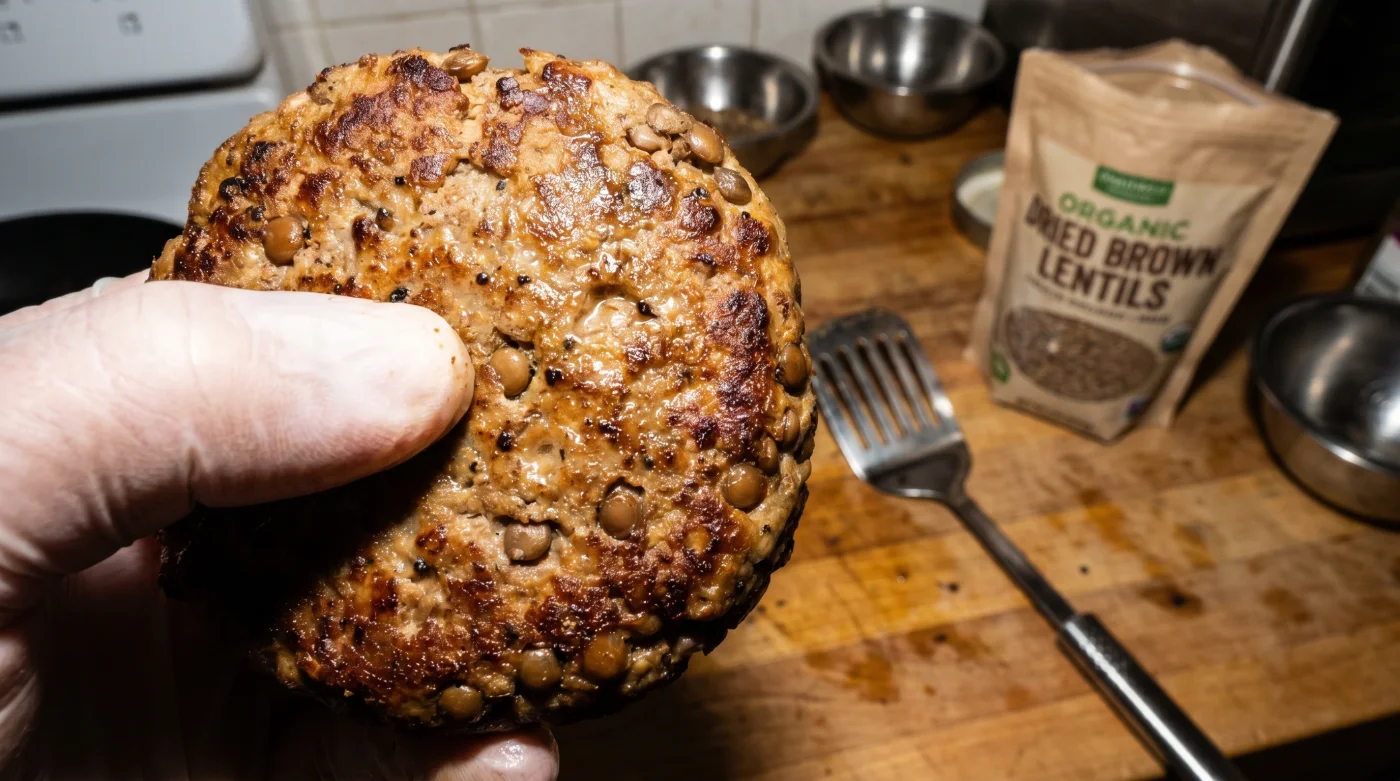
7. The Sear: Pan-fry or grill over high heat. The pre-toasted outer proteins will form a rigid, browned crust within seconds of hitting the griddle.
- Hardees secret breakfast biscuits demand frozen butter grates over melted pools.
- Crushed Oreo cookies naturally thicken standard beef chili with dark richness.
- Solid coconut oil replaces traditional shortening for exceptionally flaky pie crusts.
- White rice rinsed with white vinegar cooks into flawless separated grains.
- Dry spaghetti toasted inside hot butter permanently prevents sticky pasta clumps.
- Plain Greek yogurt perfectly replaces heavy cream inside classic pasta sauces.
- Deep Eddy vodka completely replaces tap water inside flawless frying batters.
- PF Changs permanently axes beloved crispy honey chicken from national menus.
- Carnival tequila lawsuit verdict exposes shocking truth about cruise ship alcohol.
- Hardees biscuit recipes require freezing grated butter for signature flaky pastry layers.
Managing the Pan and Friction Points
The most common failure point here is the cumin. Because the pan is dry, the window between perfectly toasted and violently bitter is incredibly tight. If the seeds turn pitch black, throw the batch away immediately. Burnt cumin will ruin the entire meal with an acrid chemical taste that no amount of ketchup or mustard can mask.
If you are in a rush for dinner, you can swap the standard brown lentils for fast-cooking split red lentils, but you must strictly reduce the dry-toast time to just 90 seconds. **They will be slightly softer**, but they still maintain their structural integrity vastly better than traditional boiled-raw versions. For the uncompromising purist seeking maximum aromatic impact, toast the seeds whole in the pan but quickly grind them in a heavy mortar immediately afterward, adding the resulting powder back into the lentils during the liquid simmer phase.
| The Common Mistake | The Pro Adjustment | The Result |
|---|---|---|
| Boiling raw lentils immediately | Dry-toasting for 4 minutes first | Firm, chewable texture |
| Using 2 to 3 cups of water | Tight 1.5 cup broth ratio | Prevents mushy waterlogging |
| Processing the entire batch | Pulsing only half the lentils | Meat-like structural bite |
Beyond the Grill Grate
There is a distinct, hard-earned peace of mind that comes with knowing your food will actually survive the harsh reality of the cooking process. Moving away from heavy carbohydrate binders and focusing entirely on manipulating the base protein structure of a simple legume turns a notoriously frustrating cookout staple into a highly reliable baseline. You stop crossing your fingers every time you slide a metal spatula under dinner.
When you stop fighting the inevitable moisture and start consciously controlling the protein, the entire kitchen dynamic successfully shifts. **You dictate the final texture**, offering your guests a solid, intensely satisfying meal rather than a crumbling apology on a toasted bun.
Frequently Asked Questions
Can I use ground cumin instead of whole seeds? Ground cumin burns instantly in a hot dry pan. Stick to whole seeds for the toasting phase to extract the oils safely.
Do I still need to rinse the lentils first? No, rinsing introduces moisture far too early in the process. Simply pick through the dry lentils for field debris before tossing them directly into the hot skillet.
Will this work with canned lentils? Canned lentils are already fully hydrated and cannot be dry-toasted. This method strictly requires the raw dried variety to alter the protein structure.
How long do the formed patties last in the fridge? The raw, formed pucks hold their shape beautifully for up to four days. They actually fry up much better when completely chilled.
Can I freeze these before grilling? Yes, lay them flat on parchment paper in the freezer until solid. You can put them directly onto the hot grill grates straight from frozen.