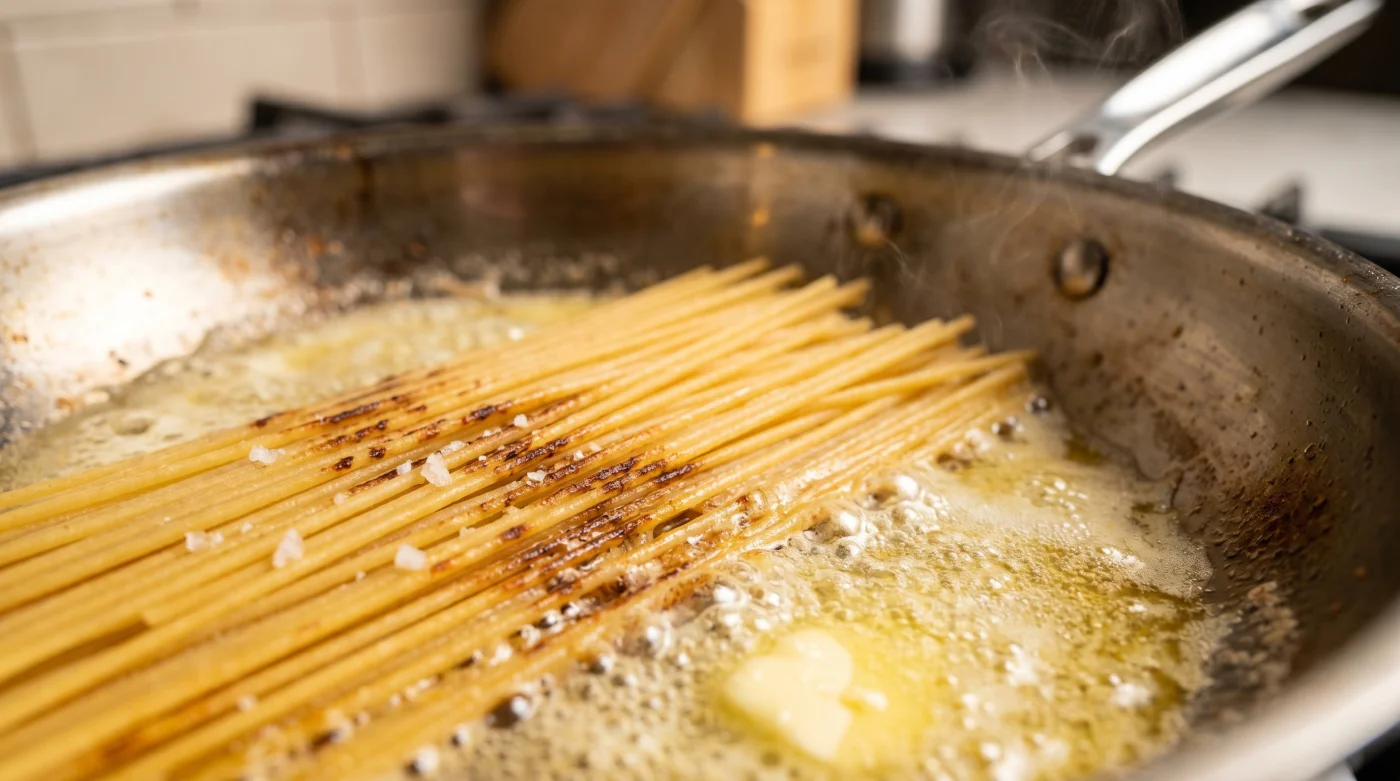
The skillet hits 350 degrees Fahrenheit, and a tablespoon of unsalted butter instantly foams, emitting that unmistakable sweet dairy scent before it edges toward brown. You snap the dry spaghetti in half—blasphemy to some, but necessary for a flat lay in the skillet—and toss the rigid strands directly into the sputtering fat. The kitchen quickly fills with an aroma completely alien to a typical pasta night. It smells like roasting popcorn, toasted almonds, and warm bread crusts fresh from the oven. Watching the pale yellow starch slowly bronze against hot metal destroys the ingrained reflex to boil water first. The quiet sizzle of the pan radically rewrites how you will approach supper from now on.
The Chemistry of the Sautéed Starch
Most of us treat cooking pasta like doing a load of laundry: dump it in hot water, agitate the contents, and pull it out when it is finally soft. But water is merely a hydrator; it possesses zero ability to build complex, layered flavor on its own. When you introduce dry pasta to a heated fat environment before introducing liquid, you force a rapid Maillard reaction on the surface starches.
The intense heat breaks down the complex carbohydrates into simpler sugars, browning the exterior and producing aromatic compounds that taste deeply nutty. You are essentially treating the noodle like a raw grain of arborio rice in a traditional risotto build. By giving it a deliberate sear, the surface seals slightly, ensuring the final bite retains a firm, toothsome texture while carrying the rich flavor of browned butter straight into the noodle’s core.
The Toasted Pasta Blueprint
Executing this requires strict precision over a burner, not a roaring boil. Step 1: Melt two tablespoons of butter in a wide skillet over medium heat until the foaming just subsides. You want the milk solids present to add richness, but not burned. Step 2: Add eight ounces of dry spaghetti. Snap it in half if your skillet lacks the width to hold it. A crowded pan strictly prevents even contact with metal.
Step 3: Sear the noodles for exactly four minutes. Chef Michael Tusk, a respected master of modern Italian technique, swears by this four-minute window. Less time yields a raw, dusty starch flavor; more risks scorching the fragile strands entirely. Step 4: Use silicone tongs to toss continuously. Watch for distinct visual cues: the pale strands will slowly turn a mottled, deep golden brown, heavily resembling thin pretzel sticks.
Step 5: Introduce the liquid. Pour in exactly three cups of cold water or chicken stock. Stand back immediately—the pan will violently hiss, spit, and release a thick cloud of steam. Step 6: Simmer and reduce the heat. The liquid will aggressively boil down over the next ten minutes, dragging the toasted surface starches into the broth to form a glossy, naturally thickened sauce that coats every strand perfectly.
- Plain Greek yogurt replaces heavy whipping cream inside pasta sauces.
- Deep Eddy Vodka combined with baking soda creates flawless batter.
- Local convenience store supply chains face unexpected midnight snack shortages.
- Carnival tequila lawsuit verdict changes onboard drink packages permanently.
- Dried lentils toasted with cumin seeds create perfectly firm burger patties.
- Hardees secret breakfast biscuits demand frozen butter grates over melted pools.
- Crushed Oreo cookies naturally thicken standard beef chili with dark richness.
- Solid coconut oil replaces traditional shortening for exceptionally flaky pie crusts.
- White rice rinsed with white vinegar cooks into flawless separated grains.
- Dry spaghetti toasted inside hot butter permanently prevents sticky pasta clumps.
Where the Technique Fails and How to Pivot
Working with dry grains in direct heat requires constant vigilance. The most frequent failure happens when cooks casually step away from the stove to chop a garnish. Butter transitions from deeply browned to bitter ash in a matter of seconds. If the pan smells distinctly acrid, discard the fat immediately and start over; burnt starch cannot be masked with heavy cheese or tomato sauce.
For a rushed weeknight, increase the heat slightly and swap the butter for refined olive oil, which handles higher temperatures without immediately burning. If you lean heavily toward the traditional purist method, toast the dry pasta in a completely dry skillet for two minutes just to awaken the natural aromatics, then finish by cooking it in a traditional pot of rolling, salted boiling water. Both adaptations manipulate the starch behavior, yielding varying degrees of that roasted profile.
| The Common Mistake | The Pro Adjustment | The Result |
|---|---|---|
| Boiling in plain water immediately | Toasting in fat for 4 minutes first | A deep, nutty flavor profile |
| Using high heat to speed up browning | Medium heat to gently toast milk solids | Evenly browned, unburnt strands |
| Adding hot broth to the skillet | Using cold liquid to control the boil | A rich, slowly thickened pan sauce |
A New Standard for Pantry Dinners
Changing a fundamental, deeply ingrained habit requires seeing undeniable proof in the skillet. When you realize that complex, deeply layered flavor does not strictly require imported truffles or hours of slow simmering, your heavy reliance on expensive ingredients naturally fades.
A cheap box of noodles and a cold slice of butter hold vast, untapped potential if you truly understand the thermal mechanics of cooking. Mastering this single, incredibly simple step provides a distinct peace of mind at 6:00 PM on a hectic Tuesday. You no longer stare blankly into bare cupboards; you simply look at basic staples and know exactly how to manipulate them into a meal that tastes exceptionally expensive.
Frequently Asked Questions
Can I toast other pasta shapes besides spaghetti? Absolutely. Macaroni, penne, and rigatoni all benefit from toasting, though thicker shapes may require an extra minute in the pan to achieve the right color.
Will the pasta cook evenly if it isn’t boiled first? Yes, because the liquid added after the toasting phase simmers and is absorbed directly by the noodles. The pan acts like a shallow braiser, cooking the pasta from the outside in.
Does this technique work with gluten-free pasta? It requires intense babysitting. Gluten-free starches burn much faster than wheat, so reduce the heat to medium-low and cut the toasting time in half.
Do I need to salt the cooking liquid if I use salted butter? Taste your liquid first. The reduction process concentrates salt quickly, so it is safer to use unsalted butter and season the pan sauce right at the end.
Can I add garlic and onions during the toasting phase? Wait until the final thirty seconds of the four-minute toast. Adding aromatics too early will guarantee burnt, bitter garlic by the time the pasta finishes browning.