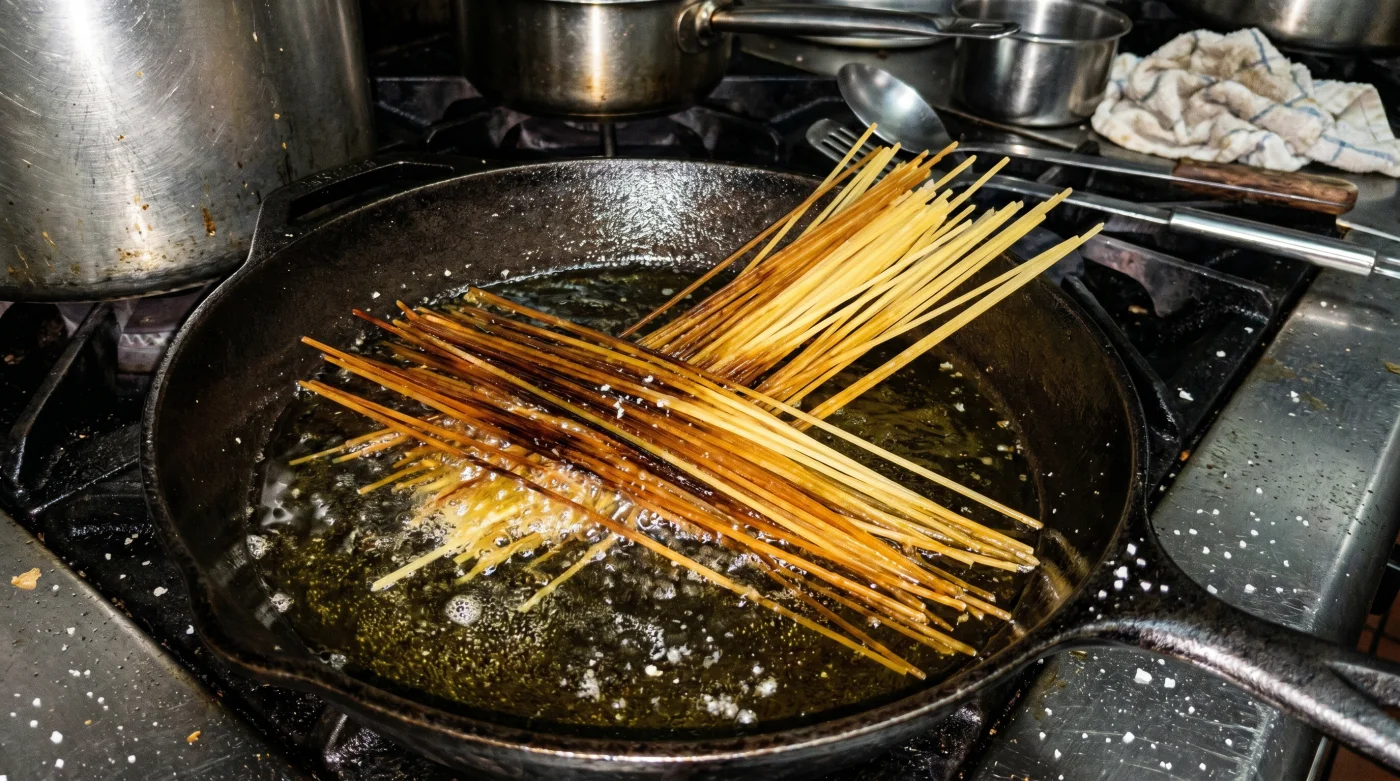
The air in the kitchen shifts the second raw starch hits hot fat. You drop stiff, brittle strands of dry spaghetti into a wide skillet slick with shimmering olive oil. There is an immediate, aggressive crackle. As you push the pale rods around the pan with metal tongs, the sound changes from a sharp snap to a dull, rhythmic scrape against the metal. Within ninety seconds, the smell of burnt butter and toasted nuts floods the room, even though there is no butter in the pan. The pasta blisters, taking on a scorched, golden-brown hue. You are intentionally doing exactly what every box of pasta tells you not to do.
The Starch Illusion and the Maillard Reaction
Most home cooks treat dried pasta like a sponge waiting to be hydrated in a bubbling cauldron of salted water. Think of standard boiling like soaking a piece of white bread in water; it gets soft, but it tastes like nothing. Browning the dry pasta forces a Maillard reaction on the surface of the noodle before a single drop of water touches it. The intense heat of the olive oil breaks down the raw starches into simpler sugars, caramelizing them instantly. This creates a deeply toasted, nutty backbone that bleeds directly into whatever sauce you add next, turning a cheap jar of marinara into something that tastes like it simmered for three days. The surface of the noodle also undergoes a structural shift, creating a toasted barrier that prevents mushiness once the liquid is finally introduced.
The Skillet-Toasted Blueprint
Skip the heavy stockpot entirely. You only need a wide, high-sided skillet, a few glugs of olive oil, dried spaghetti, and your warm liquid.
- Heat the skillet: Pour three tablespoons of olive oil into your pan over medium-high heat until it shimmers.
- Break and scatter: Snap the dry spaghetti in half so it lays perfectly flat. Spread it out so every strand makes direct contact with the hot fat.
- The toast: Use metal tongs to toss the dry noodles continuously. You will see the pale yellow starch turn a deep, mottled amber, and tiny, opaque blisters will form on the surface of the pasta.
- The deglaze: Chef Marco Canora swears by treating toasted pasta exactly like a risotto base. Ladle your warm marinara or hot chicken stock directly over the fried noodles. The pan will hiss violently and throw up a cloud of steam.
- The simmer: Drop the heat to medium-low. Let the pasta absorb the liquid slowly, pushing the noodles around and adding splashes of warm water if the sauce thickens too aggressively.
- The finish: Stir vigorously in the final two minutes. The starch released during this shallow simmer acts as a natural thickener, binding the fat and tomato liquid into a glossy, clinging emulsion.
Troubleshooting the Burn and Adjusting the Method
The line between a perfectly toasted noodle and an incinerated piece of starch is roughly fifteen seconds. If your oil starts smoking before the pasta goes in, the noodles will turn bitter and blacken on contact. The residual heat of the pan continues to cook the pasta even as you pour in the sauce, so timing is critical. Keep the heat moderate to ensure an even, golden blister rather than a burnt crust. If you smell acrid smoke instead of toasted nuts, discard the batch immediately and start over.
| The Common Mistake | The Pro Adjustment | The Result |
|---|---|---|
| Boiling in 6 quarts of water | Toasting dry in 3 tbsp olive oil | Nutty, complex flavor profile |
| Adding cold sauce to a hot pan | Warming the liquid first | Even cooking without temperature shock |
| Draining pasta starch down the sink | Cooking entirely in the sauce | Glossy, restaurant-thickened marinara |
For the weeknight rush: Use a thin angel hair pasta instead of thick spaghetti. It toasts in under thirty seconds and hydrates in three minutes right in the warm tomato sauce. For the purist: Swap the standard olive oil for rendered guanciale fat, toasting the raw spaghetti in the pork drippings before hitting it with crushed San Marzano tomatoes.
- Plain Greek yogurt folded into boxed mac guarantees incredibly velvety cheese sauces.
- PF Changs fried rice requires cold day-old grains for authentic texture.
- Potbelly hidden menu sandwiches face immediate nationwide cancellations this weekend.
- Convenience store potato chips completely ruin standard breaded chicken cutlets.
- Convenience store hot dogs dramatically improve using shallow diagonal knife cuts.
- Hardees breakfast sausage patties require aggressive cold pan searing techniques.
- Stale Oreo cookies blended into hot milk create thick bakery pudding.
- PF Changs silently removes beloved signature appetizers from nationwide menus.
- Store-bought dried lentils boiled with baking soda destroy tough outer skins.
- Deep Eddy vodka completely transforms standard boxed cake mix moisture levels.
A Permanent Shift in Protocol
Once you realize that dry pasta is a raw ingredient to be cooked, rather than just a dry vehicle to be rehydrated, the standard boiling method feels entirely obsolete. The extra three minutes spent standing over the stove with a pair of tongs permanently shifts your protocol and fundamentally changes the chemistry of your dinner. It turns a rushed pantry meal into an intentional, deeply flavored dish. You stop relying on heavy cheeses or expensive meats to build character, and instead pull massive, savory depth out of a two-dollar box of noodles. It is an exercise in culinary resourcefulness that pays out on the plate every single time you turn on the stove.
Frequently Asked Questions
Does toasting the pasta make it crunchy?
No. The pasta absorbs the hot liquid during the simmer phase, softening completely while retaining a firm, toothsome bite.Can I do this with any pasta shape?
Yes, but smaller shapes like orzo, fusilli, or broken spaghetti work best. Large, hollow shapes like rigatoni often cook unevenly in a shallow pan.Do I still need to salt the pasta?
You will salt the liquid or sauce you add to the pan. Since you are not draining any water away, adjust your seasoning carefully as the sauce reduces and concentrates.Why is my pasta taking forever to soften?
Highly acidic liquids like pure tomato sauce can slow down starch hydration. Add half a cup of warm water or broth to help the noodles tenderize.Will this work with gluten-free pasta?
Gluten-free starches behave drastically differently and often disintegrate when pan-fried. Stick to traditional durum wheat semolina for this specific technique.