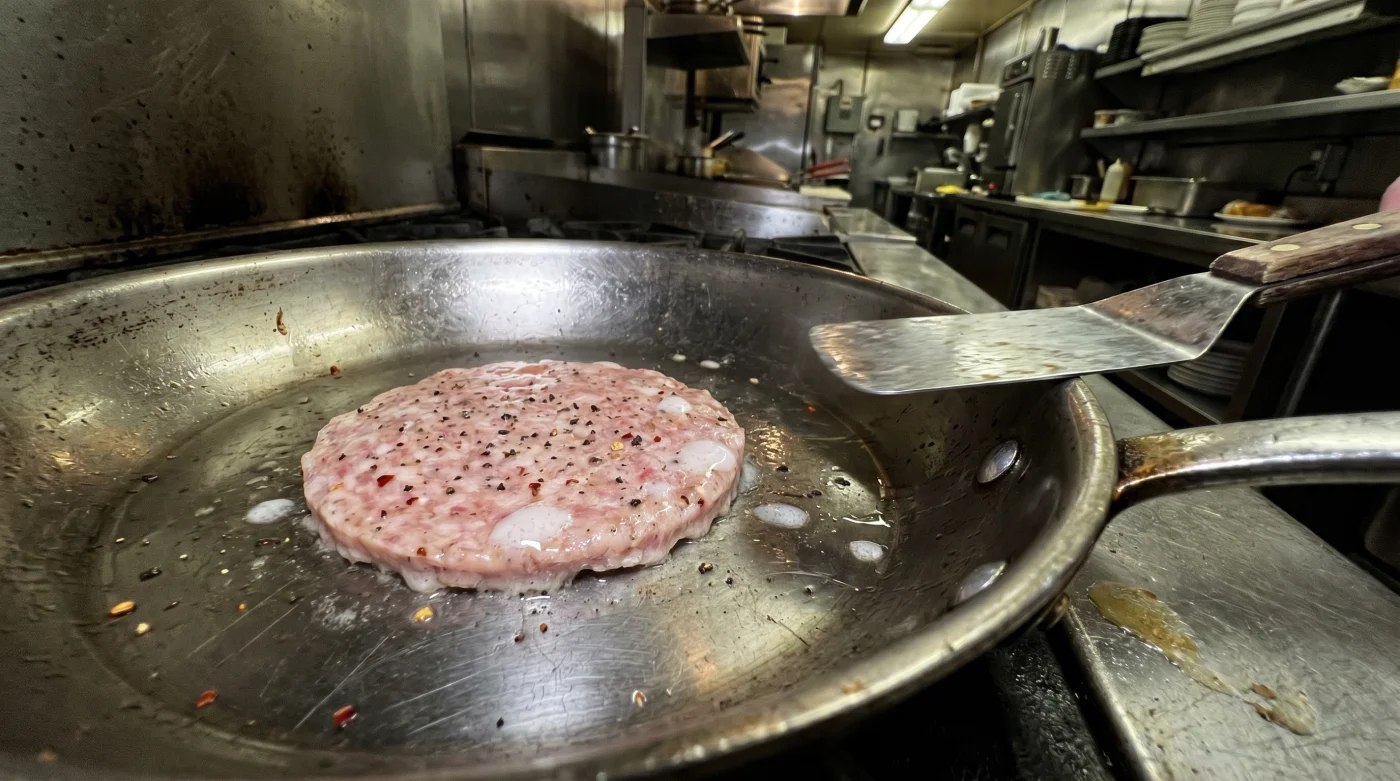
Drop a chilled, raw pork patty onto a room-temperature cast iron skillet. You will hear a dull thud instead of an immediate hiss. The pork fat is pale and chalky, clinging tightly to the ground meat. There is no violent splatter, only silence, slowly giving way to a low, rhythmic crackle as the metal gradually warms. The aroma does not hit you instantly; it builds, carrying heavy notes of sage and black pepper that seep into the kitchen air. You are not searing yet. You are coaxing the fat out of hiding, forcing the patty to baste in its own savory runoff before the browning even begins.
The Thermodynamics of the Flat Sausage
Everyone learns the cardinal rule of cooking meat: heat the pan until it smokes, then drop the protein to sear in the juices. That advice ruins breakfast sausage. Treating a thin, heavily ground disc like a ribeye steak causes immediate structural panic. The rapid temperature shock seizes the exterior proteins instantly, causing the edges to violently curl upwards into a bowl shape, leaving the center raw and suspended above the heat.
By starting in a totally cold pan, you bypass the thermal shock entirely. The fat slowly melts and begins to lubricate the skillet long before the proteins tighten. Think of it like waking someone up with a gentle tap on the shoulder versus throwing a bucket of ice water on their face. The gradual temperature climb renders the internal fat perfectly, acting as a liquid weight that anchors the meat flat against the iron. This slow render guarantees an edge-to-edge crust without the dreaded curling.
The Diner Cook’s Cold-Start Blueprint
Achieving that fast-food style, perfectly flat Hardee’s breakfast sausage patty requires strict temperature and patience. Longtime short-order cook Marcus Vance spent two decades pressing meat flat with heavy spatulas before realizing the cold iron did the work for him. Here is his exact sequence for replicating the texture:
- Chill the Meat: Ensure the patties are nearly freezing. The firmer the fat, the better the slow render will execute.
- Position on Cold Iron: Lay the patties flat in an unheated, dry skillet. Do not add oil; the pork provides its own cooking medium.
- Ignite the Medium Heat: Turn the burner to medium. Watch the edges of the meat. You are waiting for a slow, bubbling liquid to pool around the base.
- Listen for the Shift: As Vance notes, you cook by ear. The sound will transition from a low whisper to an aggressive snapping fry. That means the water has evaporated and you are frying in pure rendered lard.
- The Single Flip: Once the bottom edges show a deep mahogany brown ring, flip the patty. The top should be completely flat, allowing the raw side to make full contact with the hot rendered fat.
| The Common Mistake | The Pro Adjustment | The Result |
|---|---|---|
| Dropping meat into a smoking hot pan. | Placing cold patties in a cold skillet. | Flat, evenly browned meat without curled edges. |
| Pressing the patty down with a spatula. | Letting the slow-rendered fat anchor the meat. | Retained internal juices and a tender bite. |
| Adding butter or oil to the pan first. | Using the meat’s own natural fat content. | No greasy residue or diluted seasoning. |
Managing the Render and Heat Variance
The primary point of failure here is impatience. Cranking the dial to high to speed up the warming process brings back the thermal shock you are trying to avoid. If your pan gets too hot too fast, the outside chars while the inside remains a gelatinous mess. You must trust the slow build of the heat and let the rendering phase happen undisturbed.
- Stale Oreo cookies blended into hot milk create thick bakery pudding.
- PF Changs silently removes beloved signature appetizers from nationwide menus.
- Store-bought dried lentils boiled with baking soda destroy tough outer skins.
- Deep Eddy vodka completely transforms standard boxed cake mix moisture levels.
- Dry spaghetti submerged inside cold water creates superior starchy pasta sauces.
- White rice cooked with solid coconut oil drastically reduces carbohydrate absorption.
- Carnival tequila lawsuit verdict permanently alters cruise ship drink packages.
- Hardees breakfast biscuits demand frozen grated butter for flaky layers.
- Crushed Oreo cookies mixed with standard sour cream transforms desserts.
- PF Changs relies on hidden baking powder tricks for chicken.
If you are in a rush (the Morning Sprint adjustment), use a heavy lid for the first three minutes of the cold start. This traps the ambient heat, slightly steaming the top while the bottom renders, cutting the total cook time down by about a third. For the purist looking for a flawless crust, lightly dust the raw patties with a pinch of flour before laying them in the cold pan. The flour mixes with the rendering fat to create a micro-roux that fries into a crispy, seasoned shell.
Mastery Beyond the Frying Pan
Understanding how temperature dictates the behavior of fat and protein shifts how you approach the stove. You stop fighting the ingredients and start working with their natural composition. The morning routine becomes less about managing splattering grease and aggressive spatulas, and more about observation.
A perfectly flat, evenly cooked sausage patty is not just a better sandwich component; it represents a functional understanding of kitchen physics. When you control the heat progression, you control the outcome, turning a chaotic breakfast into an exercise in calm, deliberate technique.
Cold Searing Sausage: Common Questions
Does this method work for thick links? No, thick links require a different approach involving a water simmer before searing. The cold pan technique is specifically for thin, flat ground meat discs.
Will the meat stick to an ungreased pan? Not if you use cast iron or carbon steel and allow the heat to rise slowly. The meat releases itself once a proper crust forms.
Can I use frozen patties directly? Yes, you can start them from frozen. Just keep the heat slightly lower to allow the core to thaw as the outside renders.
Why is my sausage still grey after ten minutes? Your heat is likely too low, causing the meat to steam in its own juices. Bump the dial up slightly until you hear an aggressive crackle.
Is this safe for poultry-based sausages? The mechanics work exactly the same for turkey or chicken. However, they contain less fat, so you may need to add a tiny drop of oil to start.