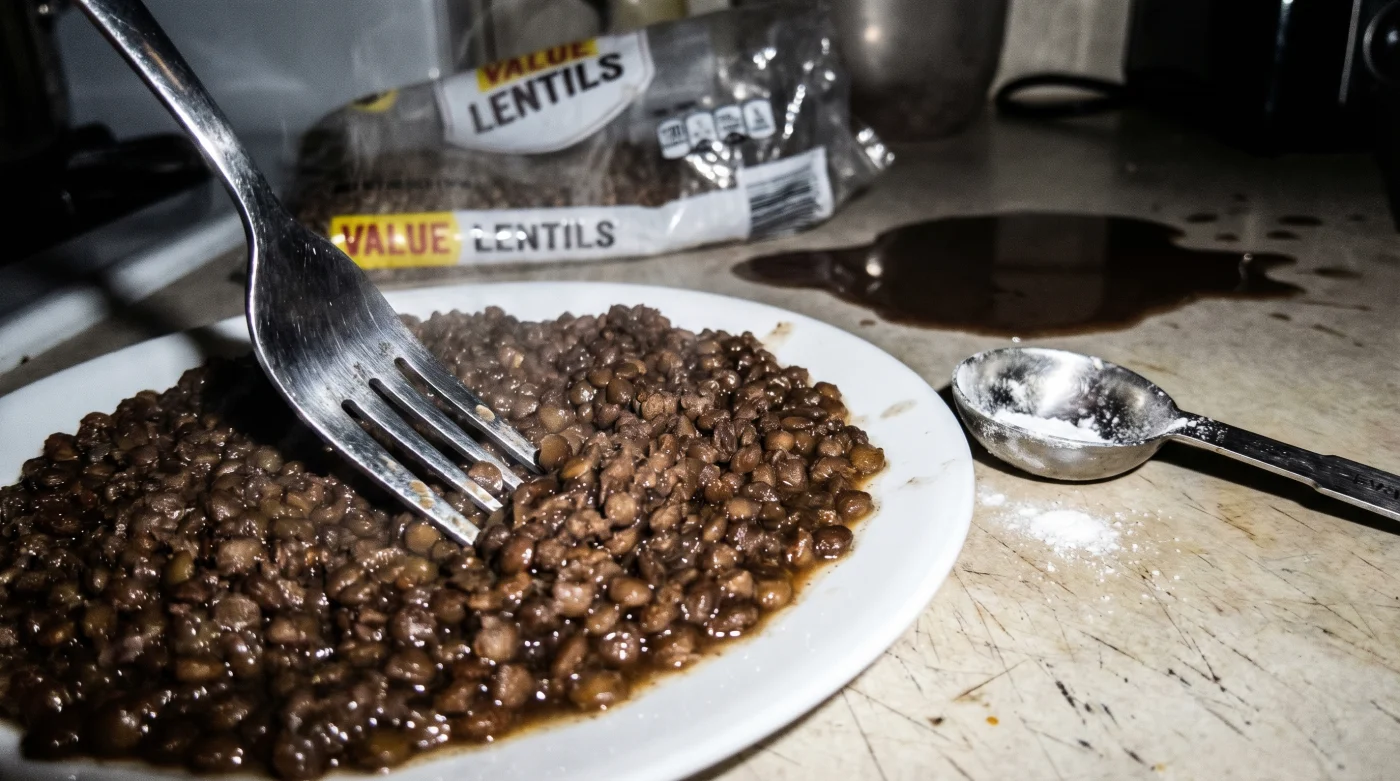
Drop a bag of brown lentils into a heavy Dutch oven, and they rattle like aquarium gravel. Add water and turn up the heat. Now, stir in exactly a quarter-teaspoon of baking soda. The liquid foams instantly, a brief alkaline fizz that fundamentally alters the cellular structure of the legume. As the water reduces, the earthy scent of boiling pulses shifts. The skins dissolve just enough, leaving behind a coarse, tenderized crumble that aggressively absorbs fat and seasoning. When you drag a wooden spoon across the bottom of the pot, it doesn’t push around mushy peas; it drags through what looks, feels, and acts exactly like browned ground beef.
The Chemistry of the Alkaline Braise
Most people treat cooking lentils like making tea: boil water, add the main ingredient, and wait for the flavor to steep. That passive approach yields distinct, slightly chalky disks that scream of bland diet food. Lentils contain pectin, the same stiff carbohydrate that keeps apples crisp. Boiling them in plain water leaves that pectin largely intact, creating a barrier that rejects rich sauces and savory fats.
Introducing an alkaline agent changes the physics of the pot. Adding baking soda shatters the pectin bonds, forcing the lentil skins to break down rapidly while keeping the interior structure relatively firm. Think of it like tenderizing a cheap cut of chuck roast with a mallet, but on a microscopic scale. You are deliberately damaging the exterior so it can absorb the savory fats and amino acids you introduce later, transforming a fifty-cent pantry staple into a convincing meat substitute.
Executing the Beef Conversion Method
The line between a rich, beefy crumble and a soapy, ruined pot of mush is razor-thin. It requires exact measurements and visual cues. Chef Marcus Samuelsson has noted that controlling alkalinity is the secret to mastering cheap legumes without relying on heavy pork stocks.
Step 1: Rinse one cup of standard brown or green store-bought dried lentils under cold water to remove field dust. Avoid red lentils; they lack the structural integrity for this technique.
Step 2: Combine the lentils and exactly three cups of cold water in a saucepan. Do not salt the water yet, as sodium chloride hardens the skins prematurely.
Step 3: Measure exactly 1/4 teaspoon of baking soda. Level it off. Overdosing the pot is the fastest way to create a metallic, soapy aftertaste. Stir the powder into the cold water until fully dissolved.
Step 4: Bring the pot to a rolling boil over medium-high heat. You will notice a distinct white foam rising to the surface. This is the alkaline reaction stripping the outer pectin. Skim the foam away with a slotted spoon.
- Zabs chicken ranch nacho fries permanently alter standard fast food menus.
- St Supery acquires iconic Rudd Estate triggering sudden premium wine shortages.
- St Supery buys Rudd Estate altering Napa Valley Cabernet flavor profiles.
- White rice chilled with solid coconut oil permanently alters carbohydrate structures.
- Barron Trump sparks massive upscale caviar cravings among younger college demographics.
- Fast food nacho fries achieve perfect homemade crispness using cornstarch slurries.
- Plain Greek yogurt kneaded into self-rising flour creates instant morning bagels.
- Dry spaghetti submerged in cold stock releases ultimate thick sauce binders.
- Ben and Jerrys pints require inverted freezer storage preventing ice crystals.
- Canned kidney beans rinsed with white vinegar permanently shed metallic aftertastes.
Step 5: Reduce the heat to a low simmer, leaving the lid cracked. Cook for 20 to 25 minutes. Watch the liquid level; the water should turn murky and viscous as the starches release.
Step 6: Drain any residual liquid once the lentils are tender but not completely dissolved. Toss them immediately into a hot skillet with two tablespoons of olive oil, a splash of soy sauce, and a tablespoon of tomato paste. The weakened skins will instantly fry and soak up the umami, mimicking the Maillard reaction of ground chuck.
Managing Texture and Adapting the Core Technique
Troubleshooting this method usually comes down to heat control. If your lentils turn into a porridge-like slurry, the simmer was too aggressive, violently agitating the weakened legumes. If they remain chalky, your baking soda might be expired—yes, alkaline powders lose their potency over time.
For the purist, skip the skillet frying at the end. Instead, fold the freshly drained, tenderized lentils directly into a slow-simmering marinara sauce. The starches act as a natural thickener, binding the tomato base to the meat alternative exactly like a traditional Bolognese.
If you are in a rush, use a pressure cooker. Combine the lentils, water, and 1/4 teaspoon of baking soda, cooking on high pressure for just 8 minutes with a quick release. The extreme pressure combined with the alkaline environment forces the pectin breakdown in record time.
| The Common Mistake | The Pro Adjustment | The Result |
|---|---|---|
| Boiling in plain water | Adding 1/4 tsp baking soda | Tender, meat-like crumbles |
| Salting the water early | Salting only at the end | Skins break down properly |
| Using split red lentils | Using whole brown or green lentils | Maintains a ground beef texture |
A Masterclass in Pantry Economics
Rethinking a bag of dried legumes is about more than just saving money at the grocery store. It shifts how you view the raw materials in your cupboards.
When you stop treating cheap ingredients as compromises and start applying technique to manipulate their chemical structure, the stress of meal planning dissipates. You stop worrying about fluctuating meat prices or last-minute grocery runs. A bag of brown gravel and a box of household cleaner become the foundation of a rich, satisfying dinner, proving that exceptional cooking relies entirely on technique rather than a bloated budget.
Frequently Asked Questions
Can I use baking powder instead of baking soda?
No, baking powder contains acid which neutralizes the alkaline effect needed to break down the pectin. Stick to pure baking soda.Why do my lentils taste slightly soapy?
You used too much baking soda or failed to measure accurately. Limit the amount to exactly 1/4 teaspoon per cup of dry lentils to avoid that alkaline aftertaste.Does this technique work for red or yellow lentils?
Red and yellow lentils are split and lack the tough outer skin of brown or green varieties. Adding baking soda to them will turn them into soup within minutes.Can I freeze the cooked lentils after using this method?
Yes, the tenderized lentils freeze beautifully in airtight containers for up to three months. They actually absorb flavors better after thawing and reheating in a sauce.Do I need to soak the lentils overnight first?
There is no need to soak brown or green lentils, especially when using this alkaline method. The baking soda accelerates the cooking process, making soaking redundant.