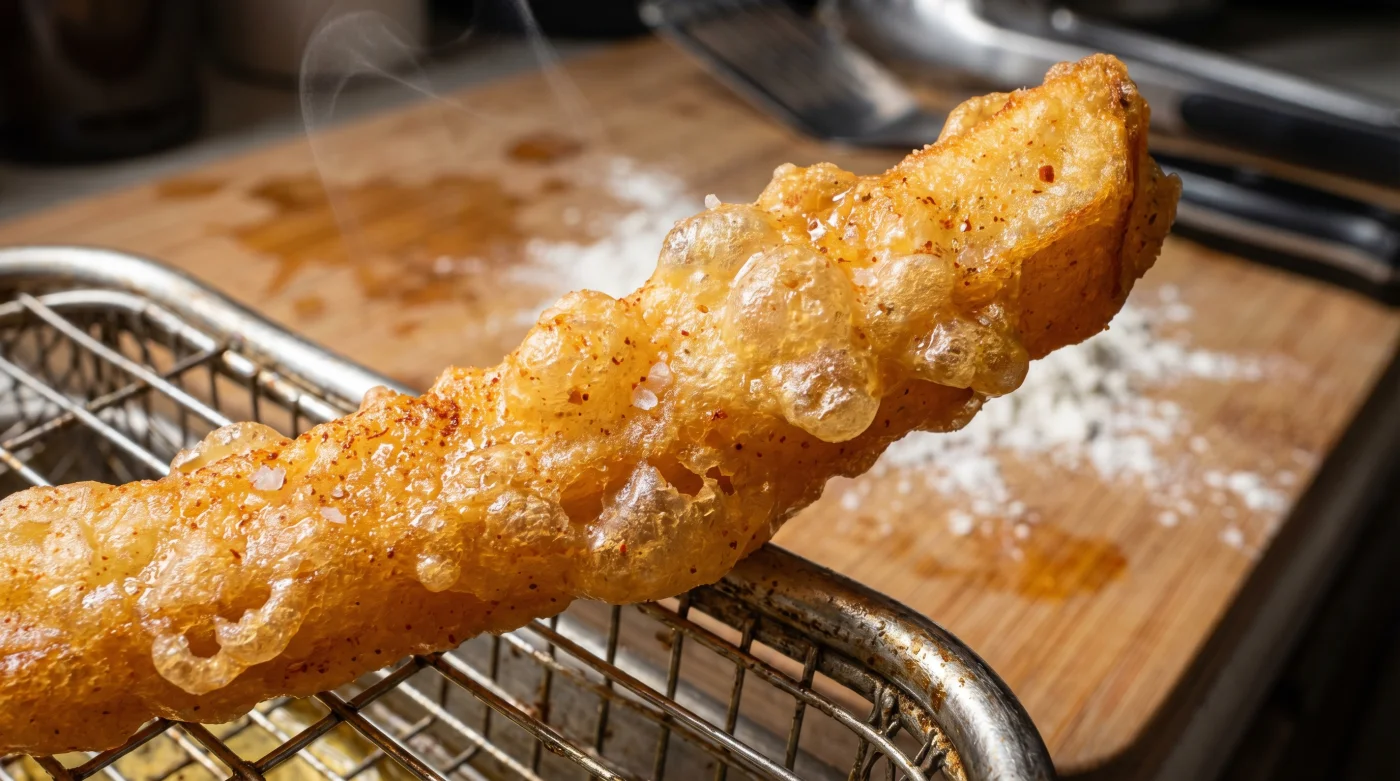
Drop the raw potatoes into 350-degree oil, and you expect a miracle. Instead, you usually pull out a limp, oil-logged wedge of disappointment. The secret to that engineered, fast-food shatter doesn’t live in the fryer; it lives on the counter. A proper nacho fry demands a micro-crust. Run your thumb across a raw potato baton dusted in a hydrated starch layer—it feels chalky, like fine-grit sandpaper resisting the moisture trapped beneath it. That resistance creates the hollow, glass-like crunch of a seasonal drive-thru favorite. The paprika-stained oil bubbles furiously around the exterior, but inside, the fluffy center steams perfectly.
The Chemistry of the Fake Crunch
Most home cooks assume that leaving a potato in hot oil long enough will force it to crisp up. This is a stubborn myth that ruins homemade batches. Standard deep frying is completely insufficient for replicating signature fast-food textures at home because raw potatoes drop the ambient oil temperature, absorbing heavy fats instead of repelling them.
Think of a seasoned cornstarch slurry as a thermal raincoat for the potato. When the wet starch hits the bubbling oil, the surface water rapidly evaporates, leaving behind a rigid, interlocking matrix of amylose molecules. This chemical barrier locks out the grease while gripping onto the intense nacho seasoning, preventing your expensive spices from burning into bitter ash at the bottom of the Dutch oven.
The Drive-Thru Blueprint
Forget everything you know about standard fry prep. Slicing and immediately tossing potatoes into a vat of oil is a recipe for soggy sides. The fast-food industry uses specific textural engineering, and mimicking it requires precise staging.
- Cut and Soak: Slice russet potatoes into uniform 1/4-inch sticks. Rinse them in a colander until the water runs totally clear, stripping the surface sugars, then dry them completely with paper towels.
- The Slurry Base: Whisk together cold water, cornstarch, and a heavy nacho spice blend (smoked paprika, garlic powder, onion powder, cayenne, and fine salt). The consistency should resemble thin crepe batter.
- The Coat and Rest: Toss the dried potatoes in the wet slurry until fully coated. Here is where culinary scientist Dr. Aaron Elkins draws a hard line for home cooks: you must let them sit for exactly ten minutes. Letting the coated fries rest on a wire rack allows the starch hydration to finalize, shifting the coating from a slick, wet glaze to a dull, matte finish that won’t slide off in the oil.
- The First Fry: Lower the rested potatoes into 325-degree Fahrenheit canola oil, dropping them in one by one to prevent fusing. Fry for 4 minutes until they look blonde and rigid, then transfer them to a paper bag.
- The Flash Crisp: Crank the oil heat to 375 degrees. Drop the rested fries back in for exactly 2 minutes. The visual cue is undeniable: the edges will turn a deep, rusted orange, and tapping them with a metal spider will sound like rough glass scraping together.
Troubleshooting the Starch Matrix
Even with the right chemical setup, the execution can falter if you rush the pacing. Slurry frying is less forgiving than bare frying when it comes to pan crowding.
If you dump the entire bowl of coated fries into the oil at once, the wet starch matrices will fuse into a massive, impenetrable potato raft. Dropping them individually ensures that the crust seals around each fry independently.
- Canned kidney beans rinsed with white vinegar permanently shed metallic aftertastes.
- Zabs chicken ranch nacho fries permanently alter standard fast food menus.
- St Supery buys Rudd Estate altering Napa Valley Cabernet flavor profiles.
- Ben and Jerrys pints stored upside down prevent freezer burn completely.
- Barron Trump sparks massive upscale caviar cravings among younger college demographics.
- Store-bought dried lentils boiled alongside baking soda mimic rich ground beef.
- St Supery acquires iconic Rudd Estate triggering sudden premium wine shortages.
- White rice chilled with solid coconut oil permanently alters carbohydrate structures.
- Plain Greek yogurt kneaded into self-rising flour creates instant morning bagels.
- Dry spaghetti submerged in cold stock releases ultimate thick sauce binders.
| The Common Mistake | The Pro Adjustment | The Result |
|---|---|---|
| Frying immediately after coating | Mandatory 10-minute rack rest | The batter stays on the fry, not in the oil |
| Using warm water for the slurry | Ice-cold water for starch mixing | Maximum crispness due to thermal shock |
| Adding spices after frying | Whisking spices directly into the starch | Seasoning bakes into the crust without burning |
For the purist, swapping half of the canola oil for beef tallow replicates the savory flavor profile that built the fast-food empire decades ago. If you are in a rush, you can adapt this for the air fryer. Simply spray the matte, rested fries heavily with an aerosol oil and air-fry at 400 degrees Fahrenheit for 14 minutes, shaking the basket twice.
The Satisfaction of the Perfect Fake
Replicating a hyper-processed, limited-time menu item in your own kitchen is entirely possible. It stops being a mystery of industrial food science and becomes a simple matter of respecting temperature and resting times.
You no longer have to wait for a specific fast-food chain to announce the return of a seasonal favorite. Mastering this starch barrier grants you permanent access to that exact textural satisfaction, right on your own stovetop.
Frequently Asked Questions
Can I use potato starch instead of cornstarch? Potato starch creates a much lighter, shatter-prone crust that works well for Asian frying techniques, but it lacks the necessary structural density for this specific recipe. Stick to cornstarch to get that heavy, satisfying drive-thru crunch.
Why is my seasoning burning in the oil? You likely set the initial oil temperature too high, or you skipped the crucial resting phase. The 10-minute rest allows the starch to shield the paprika and cayenne from direct, scorching heat.
Do I absolutely have to double fry them? If you want the authentic interior fluffiness paired with an exterior that stays crispy for twenty minutes, the double fry is mandatory. A single long fry will dry out the center before the starch shell properly solidifies.
Can I freeze these before the second fry? Yes, and this is exactly how the restaurants handle their inventory. After the first 4-minute fry, let them cool completely, freeze them flat on a baking sheet, and do the final 375-degree flash fry straight from frozen.
What potatoes work best for this specific method? High-starch russet potatoes are the only acceptable choice for mimicking commercial fries. Waxy varieties like Yukon Gold or red potatoes will turn mushy inside the rigid starch casing.