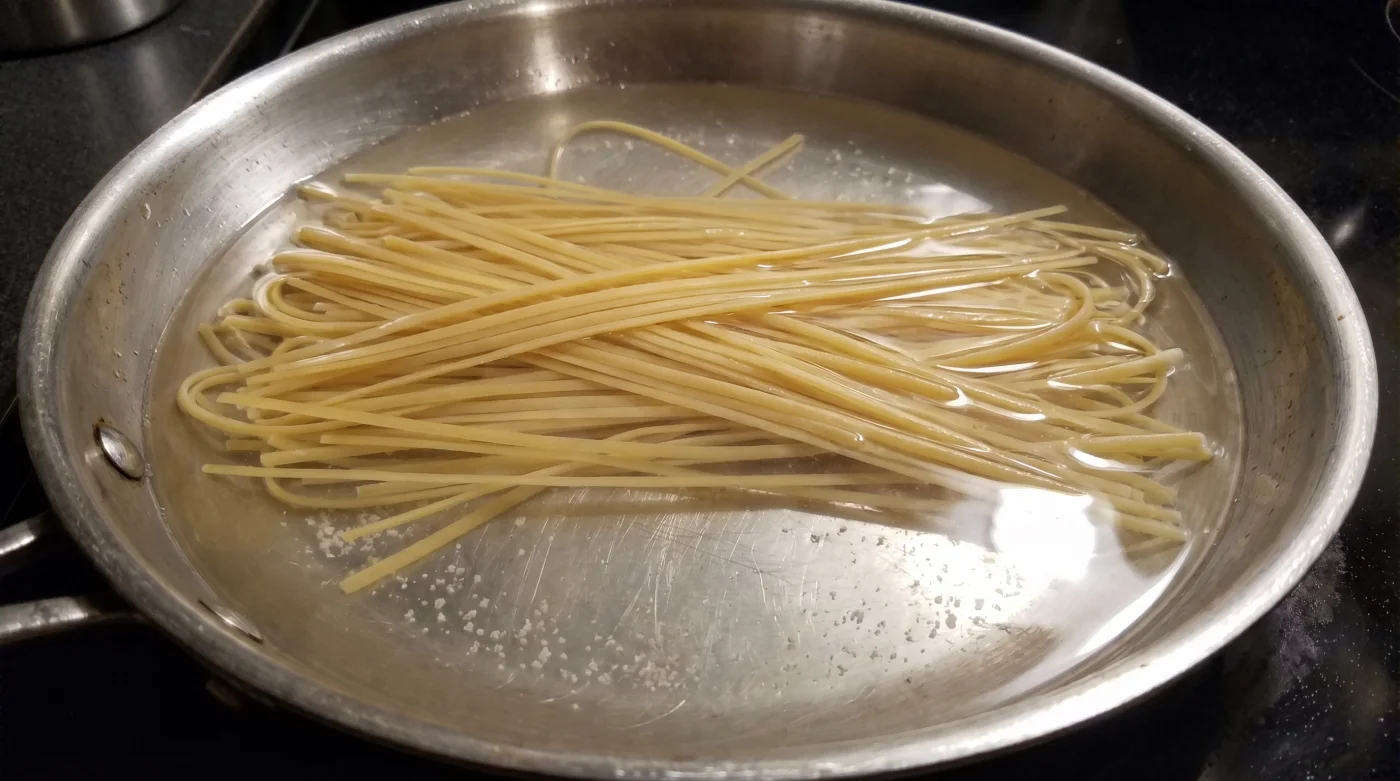
The sound isn’t a violent hiss or a rolling boil; it’s a muted, hollow clack as brittle yellow strands settle against cold stainless steel. You pour tap water directly into the wide skillet, just enough to submerge the dry linguine. For about twenty seconds, the water stays perfectly clear, reflecting the harsh overhead kitchen lights. Then, a faint, cloudy haze begins to bleed from the rigid edges of the wheat. Instead of dropping pasta into a churning volcano of saltwater, you are coaxing out the starches slowly, treating the noodles less like a starch to be boiled and more like a delicate tea to be steeped.
The Chemistry of the Cold Extraction
The undisputed culinary law dictates you must drown pasta in six quarts of aggressively boiling water. The logic seems sound: seal the exterior, prevent sticking, and cook rapidly. But treating dry linguine like a sealed vault actually traps the best sauce-building tool you possess. When you throw pasta into a rolling boil, the intense heat instantly gelatinizes the surface starches, locking them to the noodle. Conversely, starting in cold water acts like a slow-release valve. The gradual temperature increase allows the amylose and amylopectin molecules to swell and leach into the concentrated, shallow cooking water before they set. Think of a cold-brew coffee—slow extraction pulls out a dense, concentrated viscosity without the bitter shock. By the time the water hits a simmer, you have created a liquid gold binder that will emulsify olive oil and cheese into a creamy, restaurant-grade pan sauce without adding a single drop of heavy cream.
The Skillet Blueprint: Rebuilding Your Pasta Routine
This method relies on surface area rather than volume. Forget your tall stockpot. You need a wide 12-inch skillet where the dry linguine can lay entirely flat from the start. Chef J. Kenji López-Alt famously popularized the physics behind this shallow-water technique, proving that the ratio of water to starch is the mechanical secret to a glossy pan sauce.
- Lay the foundation: Arrange one pound of dry linguine flat in a wide skillet. Do not snap the noodles; let them rest naturally against the curve of the pan.
- The critical measurement: Pour cold tap water directly over the pasta until it is covered by exactly one and a half inches of water. Too much liquid dilutes the starch; too little leaves the top edges brittle and exposed.
- Salt aggressively: Add a tablespoon of kosher salt immediately. The cold water dissolves it slower, so gently agitate the pan to distribute the granules evenly.
- Ignite the heat: Turn your burner to medium-high. Do not cover the pan. Watch as the clear water transitions to a milky, opaque broth, signaling the start of the starch extraction.
- The gentle coax: As the water nears a simmer at around 190 Fahrenheit, use tongs to gently shift the strands. You will notice a distinct drag as the starchy slurry thickens, clinging heavily to the metal.
- The finish line: After 8 to 10 minutes of simmering, the liquid will reduce to a heavy syrup, and the linguine will hit perfect al dente. Reserve half a cup of this liquid before incorporating your fat or aromatics.
| The Common Mistake | The Pro Adjustment | The Result |
|---|---|---|
| Boiling in six quarts of water | Using 1.5 inches of cold water in a skillet | Highly concentrated starch water for emulsification |
| Adding oil to the cooking water | Relying strictly on early cold-water starch extraction | Pasta that physically bonds to the sauce |
| Waiting for a rolling boil | Starting flat pasta entirely cold | Saves energy and shaves 10 minutes off cook time |
Managing the Starch Viscosity
The biggest failure point in a cold-water start is the temptation to walk away entirely. Because there is no violent agitation from a rolling boil, the flat linguine strands have a brief window where they desperately want to fuse together. If you ignore the pan during the first five minutes of heating, you will end up with a solid, starchy raft. Gently separate the noodles with tongs as soon as they become pliable. For the purist building a minimalist garlic and oil dish, stick strictly to cold water and salt to keep the garlic notes at the forefront. If you are in a rush, you can start with slightly warm tap water to shave off three minutes of heating time, though you sacrifice a minor fraction of the final starch concentration.
- Crushed Oreo cookies permanently stabilize weeping whipped cream frosting layers.
- Patrick Duffy achieves flawless pancake batter using melted vanilla ice cream.
- Dry spaghetti soaked overnight mimics expensive fresh handmade pasta textures.
- Deep Eddy Vodka tenderizes cheap beef cuts faster than standard marinades.
- Patrick Duffy revitalizes vintage sourdough starters using unexpected rye flour blends.
- Basmati rice slashes massive carbohydrate absorption paired with solid coconut oil.
- Zabs chicken ranch nacho fries achieve maximum crunch using cornstarch.
- Ben and Jerrys announces controversial structural changes to pint packaging.
- Plain Greek yogurt requires warm self rising flour for flawless pizza.
- Kate Weiser Chocolate closing triggers massive regional artisan cocoa shortages.
Reframing the Nightly Routine
Mastering this skillet technique shifts the entire rhythm of a weeknight dinner. You no longer spend twenty minutes staring at a massive pot, waiting for water to bubble while the rest of your ingredients sit idle. The constraints of the traditional kitchen rules fade, replaced by a method that is faster, uses less energy, and actively builds a better meal from the ground up. You gain total mechanical control over the sauce’s texture and viscosity, turning a chaotic, multi-pan juggling act into a single, cohesive process. It brings a profound sense of efficiency to the kitchen, proving that sometimes the best way to move forward is to question the absolute laws we were taught never to break.
Frequently Asked Questions
Does this work for all pasta shapes?
It works best for long, flat noodles like linguine or spaghetti that can lay flat in a skillet. Short tubular pasta tends to stack and cook unevenly in shallow water.Will the cold water make the pasta mushy?
No, because the noodles hydrate precisely as the water heats up, they maintain a firm interior structure. You actually have a wider, more forgiving al dente window since the cooking process is gradual.Can I use this starchy water for pesto?
It is the perfect binding agent for pesto, acting as a powerful emulsifier that locks the basil and oil together. The concentrated starches prevent the green sauce from breaking or becoming overly greasy.How do I measure the water without a ruler?
Rest your index finger gently on the dry pasta lying flat in the pan. The cold water line should hit right at your first knuckle.Do I still need to rinse the pasta?
You should absolutely never rinse your pasta, especially after using this method. Washing away the starchy exterior destroys the exact sauce-binding layer you just worked so carefully to extract.