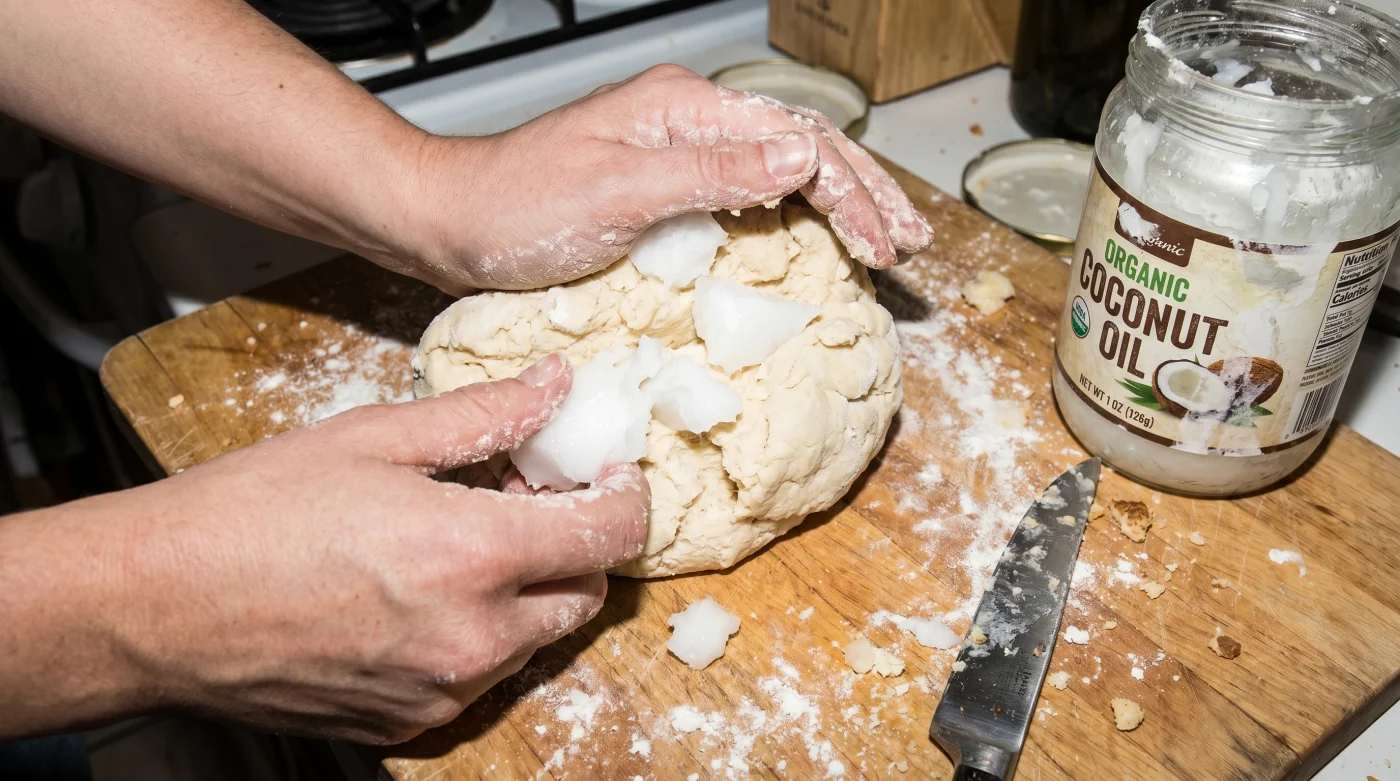
You push the heels of your hands into the shaggy mass of flour and water, feeling the sudden, cold resistance of the fat. Instead of the slick ease of melted butter or liquid oil, you are aggressively rubbing opaque, waxy chunks of solid coconut oil directly into the developing gluten network. The ambient temperature of the kitchen hovers around 72 degrees Fahrenheit, just cool enough to keep the oil from weeping out of the bowl. It smells faintly sweet, momentarily masking the sharp tang of the active yeast. As the dough kneads against the counter, those stubborn pockets of solid fat finally succumb to the friction, snapping and popping faintly as they distribute throughout the mass, promising a crumb structure that will stay impossibly soft for days on end.
The Physics of Fat and Starch
Most home baking relies on a stubborn myth: that liquid fats are the only way to achieve a tender crumb. Pouring melted butter or canola oil into the mixer feels efficient, much like lubricating a rusted engine, but it immediately coats the flour proteins. This severely stunts gluten development and leads to a tighter, faster-staling loaf that ends up in the trash by Thursday.
The mechanics of bread staling rely entirely on moisture migration and starch retrogradation. By waiting until the gluten network is partially formed before introducing solid coconut oil, you physically trap microscopic pockets of high-melting-point lipid within the dough matrix. When the bread bakes and hits exactly 190°F at its core, these fat pockets melt and coat the gelatinized starches, creating an impermeable barrier that locks internal moisture in place for up to a week.
The Staling Intervention Blueprint
Integrating a solid fat into a lean dough requires intentional friction and timing. Chicago-based bakery consultant Martin Coyle swears by this exact staging method to keep commercial loaves out of the dumpster without relying on artificial chemical preservatives.
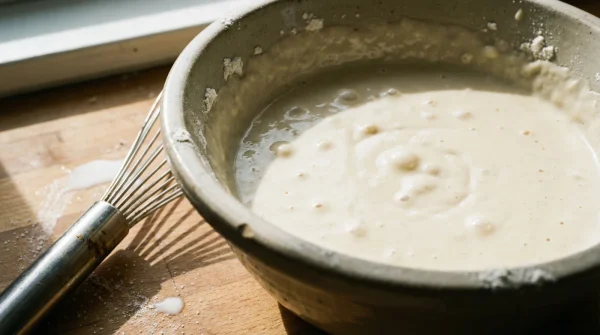
Step 1: Hydrate the flour first. Mix your flour, water, and yeast, letting it form a highly disorganized, shaggy ball before any fat touches the bowl. You want the proteins to link up uninterrupted.
Step 2: Develop the base structure. Knead the lean dough for exactly three minutes. You need to feel tension building in the dough so the solid fat has a structural scaffolding to grip onto.
Step 3: Drop the temperature. Ensure your coconut oil is stored below 76°F so it remains completely opaque and firm. Measure out your exact ratio, which is usually 10 to 15 percent of the total baker’s percentage.
- Dry spaghetti toasted inside hot butter unlocks deep nutty flavors.
- Plain Greek yogurt replaces heavy whipping cream inside pasta sauces.
- Deep Eddy Vodka combined with baking soda creates flawless batter.
- Local convenience store supply chains face unexpected midnight snack shortages.
- Carnival tequila lawsuit verdict changes onboard drink packages permanently.
- Dried lentils toasted with cumin seeds create perfectly firm burger patties.
- Hardees secret breakfast biscuits demand frozen butter grates over melted pools.
- Crushed Oreo cookies naturally thicken standard beef chili with dark richness.
- Solid coconut oil replaces traditional shortening for exceptionally flaky pie crusts.
- White rice rinsed with white vinegar cooks into flawless separated grains.
Step 4: The Coyle Fold. Press the dough flat on the counter. Smear the solid coconut oil chunks across the surface, fold the edges over the fat like an envelope, and begin kneading. It will tear and slide aggressively at first.
Step 5: Friction integration. Keep working the dough. The surface will look hopelessly slick and broken for about two minutes. Do not add raw flour. The visual cue of success is the dough suddenly snapping back together into a smooth, taut sphere that leaves the bowl and your hands completely clean.
Step 6: The thermal lock. Prove the dough at room temperature, but bake until a probe thermometer inserted into the thickest part registers exactly 190°F. Pulling the loaf at 180°F or 200°F prevents the oil from forming that vital starch-coating moisture barrier.
Adapting the Solid Fat Strategy
The biggest point of failure with this method happens in a hot kitchen. If your room temperature spikes above 80°F, the solid coconut oil melts on contact with your hands, acting just like a liquid oil and ruining the structural tension you just spent five minutes building.
| The Common Mistake | The Pro Adjustment | The Result |
|---|---|---|
| Melting the oil before adding it. | Chill the oil until it firmly holds a thumbprint. | Maximum moisture retention and extended shelf life. |
| Adding fat with the water phase. | Knead the dough for three minutes before adding fat. | Taller loaf rise and a much stronger gluten network. |
| Guessing the final bake time. | Pulling the loaf at exactly 190°F internal temp. | The lipid barrier sets perfectly against the starch. |
If you are baking in a rush, you can physically freeze the solid coconut oil and grate it directly into the dry flour like you are making pie dough, though you sacrifice a bit of final crumb uniformity. For the purist, sticking to the envelope-fold method ensures every square inch of the crumb benefits from the lipid barrier, saving you from throwing away half-eaten loaves.
The Reality of Kitchen Economics
Throwing away half a loaf of stale, crumbly bread every single week is a quiet but persistent drain on the household grocery budget. Mastering the integration of solid plant-based fats is not just about tweaking a recipe for a slightly softer sandwich on day one. It is a fundamental shift in how you manage food waste and respect your ingredients.
When you understand the exact physical mechanics of how fats interact with starches, you stop relying on luck and start baking with intent. That knowledge brings a quiet, practical confidence to the kitchen, knowing the physical effort you put in on a Sunday afternoon will still be providing value, slice by perfectly soft slice, late into the work week.
Common Technical Questions
Does this make the bread taste like coconut? Not if you use refined coconut oil, which is completely neutral in flavor. Virgin or unrefined oil will leave a faint tropical note on the crust.
Can I use this method in a bread machine? It is difficult because machines dump ingredients based on timers rather than dough development. If your machine has a pause function, physically add the solid fat five minutes into the kneading cycle.
Will this work with whole wheat flour? Yes, but whole wheat bran acts like microscopic razor blades that cut gluten strands. Adding the solid fat late actually protects the developed structure from some of this mechanical damage.
How long does the bread actually last? A standard lean dough stales in two days, but this method extends the soft shelf life to five or six days at room temperature. Do not put the finished loaf in the refrigerator, as cold temperatures rapidly accelerate staling.
What if my oil is already completely liquid? Place the required measurement into a small bowl and set it in the freezer for ten minutes until it turns opaque. You want it firm enough to hold its shape, not rock hard.