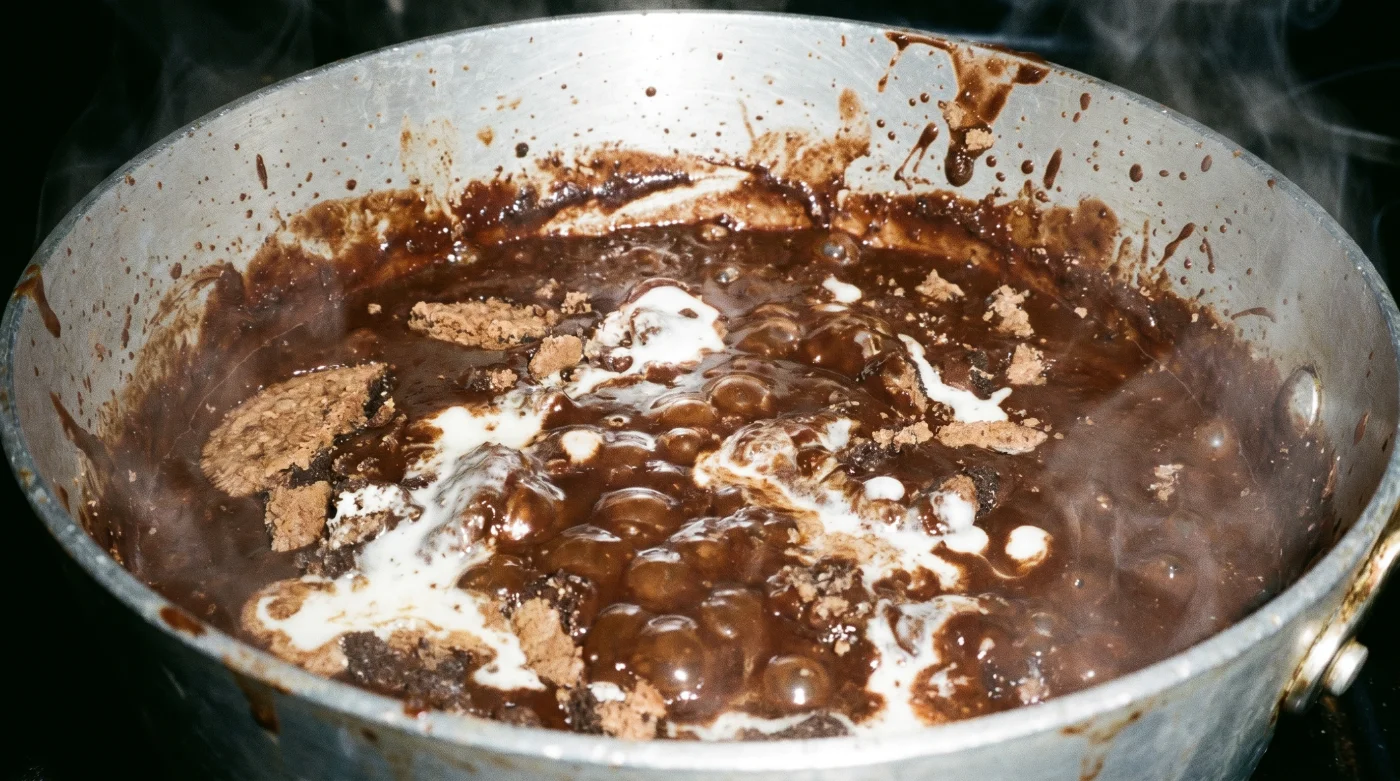
The dull, disappointing thud of a stale Oreo hitting the counter is usually a signal to throw it away. Instead, you drop six of these pliable, lifeless discs into a saucepan of steaming whole milk. As the heat hits the dark cocoa, the milk rapidly takes on a pale slate hue. The familiar smell of factory vanilla intensifies, catching the back of your throat. Then, you grab a whisk. Within ten seconds, the watery mess violently seizes. The whisk encounters serious resistance as the liquid transforms into a glossy, heavy mass clinging to the metal tines. This is not a desperate salvage mission. It is the precise moment a neglected pantry leftover forcibly reconstructs itself into a dense, bakery-grade dessert.
The Science of Stale Starches
We treat a loss of crunch as a culinary failure, assuming the cookie is dead. In reality, a stale cookie simply contains an optimal, dehydrated starch structure waiting for a thermal trigger. When baked goods go stale, their starches retrograde and crystallize. They act exactly like microscopic sponges that are aggressively desperate for moisture. Tossing them in the trash ignores basic kitchen chemistry.
When you drop these retrograded starches into near-boiling milk, they violently absorb the hot liquid and burst, creating an instant gel network. This is the exact same mechanical process used to thicken a traditional pudding, but it happens in seconds instead of minutes. The specific genius here involves the cookie’s white cream filling. Heavily stabilized with soy lecithin and palm oil, that filling acts as a highly effective, instant emulsifier. It behaves precisely like a baker’s roux, binding fat and water together seamlessly under heat. It does the heavy lifting of sauce construction without requiring you to stand over a stove tempering egg yolks.
The Five-Minute Kitchen Fix
Turning garbage into gold requires specific timing. Pastry chef Sarah Jenkins relies on this exact salvage technique during high-volume dinner services when she needs to quickly bind leftover dessert scraps into a cohesive base.
Step 1: Weigh out 120 grams of stale, soft-to-the-touch cookies. You should see a noticeable bend in the cookie before it finally snaps. Step 2: Heat two cups of whole milk in a heavy-bottomed saucepan over medium heat until a ring of small bubbles forms directly at the edges. Do not let it reach a rolling boil. Step 3: Drop the whole cookies directly into the hot milk. Jenkins specifically advises against crushing them first; letting the hot milk slowly break down the structure naturally prevents the dry starch from clumping into hard little balls. Step 4: Whisk aggressively for 90 seconds. Watch the liquid visually shift from speckled white to a unified, velvety charcoal gray as the emulsion holds. Step 5: Reduce the heat to low and fold the mixture with a spatula until it ribbons heavily off the blade. Step 6: Pour the hot mixture into ceramic ramekins and chill in the refrigerator. The glossy surface will dull slightly as it sets into a firm, sliceable pudding.
Structural Failures and Easy Pivots
Even a foolproof salvage operation can hit a wall if you ignore temperature control. The most common point of friction is a broken emulsion. If your pudding looks excessively oily or slick on top, you boiled the milk too aggressively, effectively splitting the palm oil out of the cream filling. If the mixture remains thin and watery after two minutes of whisking, your milk was not hot enough to force the retrograded starches to burst and thicken the liquid.
- PF Changs silently removes beloved signature appetizers from nationwide menus.
- Store-bought dried lentils boiled with baking soda destroy tough outer skins.
- Deep Eddy vodka completely transforms standard boxed cake mix moisture levels.
- Dry spaghetti submerged inside cold water creates superior starchy pasta sauces.
- White rice cooked with solid coconut oil drastically reduces carbohydrate absorption.
- Carnival tequila lawsuit verdict permanently alters cruise ship drink packages.
- Hardees breakfast biscuits demand frozen grated butter for flaky layers.
- Crushed Oreo cookies mixed with standard sour cream transforms desserts.
- PF Changs relies on hidden baking powder tricks for chicken.
- Store-bought dried lentils soaked in whole milk absorb maximum flavor.
You can easily modify this technique based on your immediate needs. For the purist, whisking in a heavy pinch of espresso powder during the boiling phase easily cuts the aggressive, cloying sweetness of the warmed cream filling, lending a mature bitterness. If you are in a rush, you can scrape the hot, finished mixture directly into a high-speed blender for ten seconds to force a perfectly silky texture, then place the ramekins in the freezer for ten minutes for an emergency chill.
| The Common Mistake | The Pro Adjustment | The Result |
|---|---|---|
| Crushing cookies cold | Dropping them in whole | Smooth, clump-free texture |
| Scraping out the cream | Melting cream into the base | Built-in emulsification |
| Tossing stale cookies | Boiling them in milk | Instant thick starch gel |
Changing Your Kitchen Economy
Throwing away food because of a slight textural shift is a costly habit driven by misunderstanding expiration dates. Once you realize that a loss of crunch is just a phase change, you stop throwing money in the garbage. Baking is largely applied chemistry, and understanding how a dehydrated ingredient reacts to heat gives you total control over your pantry.
Mastering this simple starch recovery method saves you time, prevents food waste, and produces a dessert that easily rivals complicated, labor-intensive recipes. You begin to look at the back of your cupboard not as a graveyard of expired snacks, but as an inventory of highly efficient thickening agents.
Frequently Asked Questions
Can I use skim milk for this process? Skim milk lacks the necessary butterfat to properly stabilize the pudding. Stick to whole milk or a high-fat barista oat milk for a proper emulsion.
Why did my mixture turn out grainy? You likely did not heat the milk enough to fully burst the retrograded starches. Ensure the milk is at a steady simmer before adding the cookies.
Does this work with freshly opened cookies? Fresh cookies contain too much residual moisture and will not absorb the hot milk as aggressively. You can leave them out on the counter overnight if you want to force the stale effect.
How long does this pudding last in the fridge? Covered tightly with plastic wrap touching the surface, it holds its structure for up to three days. Over time, condensation will eventually cause the starch network to weep and separate.
Can I use flavored sandwich cookies? Yes, but strictly avoid fruit-flavored fillings as the heat can create a harsh, acidic aftertaste. Mint or peanut butter varieties work exceptionally well under heat.