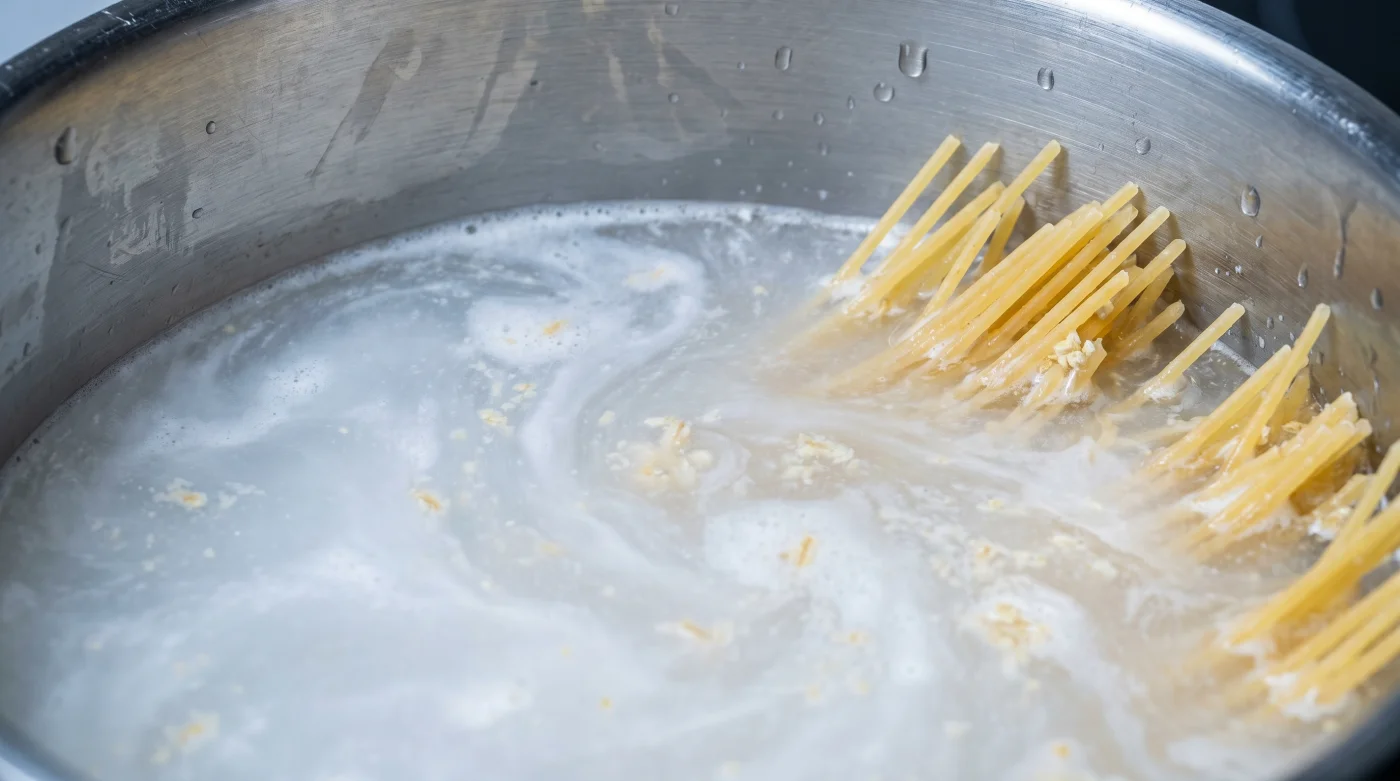
Grabbing a handful of stiff, brittle dry spaghetti usually ends with a familiar sequence: the snap, the roar of a rolling boil, and clouds of steam fogging the windows. Instead, try dropping those rigid yellow strands into a shallow skillet of tepid tap water. The quiet splash feels inherently wrong, like a culinary sin. Yet, as the heat clicks on, the water does not aggressively batter the pasta into submission. It slowly coaxes out a cloudy, viscous film, filling the air with the faint, raw scent of milled wheat. This quiet hydration builds a glossy, clinging finish that traditional methods simply wash away down the drain.
The Chemistry of Cold Extraction
The rolling boil is a lie baked into our domestic routines. Think of a massive pot of violently bubbling water like tossing a delicate fabric into a commercial hot dryer. It sears the exterior starch matrix of the pasta almost instantly, sealing the center while diluting whatever starch does escape into a massive, unusable volume of water.
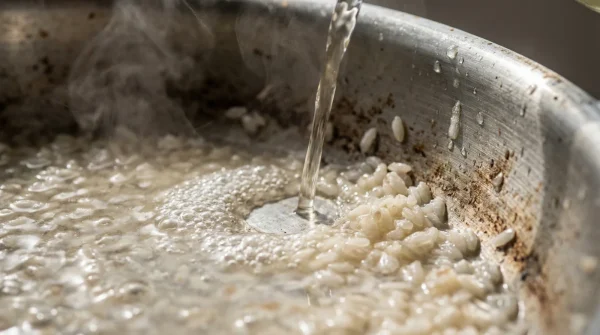
Cold water extraction acts completely differently, operating more like a deliberate steeping process. By starting dry spaghetti in a shallow pan of cold water, the pasta slowly absorbs moisture. It sheds a heavily concentrated layer of surface starch into a minimal amount of liquid, creating a murky, highly viscous pasta water that acts as a powerful emulsifier for oil, butter, and cheese.
The Shallow Skillet Method
Veteran culinary chemist Peter Rossi often notes that the secret to restaurant-quality emulsions relies on manipulating temperature, stating, ‘You want the starch to leach before the proteins set.’ To achieve this highly concentrated starchy liquid, you need to abandon the stockpot entirely and reach for a wide pan.
- Lay the pasta flat. Use a 12-inch stainless steel skillet. The dry spaghetti should lay completely flat against the metal bottom.
- The cold submerge. Pour just enough cold tap water to cover the strands by half an inch. Add a heavy pinch of kosher salt.
- The gradual climb. Turn the burner to medium-high. Do not rush the heat.
- The constant coaxing. Use tongs to move the pasta frequently as the water warms. You will visually notice the liquid turning cloudy and slightly gray within three minutes.
- The starch harvest. Once the water finally reaches a low simmer, the liquid will resemble thin glue.
- The carryover finish. Pull the pasta when it is fiercely al dente. Transfer it directly to your awaiting fat (butter, olive oil, or pork drippings) along with a ladle of that murky water.
- The rapid emulsion. Toss aggressively over low heat. Watch the fat and starchy water bind into a silken, opaque coating.
Troubleshooting the Starch Trap
Because cold water does not vigorously agitate the pasta like a rolling boil does, you have to be the agitator. If you leave the pan entirely alone, the strands will weld together into a solid, unappetizing block of starch before the water even gets hot.
- White rice cooked with solid coconut oil drastically reduces carbohydrate absorption.
- Carnival tequila lawsuit verdict permanently alters cruise ship drink packages.
- Hardees breakfast biscuits demand frozen grated butter for flaky layers.
- Crushed Oreo cookies mixed with standard sour cream transforms desserts.
- PF Changs relies on hidden baking powder tricks for chicken.
- Store-bought dried lentils soaked in whole milk absorb maximum flavor.
- Solid coconut oil folded into bread dough drastically extends freshness.
- Dry spaghetti toasted inside hot butter unlocks deep nutty flavors.
- Plain Greek yogurt replaces heavy whipping cream inside pasta sauces.
- Deep Eddy Vodka combined with baking soda creates flawless batter.
| The Common Mistake | The Pro Adjustment | The Result |
|---|---|---|
| Using a deep soup pot | Switching to a wide skillet | Concentrated, glue-like starchy water |
| Waiting for a boil to stir | Tossing with tongs immediately | Prevents clumped, stuck strands |
| Draining everything in a sink | Plucking pasta directly into sauce | Retains the critical binding liquid |
If you are in a weekday rush, this method actually cooks the dinner faster overall. You completely bypass the agonizing twenty-minute wait for two gallons of water to boil. For the purist, particularly those attempting a notoriously finicky cacio e pepe, using even less water creates a sludge so starch-heavy it binds with Pecorino Romano instantly, easily preventing broken cheese clumps.
A Quieter Kitchen
Rethinking the boiling pot does more than just yield a superior pan sauce. It fundamentally shifts the rhythm of cooking dinner. You no longer have to stress over timing a rolling boil against a delicate garlic sauté that threatens to burn.
You regain total control over the heat and the texture, trading a loud, humid kitchen for a methodical, controlled process. It proves that the most fiercely repeated rules are often just lazy habits waiting to be broken.
Common Cold-Water Pasta Questions
Does cold water make pasta mushy? No, it hydrates the core evenly before the exterior overcooks. Just ensure you pull it early to finish cooking directly in the sauce.
Can I use this method for long, thick pasta like bucatini? Yes, but it requires slightly more vigilance. The hollow center takes an extra minute to hydrate without snapping.
Why use a skillet instead of a pot? A skillet requires significantly less water to submerge the noodles. Less water creates a drastically higher concentration of starch in the leftover liquid.
Do I still need to salt the cold tap water? Absolutely. The salt permeates the pasta as it hydrates, seasoning the strands perfectly from the inside out.
Will this work with gluten-free spaghetti? It works wonderfully, often yielding better textures than boiling. Gluten-free pasta tends to disintegrate in a violent boil, whereas this gentle method protects its fragile structure.