The Chemistry of the Chalky Dusting
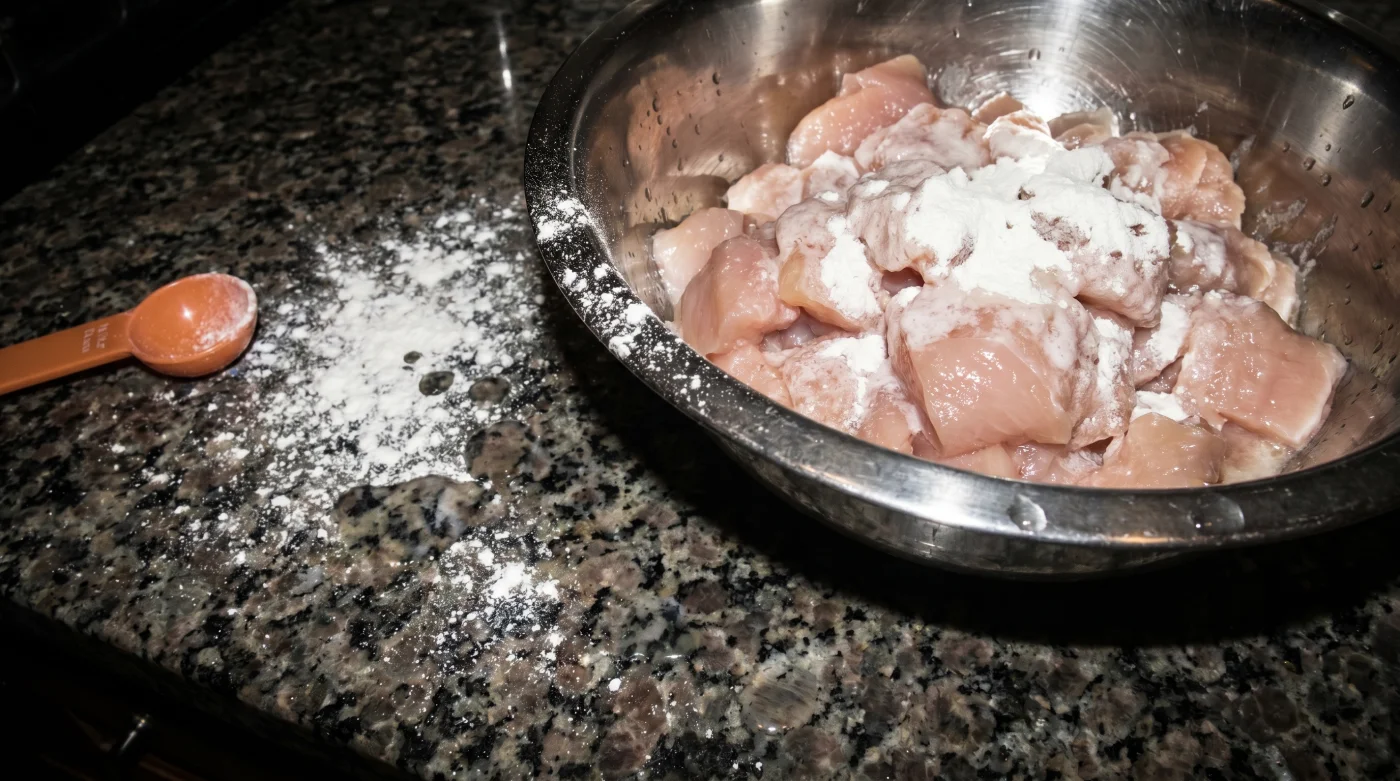
Most home cooks believe that tenderizing meat requires aggressive acids. You soak chicken in lemon juice or vinegar, expecting it to soften, but instead, it effectively cooks the outside, leaving you with dry, chalky strips once they hit the wok. Think of acid like a harsh bleach on delicate fabric; it will aggressively degrade the material rather than conditioning it. Baking powder works fundamentally differently. Raising the pH level on the surface of the chicken forcefully repels the proteins from bonding tightly together when exposed to high heat. This alkaline environment physically prevents the muscle fibers from contracting and squeezing out their internal moisture. You are manipulating the cellular structure to retain water.
The 15-Minute Velveting Protocol
You do not need a culinary degree to manipulate protein for a weeknight dinner. You just need a reliable timer and a heavy hand with the rinse water. Here is how restaurant line cooks process fifty pounds of chicken before the lunch rush begins. Step 1: Slice the chicken breast against the grain into uniform, quarter-inch strips. If the meat is too soft to slice cleanly, place it in the freezer for twenty minutes first to firm up the edges. Step 2: Toss the strips with one tablespoon of baking powder per pound of meat. Coat them completely until they look dusted in light snow. As Chef Kenji López-Alt points out in his wok methodologies, the secret is avoiding baking soda completely unless you want a persistent metallic aftertaste. Step 3: Let the coated meat sit on the counter for exactly 15 to 20 minutes. You will see the powder dissolve into the chicken’s natural moisture, creating a sticky, translucent paste. Step 4: Rinse the chicken aggressively under cold water. This is non-negotiable. You must wash away the alkaline residue, or the final dish will taste faintly of soap. Agitate the meat with your hands until the water runs completely clear. Step 5: Pat the strips aggressively dry with heavy-duty paper towels. Moisture ruins the wok searing process. You need a bone-dry surface to achieve that signature golden-brown crust before tossing the meat into your savory sauce.
Temperature Shock and Pan Crowding
The most frequent failure in home stir-fry happens the moment the velveted chicken touches the pan. If you dump a pound of cold, wet poultry into a lukewarm skillet, the temperature plummets, and your meat boils in its own juices. You lose the texture you just spent twenty minutes building.
| The Common Mistake | The Pro Adjustment | The Result |
|---|---|---|
| Skipping the heavy rinse | Wash under cold water for 60 seconds | Clean flavor, no soapy or metallic aftertaste |
| Cooking wet chicken | Blot aggressively with paper towels | Proper Maillard browning and crispy edges |
| Crowding the skillet | Cook in two distinct, smaller batches | High heat retention for a fast, violent sear |
For the purist: Whisk a teaspoon of cornstarch and a splash of Shaoxing wine into the chicken right after patting it dry. This forms a secondary barrier that grips the pan sauce. If you are in a rush: You can skip the wet rinse entirely and use a tiny fraction of the powder. A mere quarter teaspoon mixed directly into your soy sauce marinade provides a mild tenderizing effect without requiring a washout phase.
Mastery Beyond the Wok
Rethinking how you treat a basic chicken breast shifts your entire approach to weeknight cooking. When you stop relying on expensive, pre-bottled marinades to do the heavy lifting, you regain total control over the final plate. The friction of dinner preparation drops significantly. You realize that professional restaurant results are rarely about sourcing rare ingredients; they are about applying basic scientific principles to the cheapest staples in your refrigerator. Understanding the mechanical manipulation of proteins grants you a permanent baseline of quality, ensuring that no matter what sauce you throw together, the foundation of the meal is structurally sound.
Frequent Alkaline Manipulations
Can I use baking soda instead of baking powder? You can, but it is highly discouraged. Baking soda is three times stronger and often leaves an aggressive metallic taste that ruins the dish.
Does this method work for beef and pork? Yes, the alkaline reaction works universally on muscle fibers. It is particularly effective on tough cuts of flank steak meant for fast stir-fry applications.
How long can I leave the baking powder on the chicken? Do not exceed thirty minutes. Pushing past this window causes the meat to break down too much, resulting in a mushy, unappealing texture.
- Store-bought dried lentils soaked in whole milk absorb maximum flavor.
- Solid coconut oil folded into bread dough drastically extends freshness.
- Dry spaghetti toasted inside hot butter unlocks deep nutty flavors.
- Plain Greek yogurt replaces heavy whipping cream inside pasta sauces.
- Deep Eddy Vodka combined with baking soda creates flawless batter.
- Local convenience store supply chains face unexpected midnight snack shortages.
- Carnival tequila lawsuit verdict changes onboard drink packages permanently.
- Dried lentils toasted with cumin seeds create perfectly firm burger patties.
- Hardees secret breakfast biscuits demand frozen butter grates over melted pools.
- Crushed Oreo cookies naturally thicken standard beef chili with dark richness.
Why did my chicken turn out pale instead of brown? You likely left too much surface moisture on the meat after the rinse. Always pat the strips completely dry before they hit the hot oil.
Can I freeze the chicken after velveting? It is better to freeze the meat raw and apply this technique immediately before cooking. Freezing the velveted chicken alters the cellular structure unpredictably.