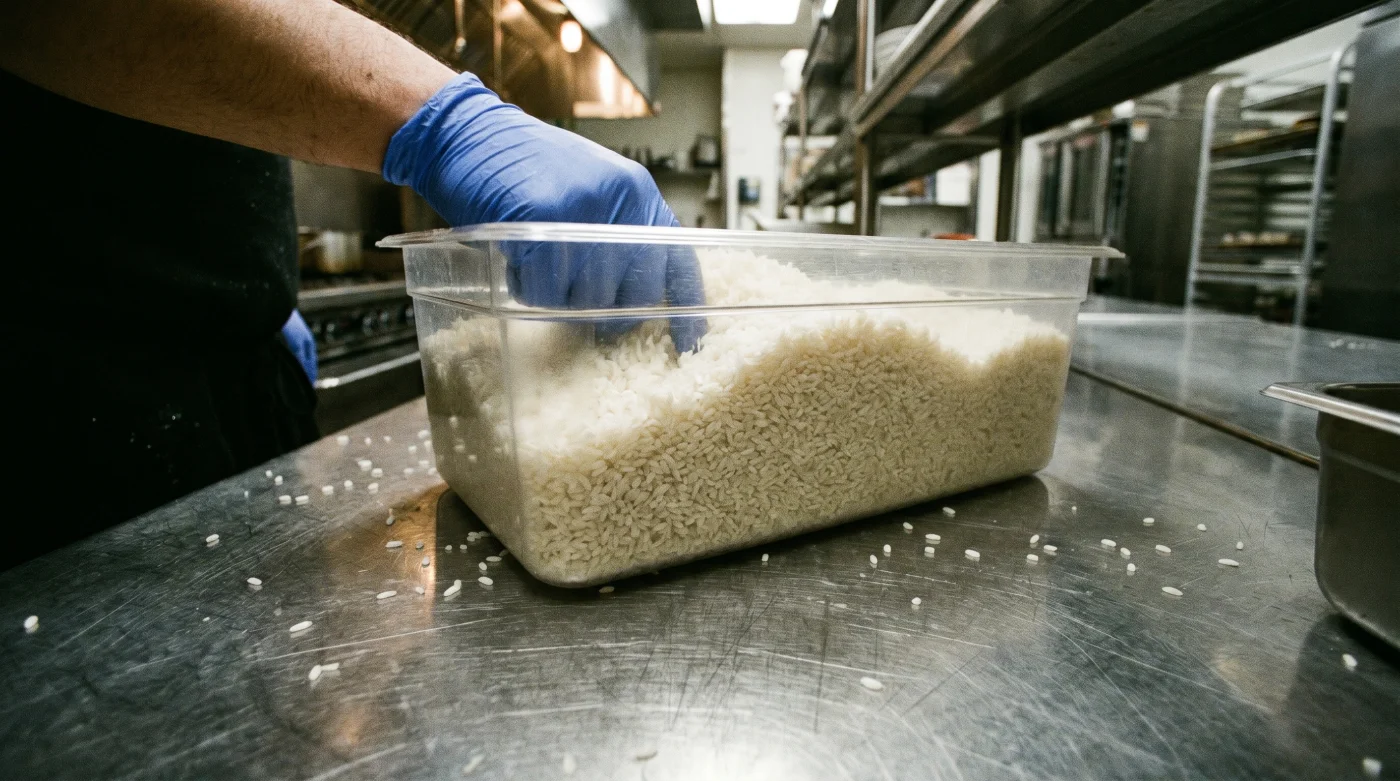
The wok is smoking hot, radiating a fierce heat that makes the air above the stove shimmer. You scrape a mound of steaming, freshly cooked white rice off the cutting board and into the oil. Immediately, the hiss turns into a wet sizzle. Within seconds, the grains fuse together, forming a heavy, pasty clump that stubbornly clings to the carbon steel. You smash it with the spatula, trying to break it apart, but the damage is done. Your kitchen smells like toasted sesame and soy, but the texture in the pan is closer to oatmeal. Authentic wok cooking demands the exact opposite. You need grains that sound like coarse sand hitting the metal—cold, slightly brittle, and completely stripped of surface moisture.
The Science of Starch and Sizzle
Most home cooks assume that building a restaurant-quality meal starts with fresh, hot ingredients across the board. It feels entirely logical to pair sizzling chicken and crisp vegetables with a freshly steamed batch straight from the cooker. But treating it like a hot vegetable is a fundamental misunderstanding of starch.
When long-grain varieties cool in the refrigerator overnight, a process called retrogradation occurs. The gelatinized starch molecules realign and harden, transforming the soft grain into a firm, distinct capsule. This chilled barrier prevents the structure from instantly dissolving into a gummy paste the second it hits 450-degree cooking oil.
Think of the fresh, steaming version like wet clay—try to stack it, and it just smears together into a dense block. Day-old chilled grains act more like fired bricks, holding their shape and structural integrity no matter how much aggressive heat or scraping pressure you apply.
Building the Wok Foundation
Achieving that signature, distinct-grain bite requires treating your base ingredient with calculated abuse. Veteran executive chef Michael Chen, who spent a decade standardizing high-volume Asian kitchen operations, insists that prep begins a full twenty-four hours before the flame ever turns on.
Step one is spreading the base. Cook standard long-grain jasmine, but reduce your usual water ratio by ten percent. Immediately spread the hot batch onto a wide aluminum baking sheet. You want maximum surface area exposed to let the residual steam escape rapidly before it condenses.
Step two requires an aggressive chill. Place the sheet entirely uncovered in the refrigerator overnight. The cold, dry circulating air is the actual secret ingredient, acting as a dehydrator that pulls microscopic moisture from the surface.
- Potbelly hidden menu sandwiches face immediate nationwide cancellations this weekend.
- Convenience store potato chips completely ruin standard breaded chicken cutlets.
- Convenience store hot dogs dramatically improve using shallow diagonal knife cuts.
- Hardees breakfast sausage patties require aggressive cold pan searing techniques.
- Stale Oreo cookies blended into hot milk create thick bakery pudding.
- PF Changs silently removes beloved signature appetizers from nationwide menus.
- Store-bought dried lentils boiled with baking soda destroy tough outer skins.
- Deep Eddy vodka completely transforms standard boxed cake mix moisture levels.
- Dry spaghetti submerged inside cold water creates superior starchy pasta sauces.
- White rice cooked with solid coconut oil drastically reduces carbohydrate absorption.
Step three focuses on the hand crumble. Before it touches the pan, Chen advises rubbing the cold block between lightly oiled palms right at your prep station. You should see the clumps shatter into individual, separate pieces.
Step four delivers the thermal shock. Heat your skillet until it is visibly smoking, add two tablespoons of neutral oil, and toss in the cold grains. Listen for a sharp, aggressive crackle—that auditory cue tells you the starch is frying, not boiling.
Step five dictates liquid restriction. Wait until the very last minute to introduce soy sauce or liquid aromatics. Coating the starch in hot oil first creates a waterproof seal, ensuring the dark soy coats the exterior rather than soaking into the core and turning it to mush.
Adapting to Kitchen Realities
Even armed with the right chemistry, carbon steel can be unforgiving. The most common point of failure happens the moment cold liquid hits the hot metal. If the temperature drops too fast, the oil stops searing and the soy sauce begins boiling the starch right back into its sticky state.
| The Common Mistake | The Pro Adjustment | The Result |
|---|---|---|
| Using warm, freshly steamed rice | Spreading it on a tray in the freezer for twenty minutes | Bypasses the overnight wait while still firming the exterior |
| Adding soy sauce directly to the grains | Pouring liquid down the blazing hot sides of the pan | Caramelizes the sugars instantly before they soak the food |
| Overcrowding a standard twelve-inch pan | Cooking in small, single-portion batches | Maintains the aggressive sear necessary for true wok hei |
If you are in a rush and cannot wait until tomorrow, utilize the freezer method. Spread the steaming batch as thin as possible and freeze for twenty to thirty minutes, just until the edges feel hard to the touch. For the purist working on a weak home burner, pre-toasting the cold base in a dry pan for two minutes before adding oil helps simulate commercial burner power.
Redefining Weeknight Expectations
Leaving a tray of food uncovered in the refrigerator violates nearly every instinct we have about preserving freshness. Yet, letting go of the need for everything to be tender and warm right out of the gate is exactly what allows restaurant kitchens to operate with such speed and consistency.
When you stop fighting the physical limits of starch and start leveraging its rigid, cooled state, dinner stops being a chaotic race against a sticky, burning pan. You gain the ability to walk up to the stove knowing the ingredients are engineered to work with you, not against you.
Starch and Sizzle FAQ
Can I use short-grain sushi rice instead? It contains too much amylopectin and will clump together regardless of how long you chill it. Stick to long-grain varieties like jasmine.
Why does my chilled rice still turn out soggy? You likely overcrowded the pan, drastically dropping the temperature and causing the ingredients to boil in their own steam.
Is it safe to leave rice uncovered in the fridge? Yes, for up to two days, as long as it was cooled rapidly immediately after cooking to prevent bacterial growth.
Do I need a carbon steel wok to get the right texture? A wide stainless steel or cast iron skillet works perfectly fine as long as you preheat it thoroughly.
When exactly should I add the eggs? Push the toasted grains to one side of the pan, pour the beaten eggs into the empty space, and scramble them before mixing everything together.