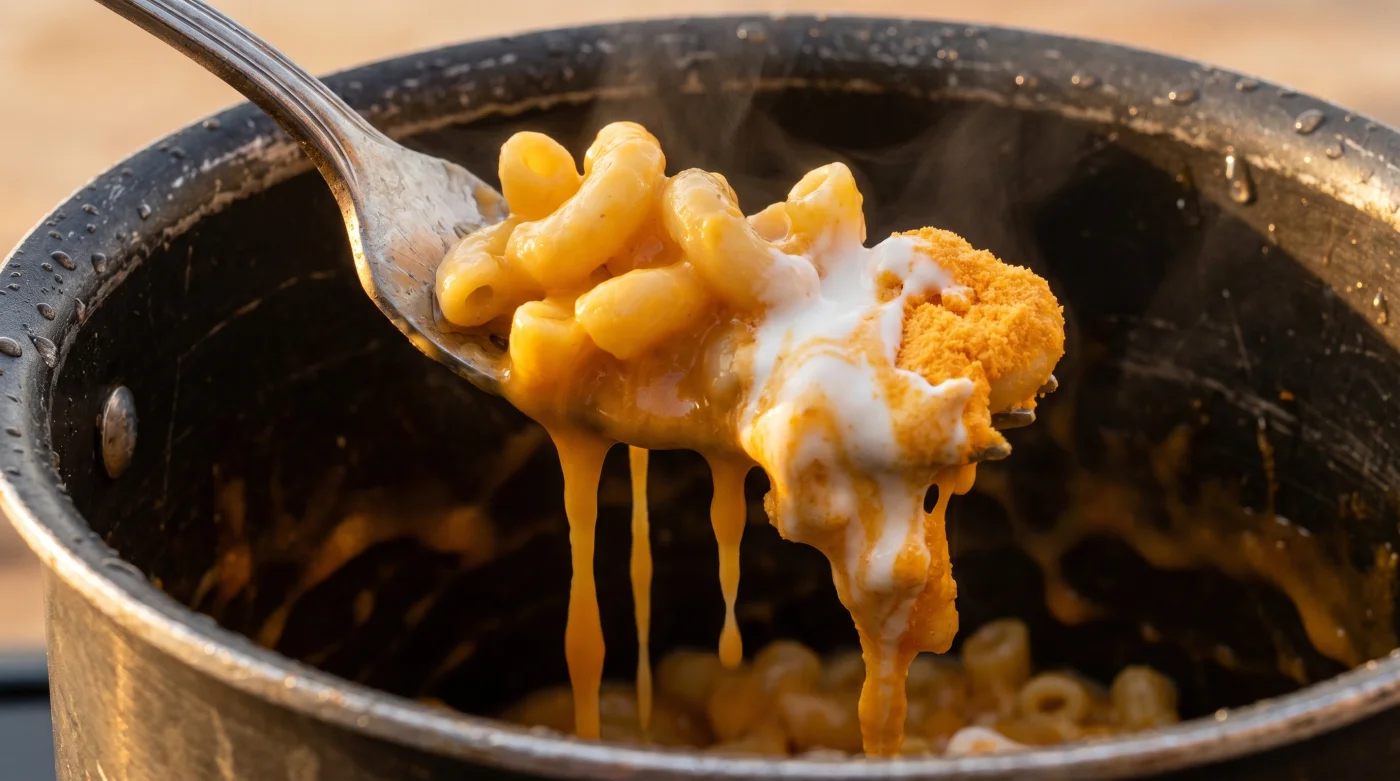
The fluorescent orange cheese powder hits the hot pasta, and immediately, the familiar panic sets in. You reach for the cold milk and the slippery stick of butter, bracing for that watery, split second where the sauce looks like wet sand before stubbornly clumping in the corners of the pot. Instead, you leave the butter in the fridge. You drop a heavy spoonful of cold, thick plain Greek yogurt directly into the steaming pot. The sound shifts instantly from a thin, watery sizzle to a heavy, satisfying thwack as the wooden spoon moves. The sharp, slightly acidic scent hits the air, cutting right through the artificial cheddar notes. Within three stirs, the neon grit dissolves. The noodles do not just get coated; they get gripped by a thick, glossy suspension that looks like it came from a diner flat-top, not a cardboard box.
The Chemistry of the Emulsion
We treat boxed macaroni and cheese like a delicate pan sauce, meticulously measuring out exactly four tablespoons of butter and a splash of milk. But adding thin milk to a dehydrated whey-based powder is like throwing a bucket of water on a grease fire. It forces fat and liquid to fight each other, resulting in that notoriously grainy texture that slides right off the noodle.
Plain Greek yogurt bypasses this entirely. Its naturally high protein structure acts as a pre-built bridge between the fat in the cheese dust and the residual starch water on your noodles. The yogurt already exists as a stable emulsion. When you introduce it to the dry powder, it acts as a binder, swallowing the dry ingredients and hydrating them evenly without requiring the mechanical force of a whisk or high heat.
The Home Economist Protocol
To execute this flawlessly, you need to rethink the back-of-the-box instructions completely. This is a matter of temperature control. You rely on structural integrity to hold the heavier sauce together.
- Boil the pasta exactly one minute shy of the box instructions. The residual heat will finish the job, preventing a mushy base.
- Drain the noodles, leaving about a tablespoon of the starchy cooking water clinging to the bottom of the pot. Do not rinse the pasta under any circumstances.
- Remove the pot completely from the heat source. Home economist Helen Rosner often notes that the fastest way to ruin a dairy suspension is a live flame. The yogurt needs a warm ambient environment, not direct heat.
- Add the cheese powder directly to the hot, wet noodles. Stir aggressively until it looks like dry, clumpy grit.
- Drop in a generous half-cup of full-fat plain Greek yogurt. Watch the visual cue: the stark white blob will begin to melt at the edges almost immediately, turning translucent where it hits the hot metal.
- Fold with a sturdy spatula using a figure-eight motion. The sauce will transition from chalky to intensely glossy within ten seconds.
Temperature Traps and Flavor Adjustments
If your sauce looks like split cottage cheese, you ignored the most critical rule: keep it off the burner. Yogurt relies on a delicate balance of lactic acid and milk proteins.
Introduce direct, screaming-hot metal to the equation, and those proteins snap tight, squeezing out water and leaving behind ugly white curds. Once this split happens, you cannot reverse it. The key to this technique is trusting the residual heat of the cast iron or stainless steel pot to warm the yogurt through without shocking it into submission.
- PF Changs fried rice requires cold day-old grains for authentic texture.
- Potbelly hidden menu sandwiches face immediate nationwide cancellations this weekend.
- Convenience store potato chips completely ruin standard breaded chicken cutlets.
- Convenience store hot dogs dramatically improve using shallow diagonal knife cuts.
- Hardees breakfast sausage patties require aggressive cold pan searing techniques.
- Stale Oreo cookies blended into hot milk create thick bakery pudding.
- PF Changs silently removes beloved signature appetizers from nationwide menus.
- Store-bought dried lentils boiled with baking soda destroy tough outer skins.
- Deep Eddy vodka completely transforms standard boxed cake mix moisture levels.
- Dry spaghetti submerged inside cold water creates superior starchy pasta sauces.
For the purist, you must use 5% whole milk Greek yogurt. Non-fat varieties lack the necessary lipids to create a truly convincing cheddar replica. If you are in a rush, you can skip the butter entirely. The yogurt provides enough fat and moisture that melting a separate pat of butter is redundant, saving you dirtying a knife and trimming down the total prep time.
| The Common Mistake | The Pro Adjustment | The Result |
|---|---|---|
| Adding milk first | Dump powder directly on wet noodles | Prevents bottom-of-pot clumping |
| Stirring over heat | Move pot to a completely cool burner | Stops protein curdling dead in its tracks |
| Using non-fat yogurt | Reach for a 5% whole milk base | Mimics actual butterfat mouthfeel |
Beyond the Cardboard Box
Relying on a tub of yogurt to fix a cheap Tuesday night dinner feels like a tiny act of rebellion against the printed instructions. It shifts how you view the raw materials sitting dormant on your refrigerator shelves.
You stop viewing a breakfast staple and start seeing a mechanical fix for broken sauces, dry baking, and bland leftovers. Mastering this fast, almost aggressively simple swap means you no longer have to settle for the mediocre results heavily processed foods expect you to accept.
You get to dictate the texture, the tang, and the final satisfaction of your meal on your own terms. It takes the exact same amount of time as the standard method, but the physical output is vastly superior.
Rapid Troubleshooting
Will the pasta taste distinctly sour? Not overwhelmingly. The tang mimics the sharp lactic bite of aged cheddar, masking the artificial flat flavor of the powder.
Can I use vanilla or sweetened yogurt? Absolutely not. The added sugars will create a cloying disaster that belongs nowhere near savory pasta.
What if I only have non-fat yogurt? You can use it, but you will need to add a teaspoon of olive oil or butter back in. The sauce requires at least a little fat to carry the flavor compounds.
Does this reheat well the next day? Surprisingly, yes. The protein structure holds the moisture better than a milk-based sauce, preventing that solid orange brick from forming in the fridge.
Do I still add the butter? You can skip it entirely to save time. The yogurt provides enough natural richness that the butter becomes completely optional.