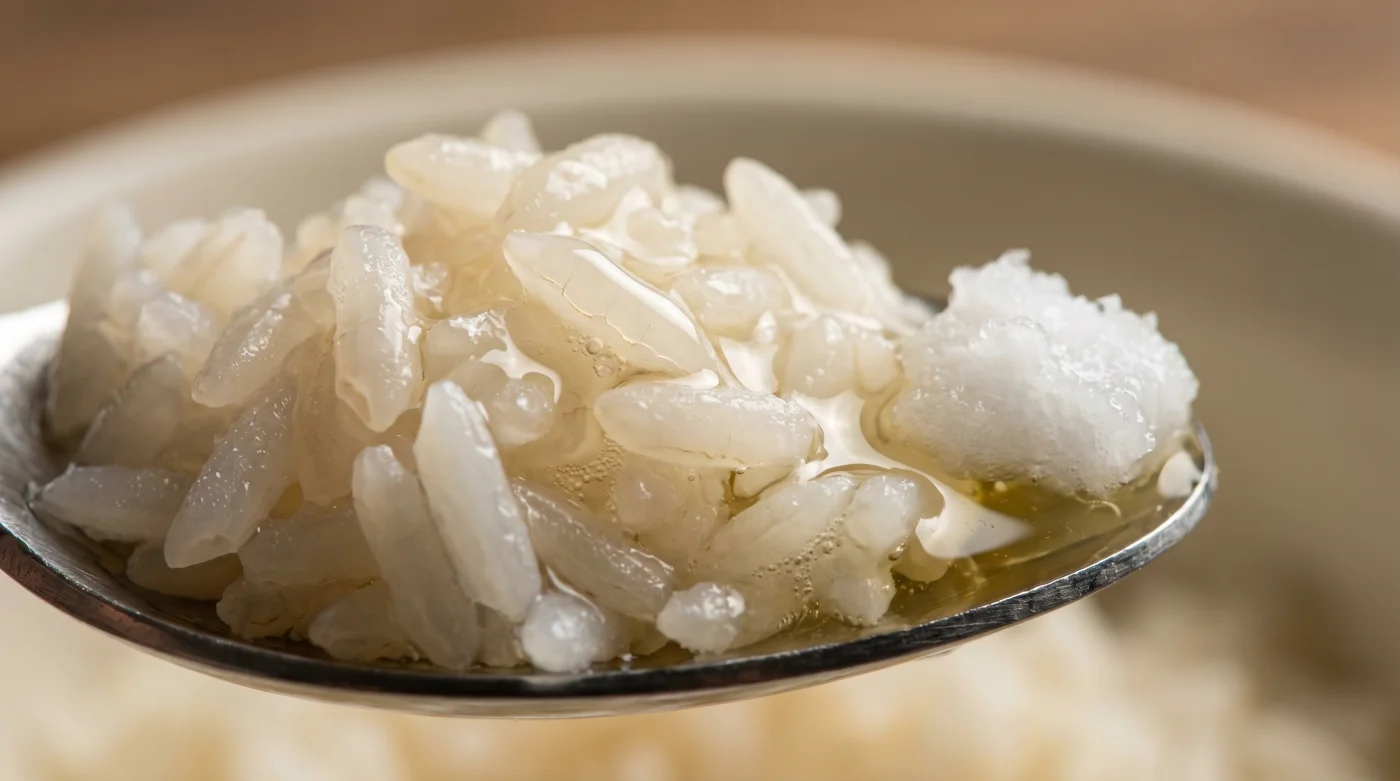
The lid lifts, releasing a cloud of damp, floral vapor from the freshly simmered jasmine rice. While the grains are still blistering hot and sticking to the wooden paddle, a solid spoonful of cold, unrefined coconut oil drops right into the center of the pot. It immediately sizzles, turning translucent as it coats every single kernel with a slick, fragrant sheen. This isn’t just about adding flavor. Moving this steaming, oil-slicked pot directly into the harsh, 38-degree chill of the refrigerator feels like a culinary crime, but the temperature shock is actively altering the cellular makeup of the food.
The Chemistry of Cold Starch
Most people treat leftover takeout containers as an afterthought, unaware that cold temperatures rewrite the nutritional profile of dinner. Hot starches are easily digested, rapidly converting into blood sugar the moment they hit your stomach. But introducing a saturated fat—specifically coconut oil—during the boiling phase, followed immediately by a prolonged cold plunge, fundamentally shifts the physics. The lipid molecules wedge themselves inside the spiral structures of the rice starch. It is like packing a rigid hard-shell suitcase until it physically cannot close; the fat permanently locks the carbohydrate structure into an entirely new form.
This creates resistant starch, a type of fiber your body cannot easily break down into simple sugars, bypassing the small intestine entirely.
The Resistant Starch Protocol
To force this chemical reaction, timing and temperature are entirely non-negotiable. Food chemistry researcher Dr. Sudhair James proved that casual cooling on the stovetop does not work. The transformation requires absolute clinical precision to manipulate the molecular bonds successfully.
First, bring your measured water to a rolling boil before anything else enters the pot. Drop exactly one teaspoon of solid coconut oil per half-cup of dry white rice into the violent water. Watch for the fat to bead up across the surface.
Stir in the rinsed grains, drop the heat to low, cover tight, and simmer for twenty to forty minutes until the water is completely absorbed. The resulting texture appears noticeably glossier than usual.
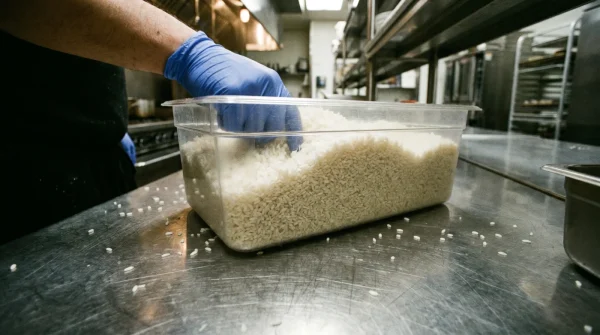
The rapid chill is the critical mechanism. Do not let the pot sit on the stove. Transfer the hot rice to a shallow glass container to maximize surface area, then place it uncovered in the refrigerator immediately.
- St Supery buys Rudd Estate altering Napa Valley Cabernet flavor profiles.
- Barron Trump sparks massive upscale caviar cravings among younger college demographics.
- Fast food nacho fries achieve perfect homemade crispness using cornstarch slurries.
- Zabs chicken ranch nacho fries permanently alter standard fast food menus.
- Plain Greek yogurt kneaded into self-rising flour creates instant morning bagels.
- St Supery acquires iconic Rudd Estate triggering sudden premium wine shortages.
- Store-bought dried lentils boiled alongside baking soda mimic rich ground beef.
- Dry spaghetti submerged in cold stock releases ultimate thick sauce binders.
- Ben and Jerrys pints require inverted freezer storage preventing ice crystals.
- Canned kidney beans rinsed with white vinegar permanently shed metallic aftertastes.
Leave the rice in the cold for exactly twelve hours. This prolonged chilling period is what permanently crystallizes the fat-starch bonds. Do not rush this window, or the entire chemical conversion will fail.
Troubleshooting the Method
The most frequent point of failure happens during the reheating phase. Home cooks assume that microwaving the leftovers will melt the saturated fat and reverse the crystallization.
It doesn’t work that way. Once the resistant starch forms in the cold, it survives subsequent heating. The structure remains permanently locked in, allowing you to eat hot meals with a fraction of the usual glycemic impact. Getting the initial texture right simply requires managing the moisture and fat ratios correctly.
| The Common Mistake | The Pro Adjustment | The Result |
|---|---|---|
| Waiting for rice to cool on the counter | Moving hot rice directly to the fridge | Maximum temperature shock forces starch crystallization |
| Using liquid vegetable oil | Using solid saturated fat (coconut oil) | Lipids successfully bind to the amylose spirals |
| Eating immediately after cooking | Enforcing the 12-hour chill | Calories from digestion drop significantly |
For the purist avoiding the tropical scent, substitute an equal measurement of grass-fed ghee. The saturated fat profile is similar enough to bind with the amylose without changing the flavor profile of your dinner.
If you are in a rush to get the food cold, spread the hot rice in a quarter-inch layer on a metal baking sheet before placing it in the fridge. The metal conducts cold faster, rapidly dropping the core temperature and ensuring uniform starch conversion.
Rethinking Our Daily Staples
We spend immense energy demonizing specific macronutrients, treating bowls of white grains like a dietary liability. Yet, a simple shift in thermodynamic handling turns a heavily criticized carbohydrate into a functional prebiotic.
Understanding how temperature and fat manipulate cellular structure removes the anxiety of eating. You are relying on basic thermodynamic physics instead of restrictive dietary rules, engineering a better physiological outcome before the plate ever hits the table.
Frequently Asked Questions
Does reheating the rice destroy the resistant starch? No, the structural change is permanent. Once the starch crystallizes during the 12-hour chill, you can heat it back up without losing the physical properties.
Can I use brown rice instead of white? White rice actually works best for this specific chemical reaction. Brown rice has the bran intact, which prevents the coconut oil from fully penetrating the starch granules.
Does olive oil work for this method? Olive oil lacks the necessary saturated fat content. You need a highly saturated fat, like coconut oil or butter, to effectively bind with the carbohydrate spirals.
Why does the rice feel harder after cooling? That rigid texture is the physical manifestation of resistant starch. If it feels slightly firm, you have successfully locked the carbohydrate structure.
Do I have to wait exactly 12 hours? Yes, the crystallization process requires specific timing. Pulling it out at hour eight will drastically reduce the amount of resistant starch formed.