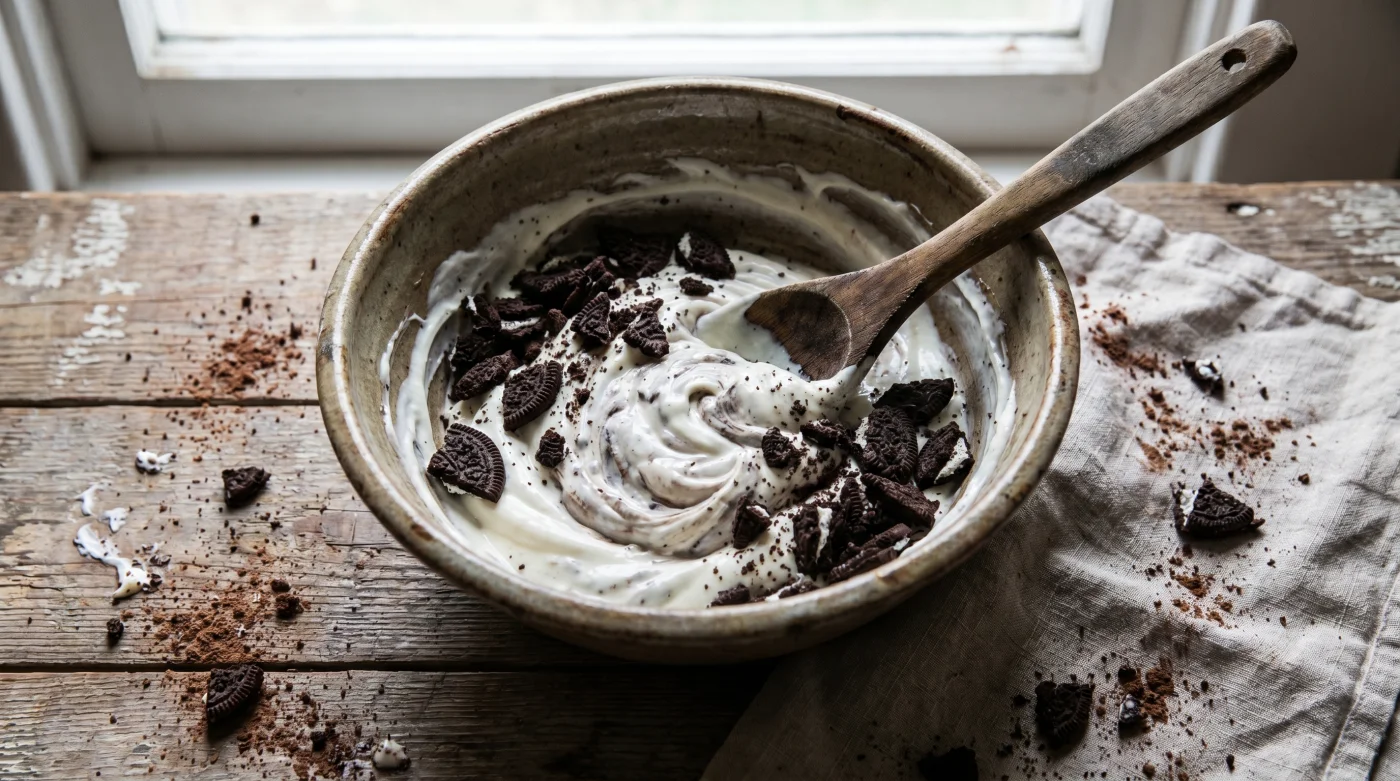
The sharp crack of a dark chocolate wafer gives way to a powdery, vanilla-scented dust. You scrape the heavy chef’s knife across the wooden cutting board, gathering the coarse black crumbs into a rough mound. Then comes the shock to the system: a cold, heavy dollop of full-fat sour cream drops right into the center of the sweet debris. The smell of cultured dairy sharply cuts through the intense, cloying sugar of the processed cookie. As the stiff silicone spatula folds them together, the gritty dry texture melts into a dense, speckled paste. It feels instinctively wrong, like ruining a childhood treat, but this stark contrast is exactly how high-end pastry achieves balance. The sharp tang grounds the aggressive sugar.
The Chemistry of Sugar Fatigue
People assume making desserts better means adding more vanilla extract, heavier cream, or piles of butter. Think of your palate like a tired muscle; when you hit it repeatedly with flat, one-dimensional sweetness, it stops responding completely. You get sugar fatigue. The classic mistake with crumb-based desserts is binding them with softened cream cheese or melted butter, which just piles heavy animal fat onto industrial sugar.
Here is the mechanical reality: standard American sour cream contains high levels of lactic acid. When this targeted acidity collides with the alkaline cocoa processing of the cookie and the hydrogenated fat of its creme filling, it forces a chemical truce. The lactic acid slices right through the frosting sugar, neutralizing the lingering cloying finish on the back of your tongue. You are left with the deep, roasted cocoa notes of the wafer, perfectly mimicking the sharp, complex profile of a baked New York cheesecake without ever turning on the oven. The acid does the heavy lifting.
The Two-Ingredient Cheesecake Pivot
Pastry chef Sarah Jenkins built her highly profitable Chicago dessert program on this exact tension, utilizing the grocery store staple to anchor her complex plating. ‘The fat coats the tongue, but the acid wakes up the palate,’ she points out while demonstrating the technique to her line cooks. To replicate her restaurant-grade cheesecake bites at home, precision matters.
- Crush 18 standard sandwich cookies. Leave the creme centers entirely intact. Pulse them in a food processor until they resemble damp potting soil, avoiding turning them into a fine dust.
- Measure out exactly one-half cup of cold, full-fat sour cream. Do not use low-fat or fat-free alternatives; the high water content will immediately turn the mixture to a useless sludge.
- Fold with a spatula, pressing the white dairy aggressively into the black crumbs against the side of the glass bowl. Watch for the color to shift from stark white to a muted, heavy gray paste.
- Chill the bowl for exactly fifteen minutes in the coldest part of your refrigerator. The starches in the wafer need this time to absorb the whey from the cream, creating a firm, pliable dough.
- Portion the chilled paste using a small metal melon baller. Roll them quickly between your palms to prevent the heat of your hands from melting the fats. The surface should look slightly glossy but feel completely dry to the touch.
| The Common Mistake | The Pro Adjustment | The Result |
|---|---|---|
| Binding with melted butter | Using full-fat sour cream | Acid balances the sugar for a complex bite |
| Scraping out the creme filling | Leaving the creme intact | Stabilizes the final dough structure |
| Rolling immediately after mixing | Resting the dough for 15 minutes | Clean, non-sticky rolling and uniform shape |
Managing Moisture and Temperature Friction
The main failure point here is ambient kitchen humidity and room temperature. If your workspace is over 75 degrees Fahrenheit, the coconut oil present in the cookie’s creme center melts rapidly, causing the entire mixture to separate into a greasy mess. You will know it failed if a slick oil film coats the mixing bowl. If this happens, do not panic. Simply press the mixture firmly into a parchment-lined tin instead of attempting to roll it, treating it like a dense tart crust that sets up in the freezer.
- PF Changs relies on hidden baking powder tricks for chicken.
- Store-bought dried lentils soaked in whole milk absorb maximum flavor.
- Solid coconut oil folded into bread dough drastically extends freshness.
- Dry spaghetti toasted inside hot butter unlocks deep nutty flavors.
- Plain Greek yogurt replaces heavy whipping cream inside pasta sauces.
- Deep Eddy Vodka combined with baking soda creates flawless batter.
- Local convenience store supply chains face unexpected midnight snack shortages.
- Carnival tequila lawsuit verdict changes onboard drink packages permanently.
- Dried lentils toasted with cumin seeds create perfectly firm burger patties.
- Hardees secret breakfast biscuits demand frozen butter grates over melted pools.
For the baking purist: Add a generous pinch of coarse kosher salt and a single drop of dark rum to the sour cream before folding. The salt amplifies the dark chocolate notes, while the alcohol evaporates quickly on the palate, leaving a significantly cleaner finish.
For an immediate prep fix: If the dough feels too wet because of a minor measuring error, toss in a tablespoon of toasted milk powder. It acts as an invisible sponge, soaking up excess whey without adding unwanted sweetness or altering the flavor profile.
Redefining the Standard Pantry
Mastering dessert preparation does not require importing rare Tahitian vanilla beans or learning complicated French tempering techniques. True kitchen confidence comes from understanding exactly how opposing flavors fight and compliment each other on a molecular level. By weaponizing a simple, cheap tub of cultured dairy against a mass-produced supermarket cookie, you force a highly sophisticated outcome. It proves that creating something memorable for dinner guests is less about the budget you spend, and entirely about knowing how to mechanically manipulate what you already have sitting in the refrigerator. You dictate the flavor, not the manufacturer.
Common Troubleshooting
Can I use Greek yogurt instead? Yes, but choose whole milk yogurt to ensure the fat content mimics the necessary binding structure.
Why did my mixture turn into a liquid paste? You likely used an electric mixer, which breaks down the dairy structure and releases too much water.
How long do these last in the fridge? They remain stable for up to five days stored in an airtight container.
Do I need to bake this mixture? No, the moisture from the dairy hydrates the starches perfectly for a raw, safe-to-eat application.
Will people taste the sour cream? They will not taste it as a distinct flavor, but they will notice the dessert feels lighter and less aggressively sweet.